Passport to the Parks: Meet Congaree National Park

Olivia Louden
Since the first US National Park was established in 1872, sixty-two others have popped up, ranging from cacti-covered corners of the desert to huge swathes of Alaskan wilderness to colorful coral reefs in Florida.
Each one does things a little differently, and this series is our chance to break them down. Today, we’re meeting Congaree National Park!
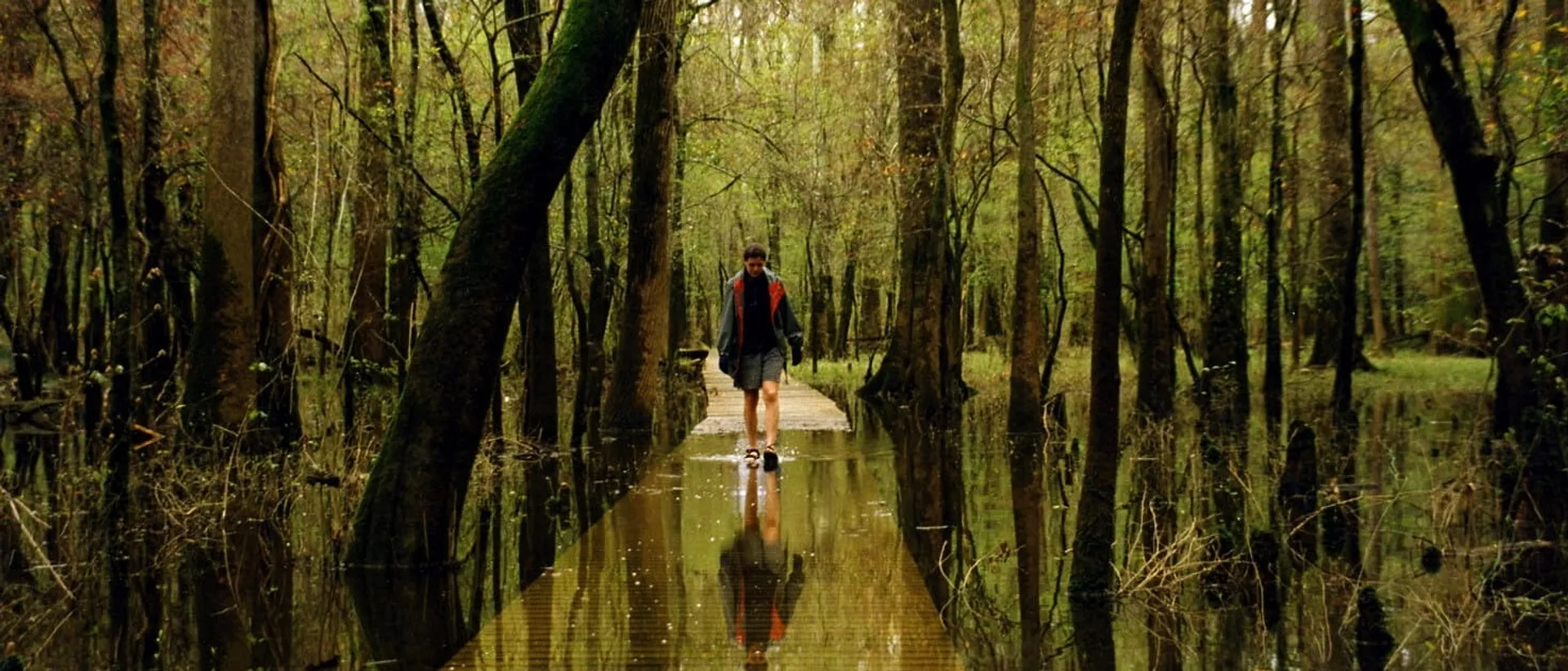
This patch of forested wetland is the smallest park we’ve covered so far and one of the country’s least visited, despite being right outside South Carolina’s state capital. While it might not have the same jaw-dropping vistas as the iconic hotspots, there’s a kind of quiet beauty here that somehow feels even more wild.
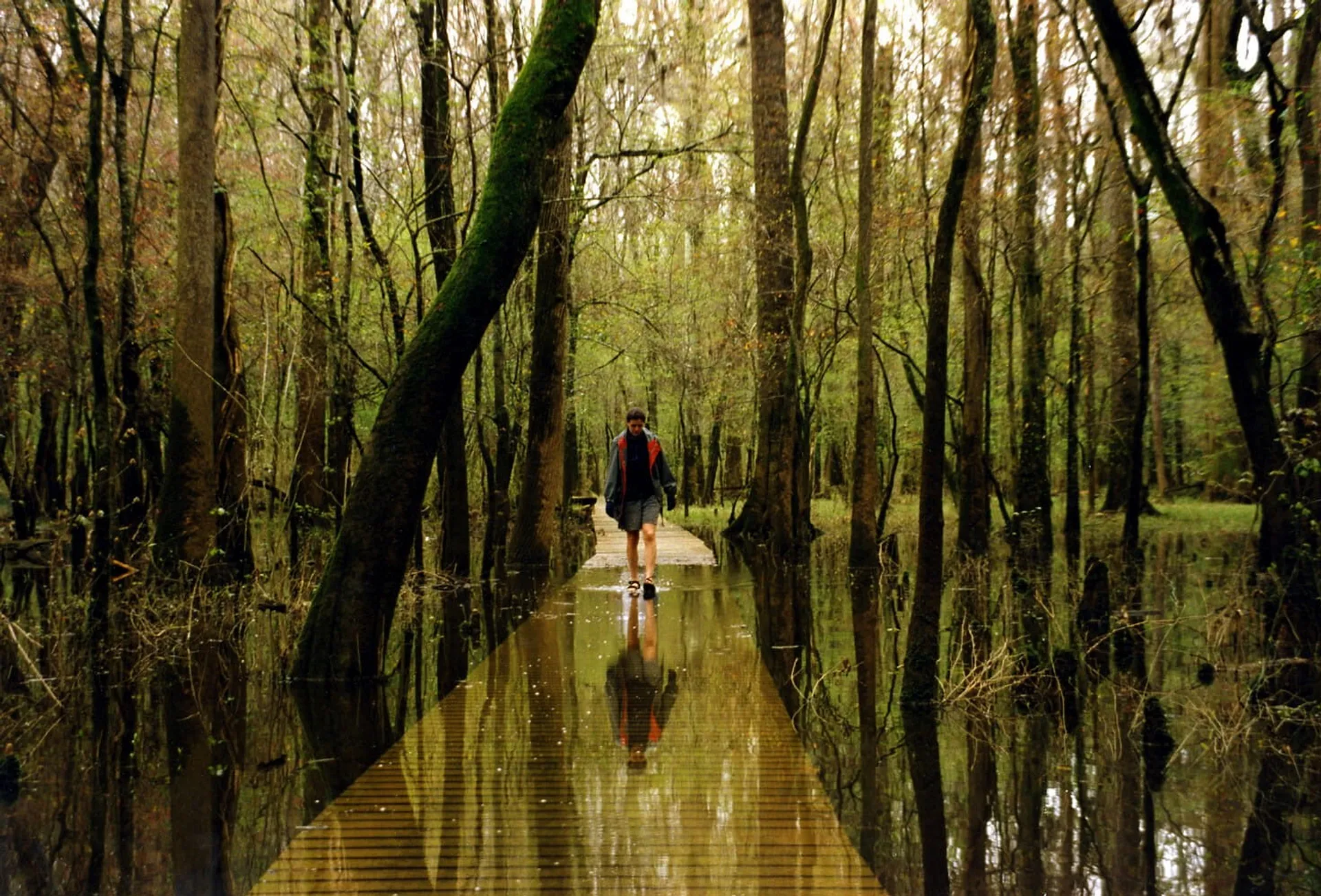
“1996 Congaree Swamped” by anoldent, CC BY-SA 2.0
As the popular parks get busier and busier, it feels like the right time to pay closer attention to the smaller, less crowded names on the register. While places like Zion and Yosemite can sometimes function more like theme parks, Congaree is mostly about winding through the swampy scenery until you feel like you’re in a Southern fairytale.
So pack your fishing rod and your bug spray, and let’s find out why this patch of wetlands deserves to be appreciated and protected.
Quick Facts about Congaree National Park:
- Established: 2003
- Size: 41.7 square miles (108 km²)
- Location: Central South Carolina
- Nearby towns: Columbia is right outside (30 minutes by car), but Charleston, Charlotte, and Augusta are all within two hours’ drive.
- Closest airports: Columbia (CAE), though international visitors will likely find better routes into Charlotte (CLT) or Charleston (CHS).
- Best time to visit: spring or fall
- Biggest highlights: ancient trees and one very special light show
Despite its relatively low visitor numbers, Congaree might actually be one of the best examples of the National Park system in action. The Eastern United States used to be covered in old-growth forests similar to some regions of the West, but due to incessant logging, almost all of those trees are gone, and the landscapes irreparably changed.
Congaree’s trees, many of which are centuries old, almost went the same way. The area was logged intermittently for eighty years, but thanks to conservation groups in the 20th century, it was given the legal statuses it needed to stay under the blanket of NPS protection.
This means that when you visit Congaree, you’re visiting one of the last remnants of the East Coast’s ancient landscape. And it only exists because of the National Parks system!
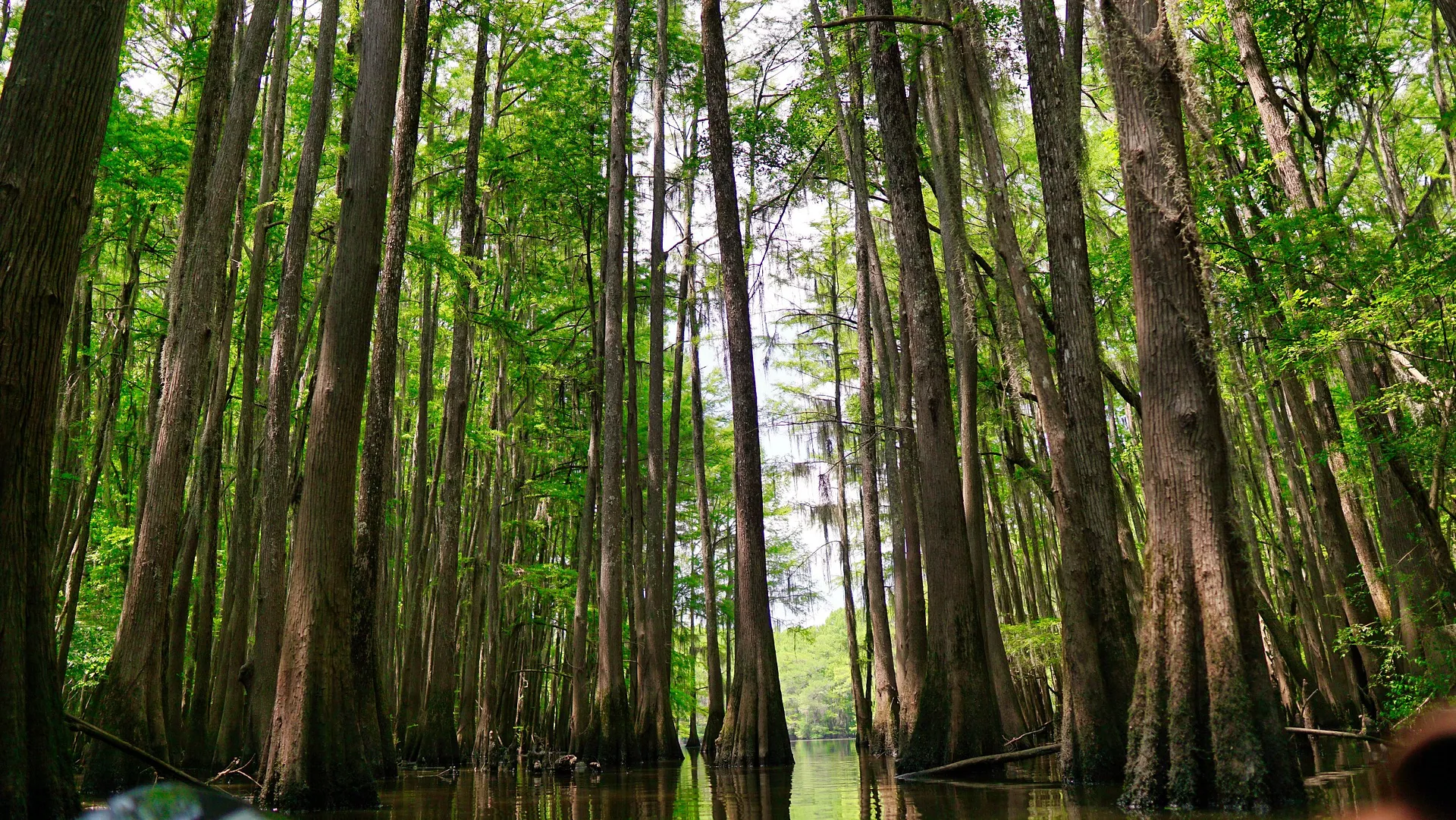
While frequently referred to as a “swamp,” the technical name for Congaree’s landscape is “old growth bottomland hardwood forest.” That basically means it’s a really old woodland that exists on a floodplain — thus the swampy, Jurassic Park-esque scenery.
One of the best ways to make the most of Congaree’s unusual environment is to paddle down Cedar Creek in a canoe or kayak. This waterway winds through most of the park, allowing you to glide past those ancient trees while spotting river otters, turtles, and the occasional alligator.
The park doesn’t rent out boats, so you have two options: show up with your own (rented or brought from home) and fly solo, or join a tour group. If you choose the former, be sure to keep an eye on the water levels — they vary a lot and can greatly impact your experience.
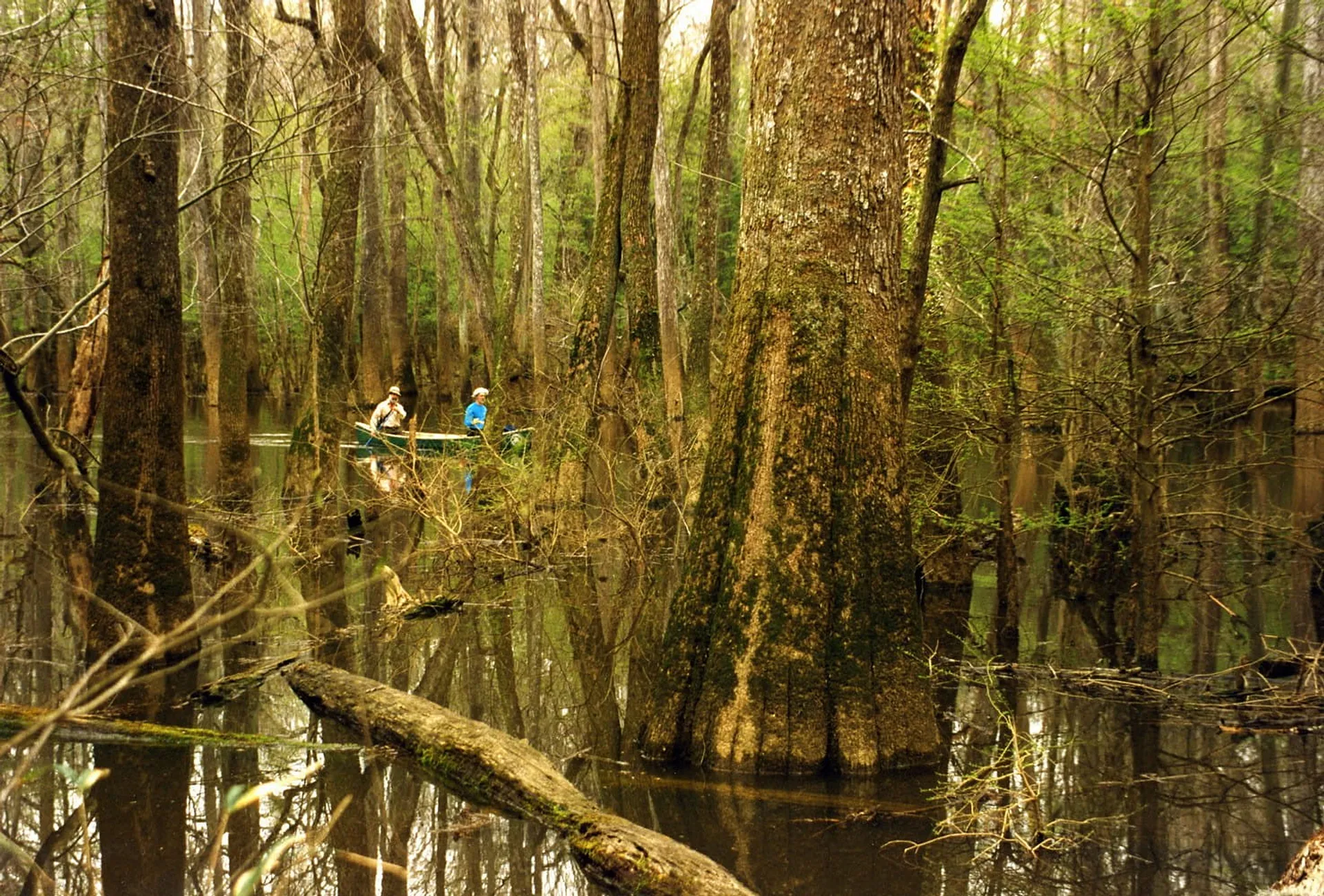
“1996 Congaree High Water” by anoldent, CC BY-SA 2.0
If you’d rather keep to dry land, pick a hiking trail or two! Most visitors do the Boardwalk Trail, which is about 2.6 miles (4.2 km) long and loops around through the most popular corner of the park on a wheelchair- and stroller-friendly wooden path. It’s the easiest way to experience the forest, so if you’ve only popped by Congaree for an afternoon, this is where you should head.
For a more challenging hike, you have plenty of options. Pick one of the longer, quieter routes like the 7-mile (11.2 km) Oakridge Trail, and you might even notice some wild turkeys gobbling among the cypress trees.
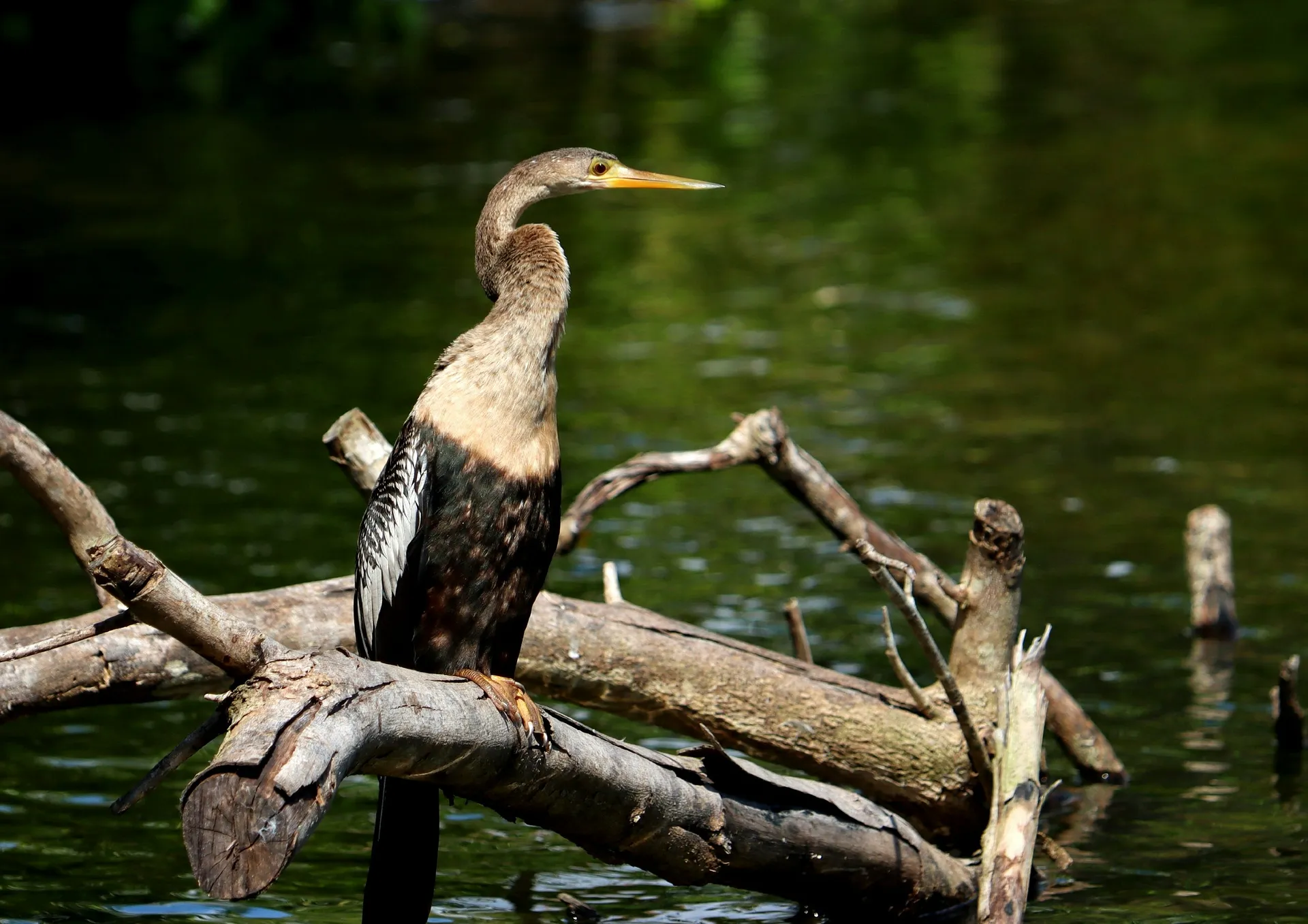
Speaking of birds, Congaree is kind of a birder’s paradise, with around 200 different species to spot. Ornithologically minded visitors should definitely pack their binoculars and head for Kingsnake Trail, where you’ll find the most diverse flora and fauna. Keep an eye out for hawks, woodpeckers, owls, storks, and dozens of other feathered friends. My personal favorite has to be the anhinga, with its long, snake-like neck.
Despite the sheer quantity of birds in Congaree, their most popular flying animal is actually much smaller. Visit during a specific period in spring, and you might not believe your eyes.
No, those aren’t LEDs — the woods are lighting up with fireflies!
For just a week or two each year, thousands of fireflies descend on Congaree and turn the forest into a glittering night sky. They flicker synchronously, meaning they glow on and off in tandem with each other, almost like the trees are inhaling and exhaling.
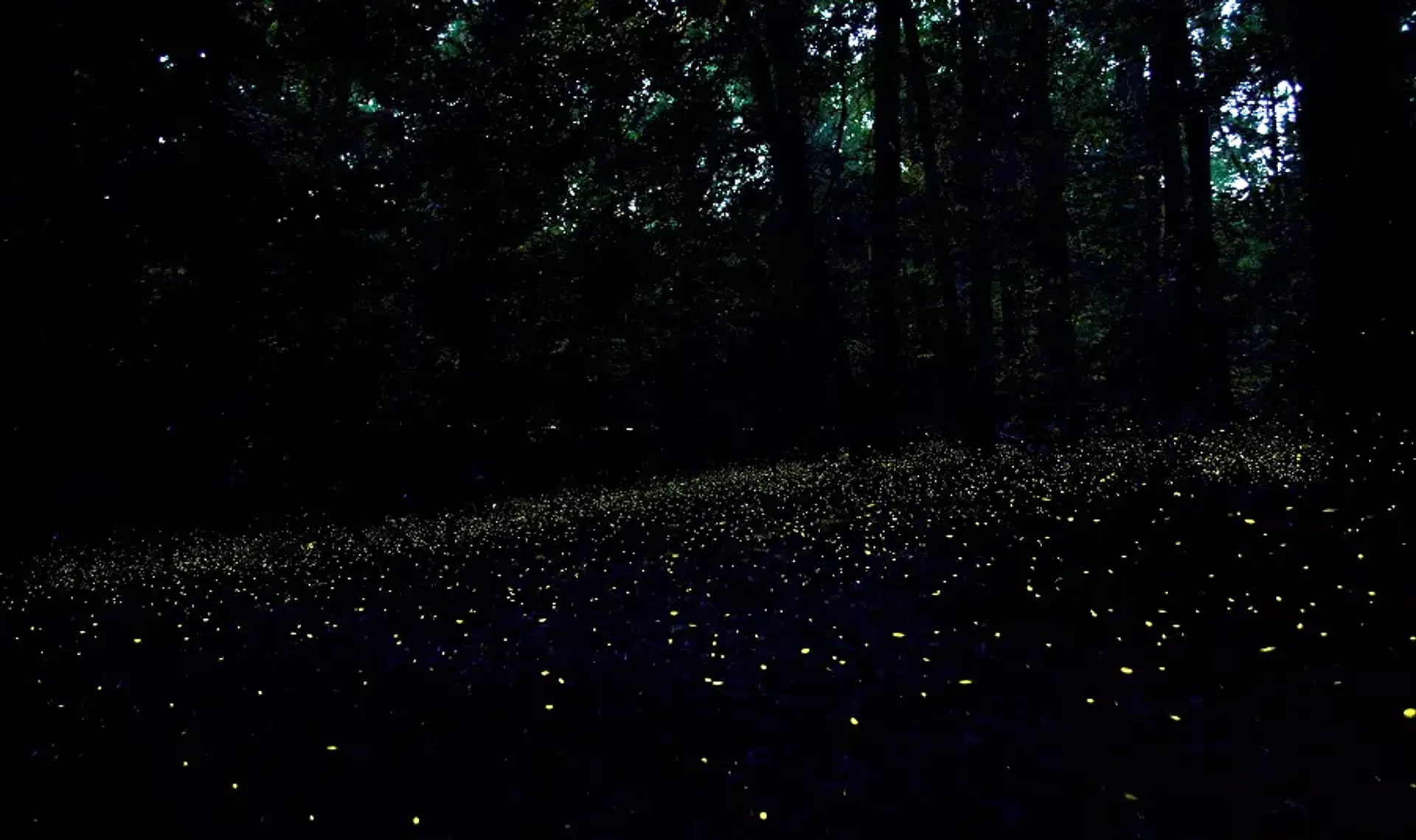
As you might expect for such a magical display, it’s tricky to get a ticket to the light show. You’ll need to have your recreation.gov account ready to go, keep an eye on when the tickets are available, and then enter your name in a lottery. Win, and you’ll be permitted to stay late in the firefly viewing area so you can take your time soaking up the experience.
If you’d like to stay the entire night inside the park, you’ll need to bring a tent. Congaree doesn’t have any lodges, so you can either choose between two campgrounds or head into the backcountry.
Then you can curl up in your sleeping bag, listen to the chitter of birds and insects, watch thousand-year-old trees sway overhead, and be glad that this ancient forest survived all these years, like it was waiting for you.
Let me know which parks you’d like to hear about next! I’m focusing on US National Parks to start, but I’m open to any and all national park suggestions from around the world. Maybe next time we’ll go kayaking in Alaska, or swim with sea turtles in Hawaii…