Winter Through a Window: The Bernina Express in 12 frames
No white-glove service or curated grandeur here. For everything the Glacier Express is, the Bernina is not. And that’s exactly why I loved it.
After basking in the glitzy carriages of the Glacier Express, my travel mates and I jump off in Pontresina. An idyllic alpine village that seems to share Swarovski snow with its high-end neighbor, St. Moritz.
We're only here for a brief stay, long enough to flop ourselves on the feathery pillows at Schloss Hotel & Spa before catching the Bernina Express across the Alps.
But first: bundling up for a quick hike and horse-drawn carriage into the pine-clad peaks of Val Roseg — the kind that makes you forget the world and your onward ticket.
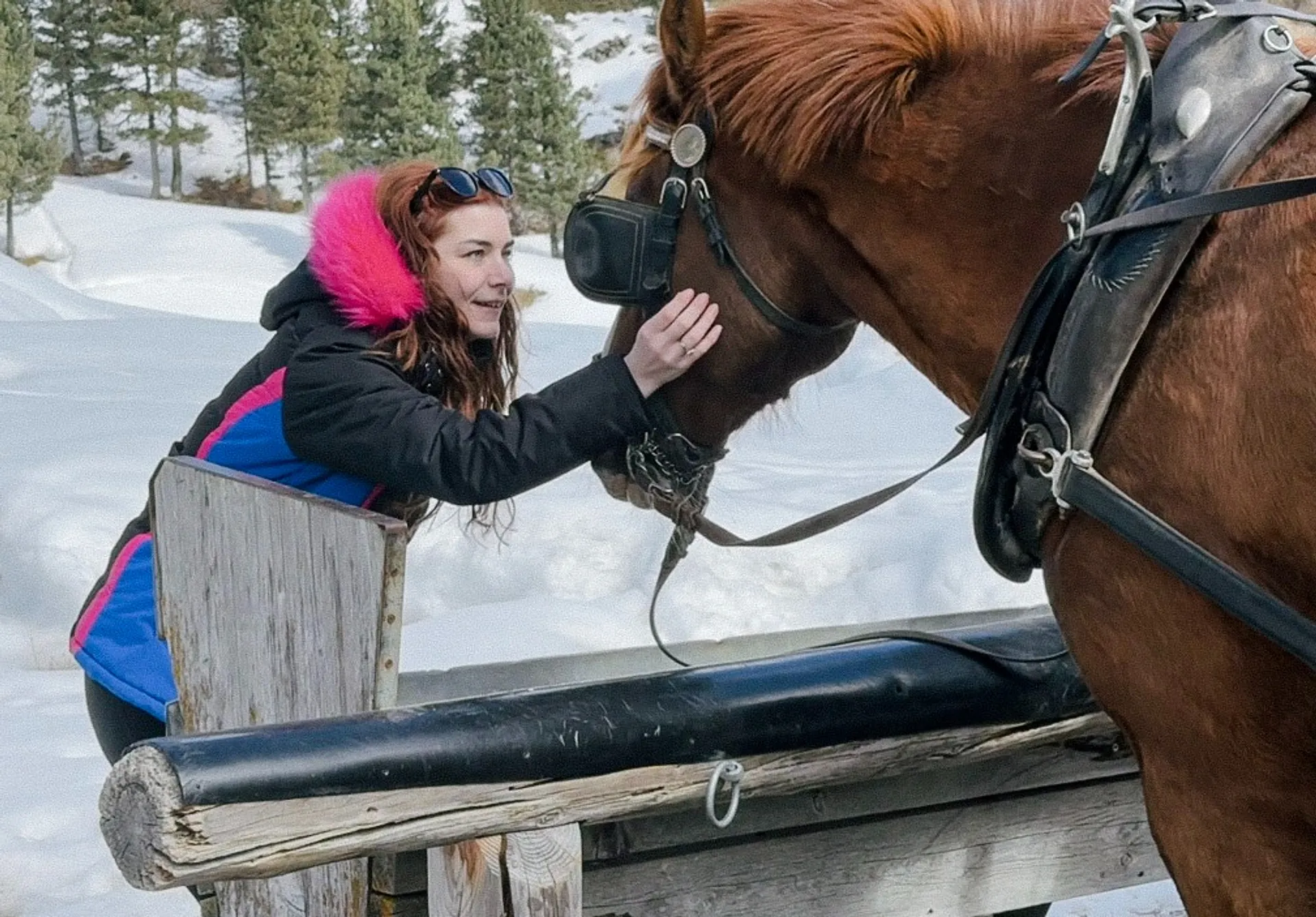
Whoever dreamed up winter clichés clearly had the Roseg Valley in mind. From underneath heavy fur and wool blankets, we wave our mittens at passing horses and hikers.
The only sounds are the soft snort of the horse and the snow crunching under its hooves.
It’s a snow-globe kind of serenity as we make our way to the gingerbread-perfect Roseg Gletscher, lured in by its legendary dessert buffet and views over the Roseg Glacier.
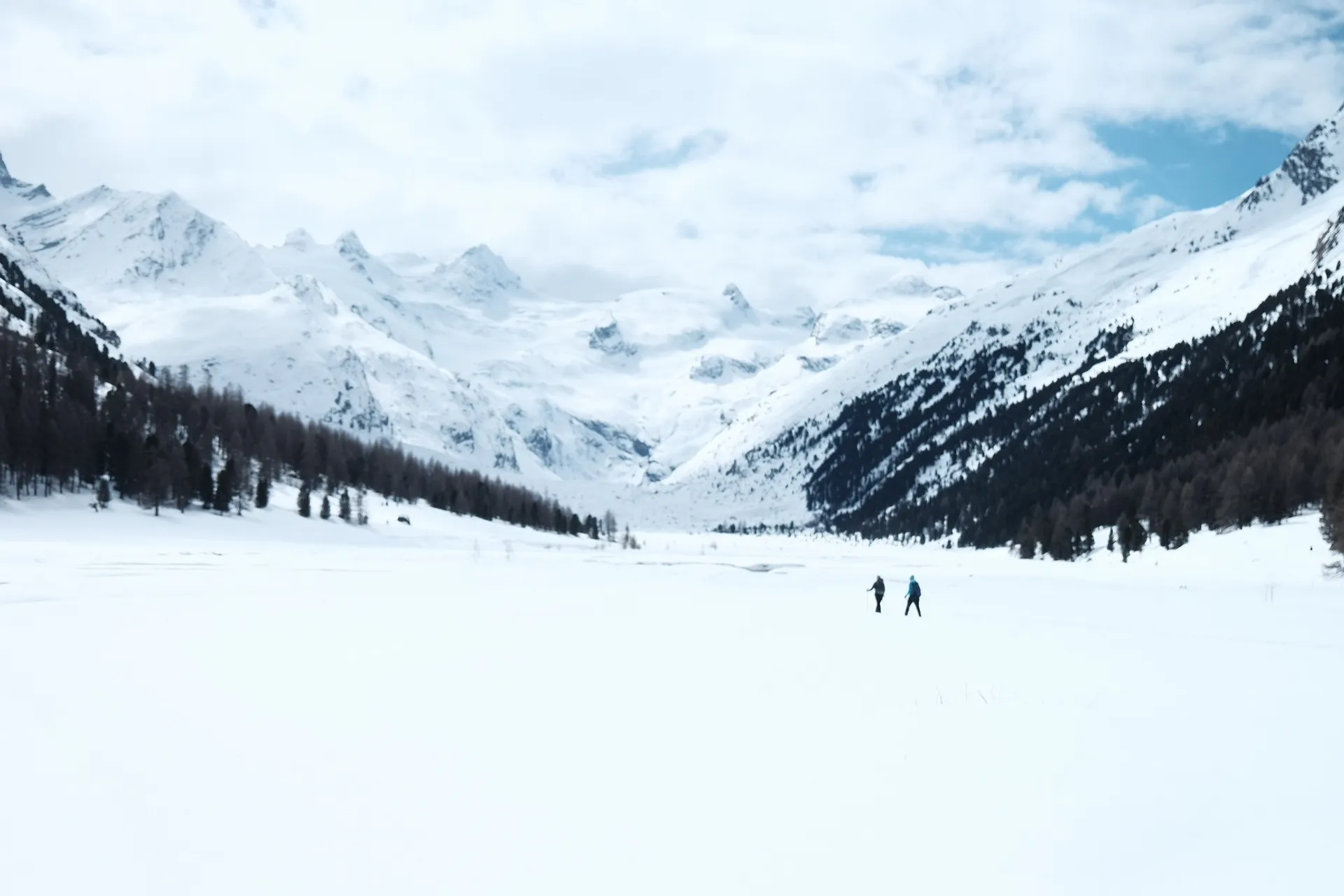
But snow globes always settle eventually, even metaphorical ones. With dessert plates empty, fingers numb, and daylight thinning, it's time to trade the trail for the tracks and hop on the Bernina Express.
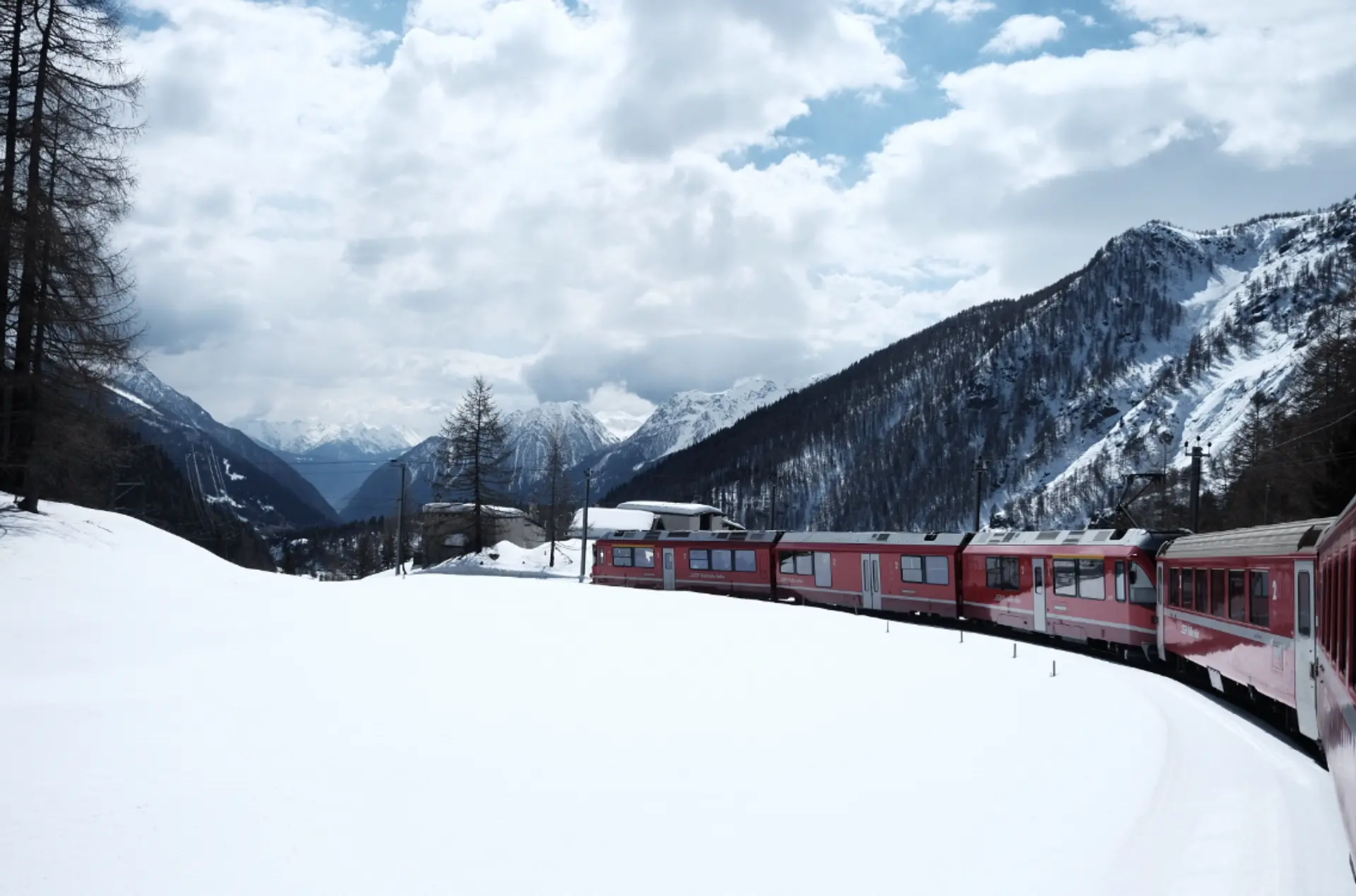
The Bernina is the Glacier Express's wilder, less polished counterpart, forgoing the bells and whistles in favour of raw switchbacks and dramatic elevation changes.
It feels more like a local train that just happens to be a UNESCO World Heritage Site, passing through some of the Alps' most stunning scenery.
The train does offer first and second class cabins, but our pockets were a feeling a little light after breathing the Swiss air for almost a week.
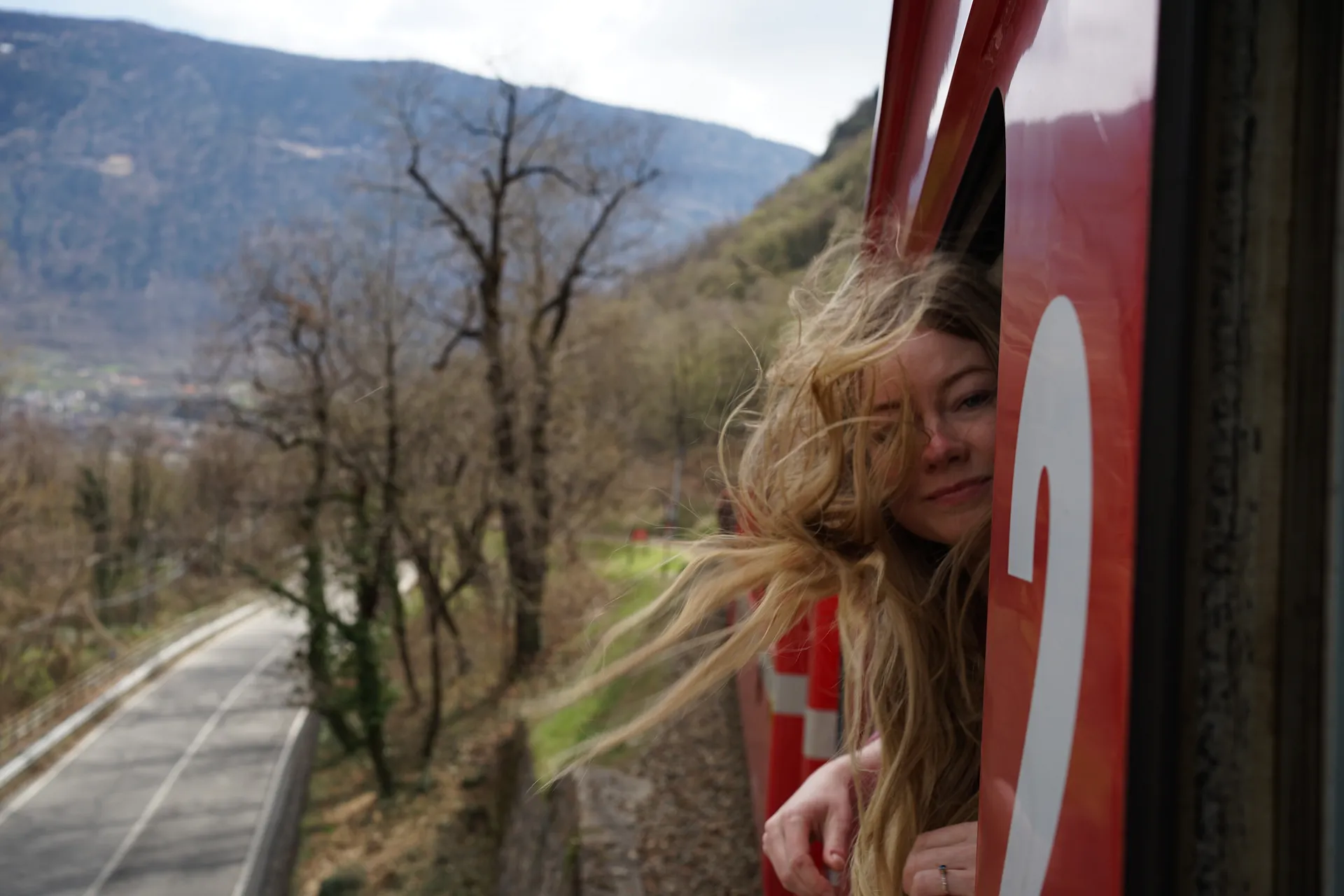
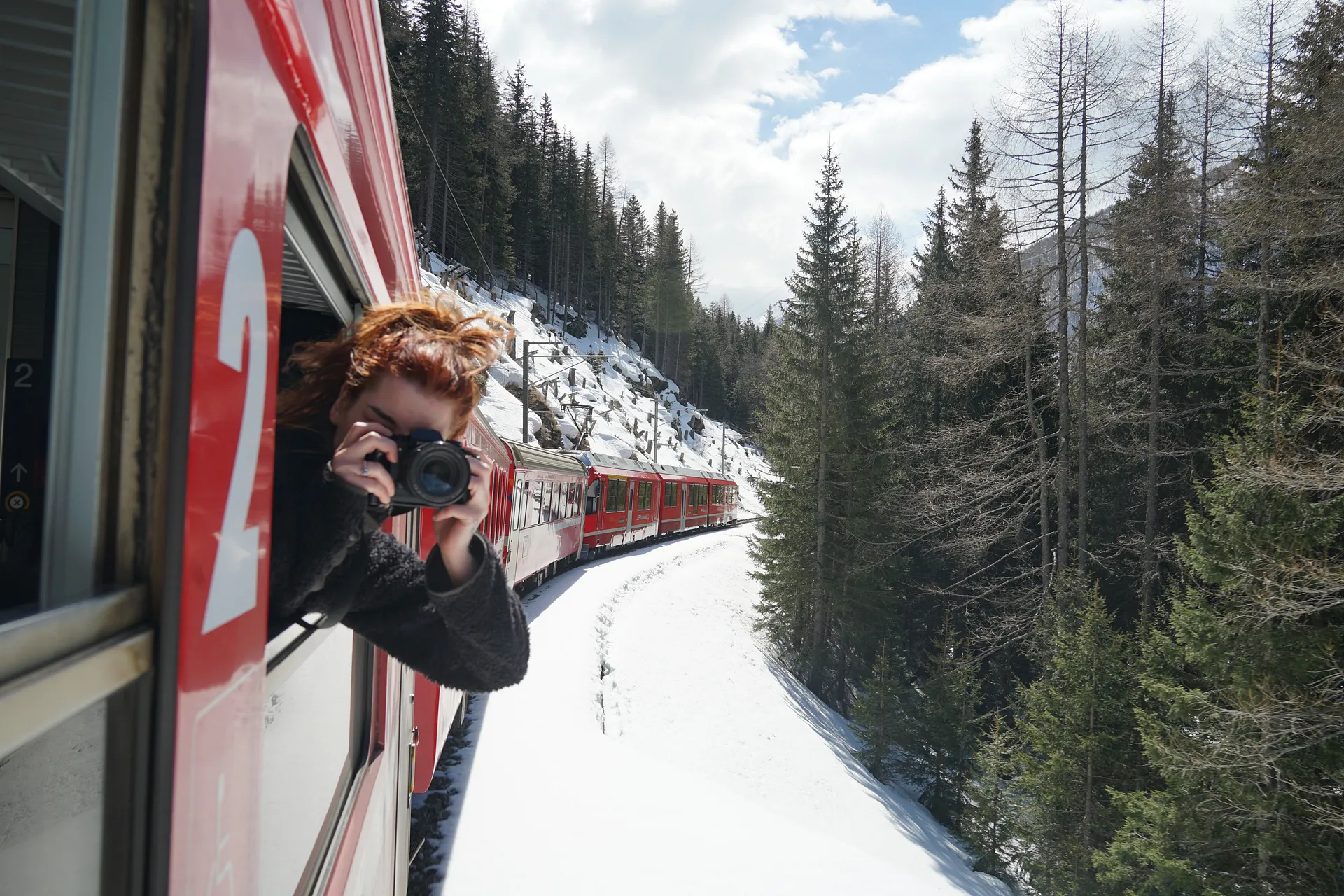
We opted for second class; it had everything we needed, including phone chargers and openable windows. Surprisingly, we had the cabin mostly to ourselves.
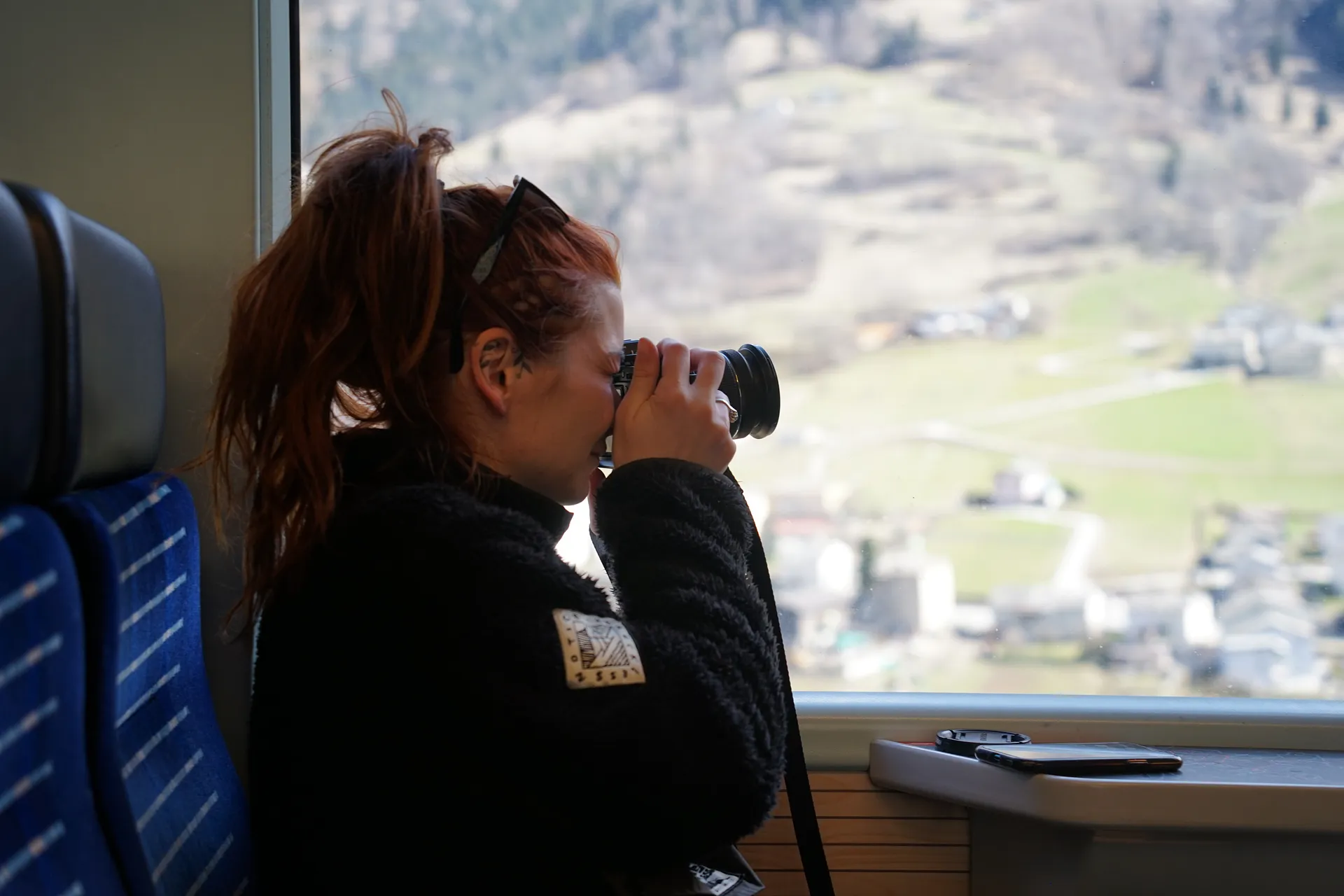
Unlike the Glacier Express, it's less about being served an experience and more about moving through one.
You're far outside the sightseeing bubble, sharing space with locals on grocery runs.
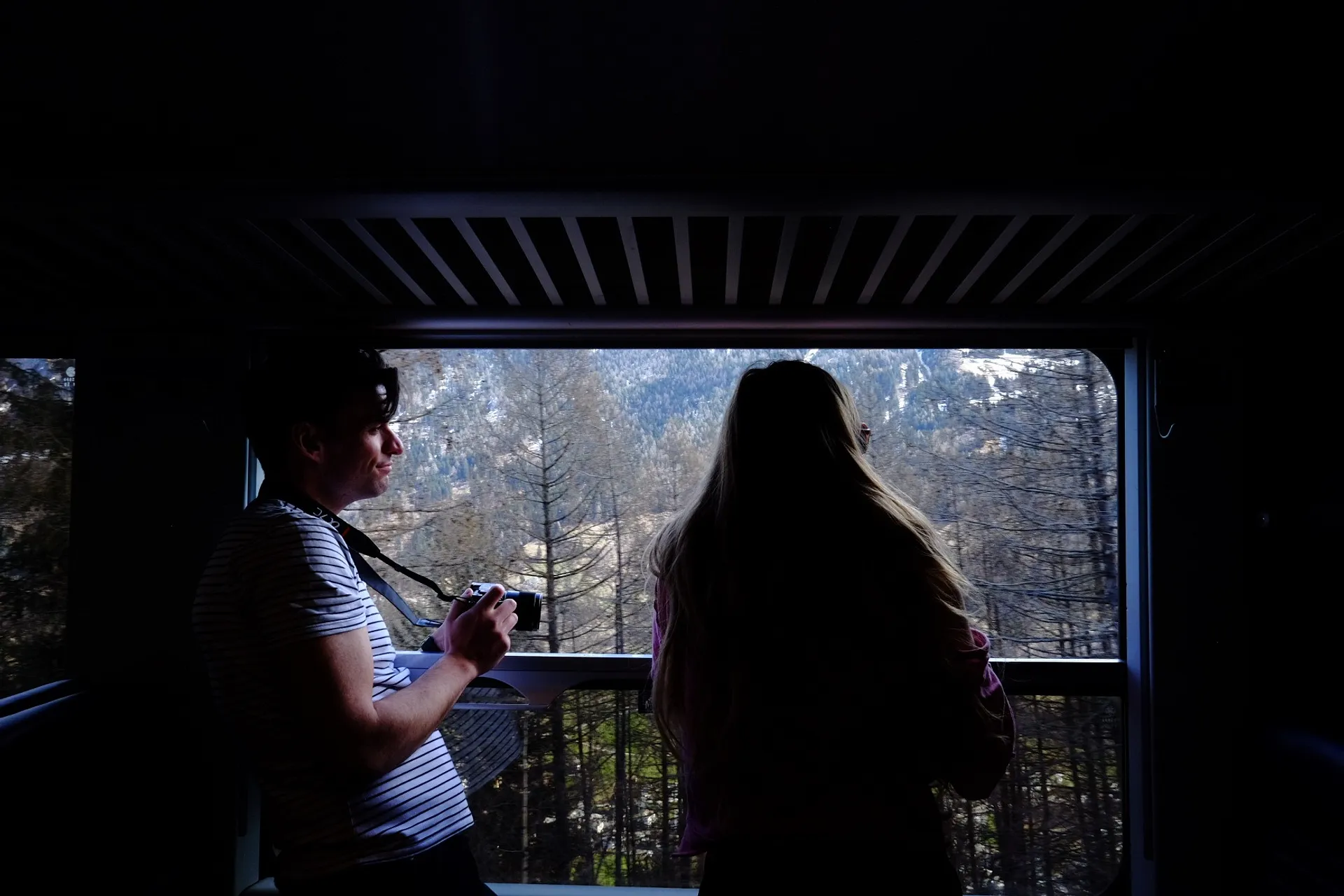
Now and then, I spot lone stone huts in the distance, snow-dusted and silent. I wonder who owns these quiet outposts in such a vast landscape that barely notices our humming train. I imagine the winters and wars they have weathered.
How many hands has their hearth warmed, and how many lovers have stolen a brief embrace on their doorsteps?
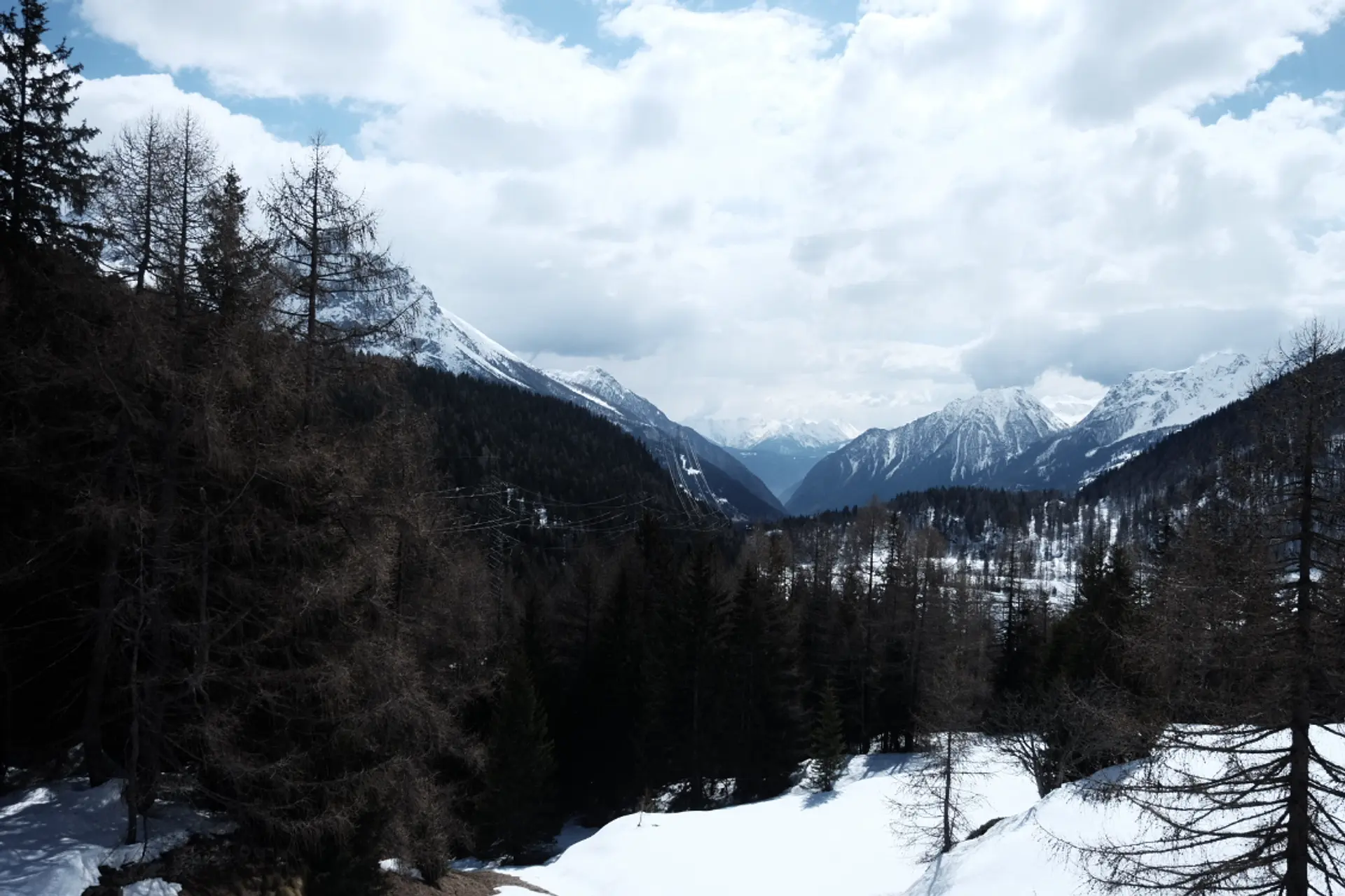
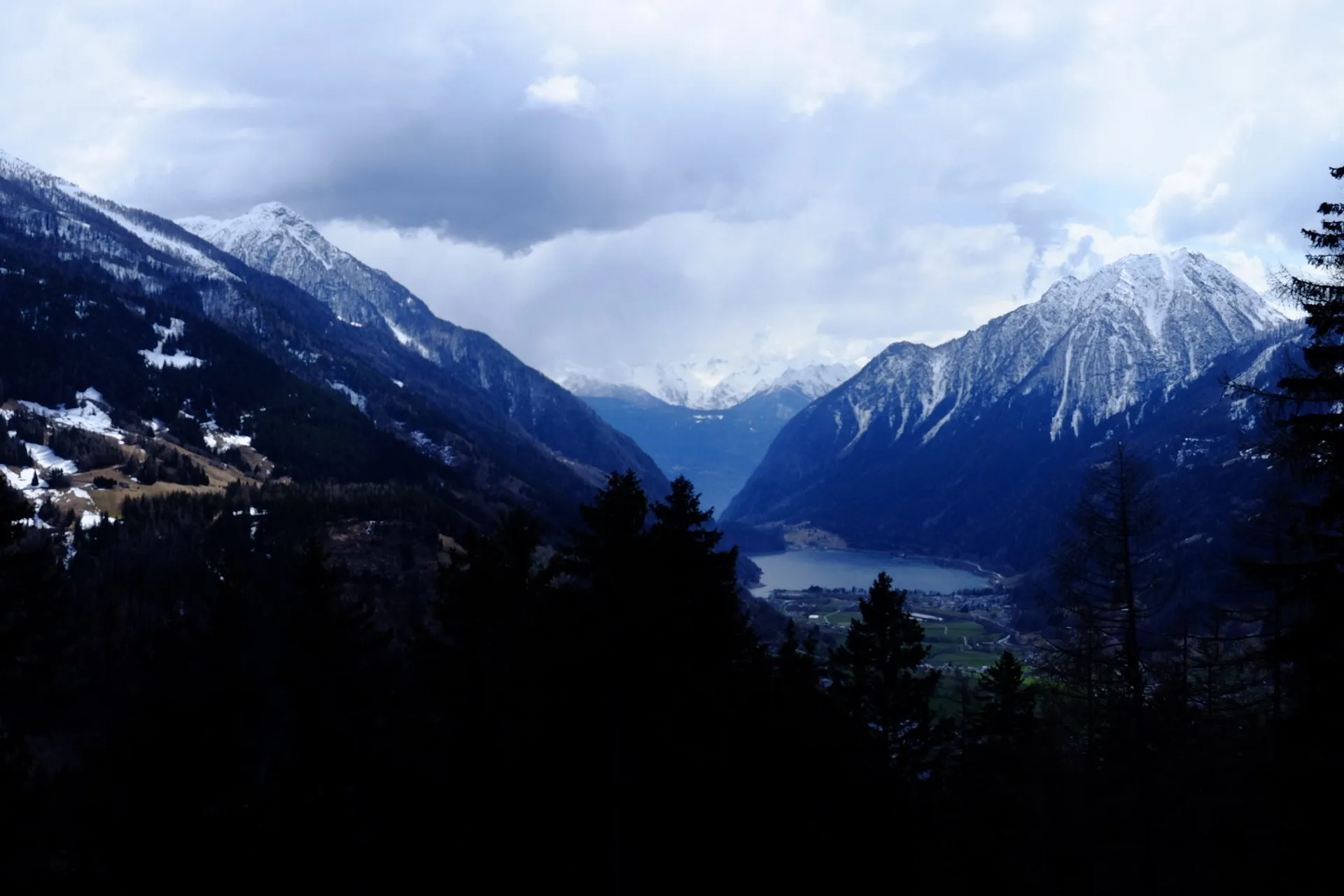
The views don't let up as we climb, looping past glaciers, lakes, and peaks. The highest point, 2,253 meters, is one of Europe's loftiest railway crossings.
When the line was built in the early 1900s, just like the Glacier Express, local workers braved avalanches and thin Alpine air to carve tracks into impossible slopes.
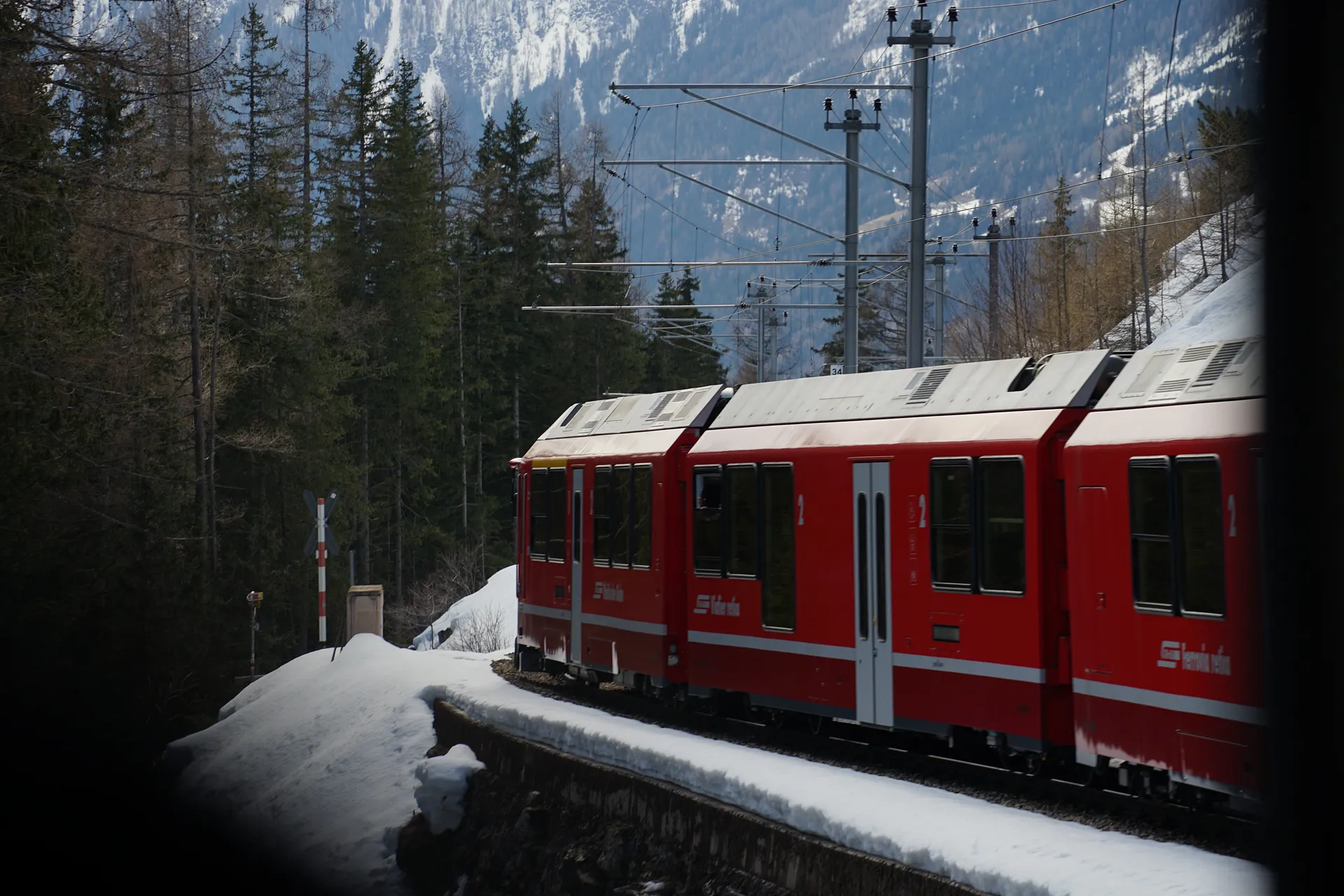
Cresting the Bernina Pass, the world outside our window shifts again. Snow melts into emerald green as glaciers give way to forests. Pines blur past, villages flash by — fast, alive, and totally unstoppable.
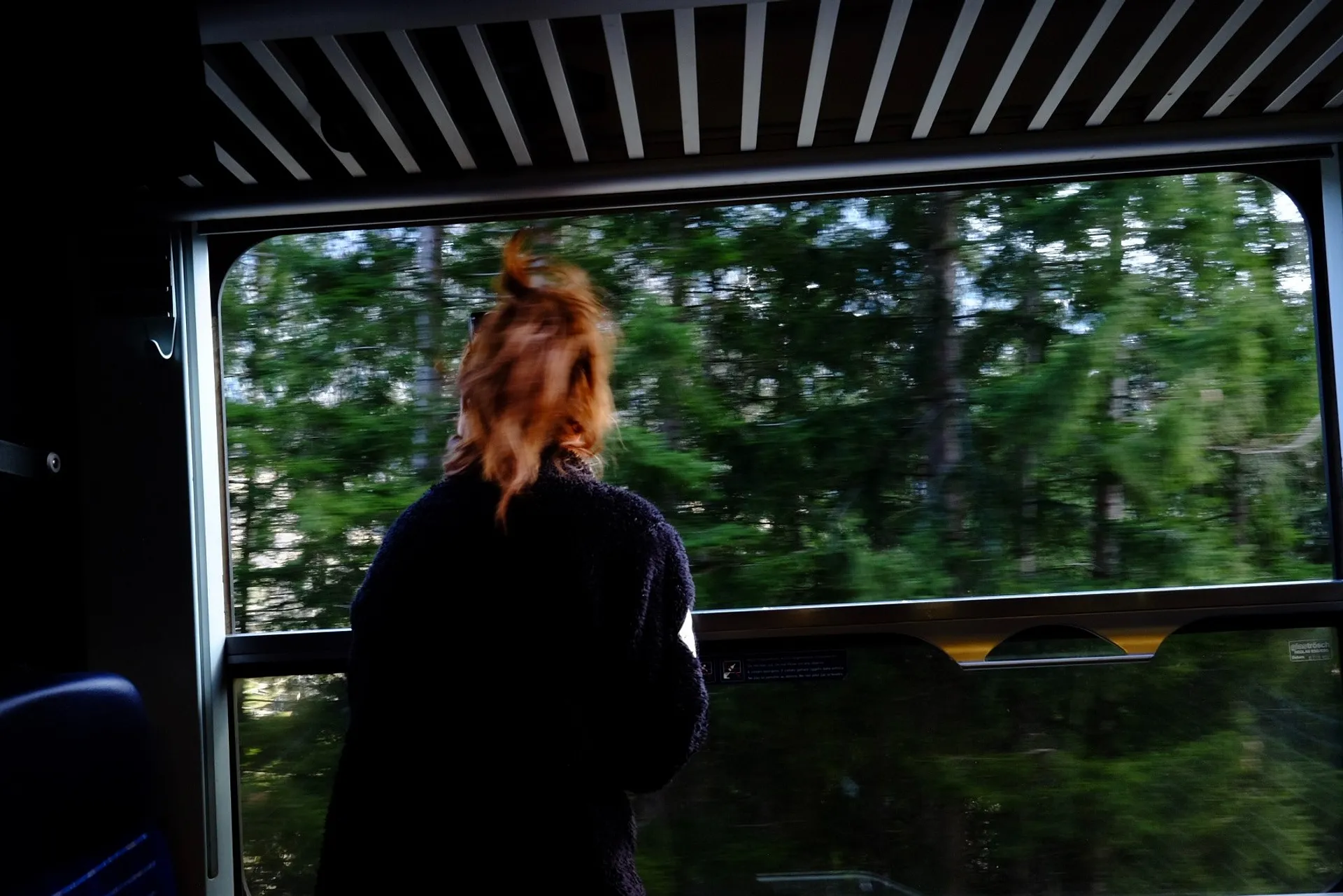
The pretty town of Poschiavo lives in between worlds. Sitting north of the Italian border, the language, food, and daily rhythm sway toward the “dolce vita” lifestyle.
In the 18th and 19th centuries, many locals left to work abroad, often as pastry chefs or traders in Spain and Portugal. Those who returned quietly transformed the village with their earnings, giving Poschiavo a surprisingly elegant feel.
Nowadays, you'll find artisan boutiques and ancestral ateliers, like StoneArt Swiss run by Angelo Boninchi. He works with local Val Poschiavo marble and regional stones like serpentinite and nephrite jade to create everything from countertops and sculptures to one-of-a-kind jewelry.
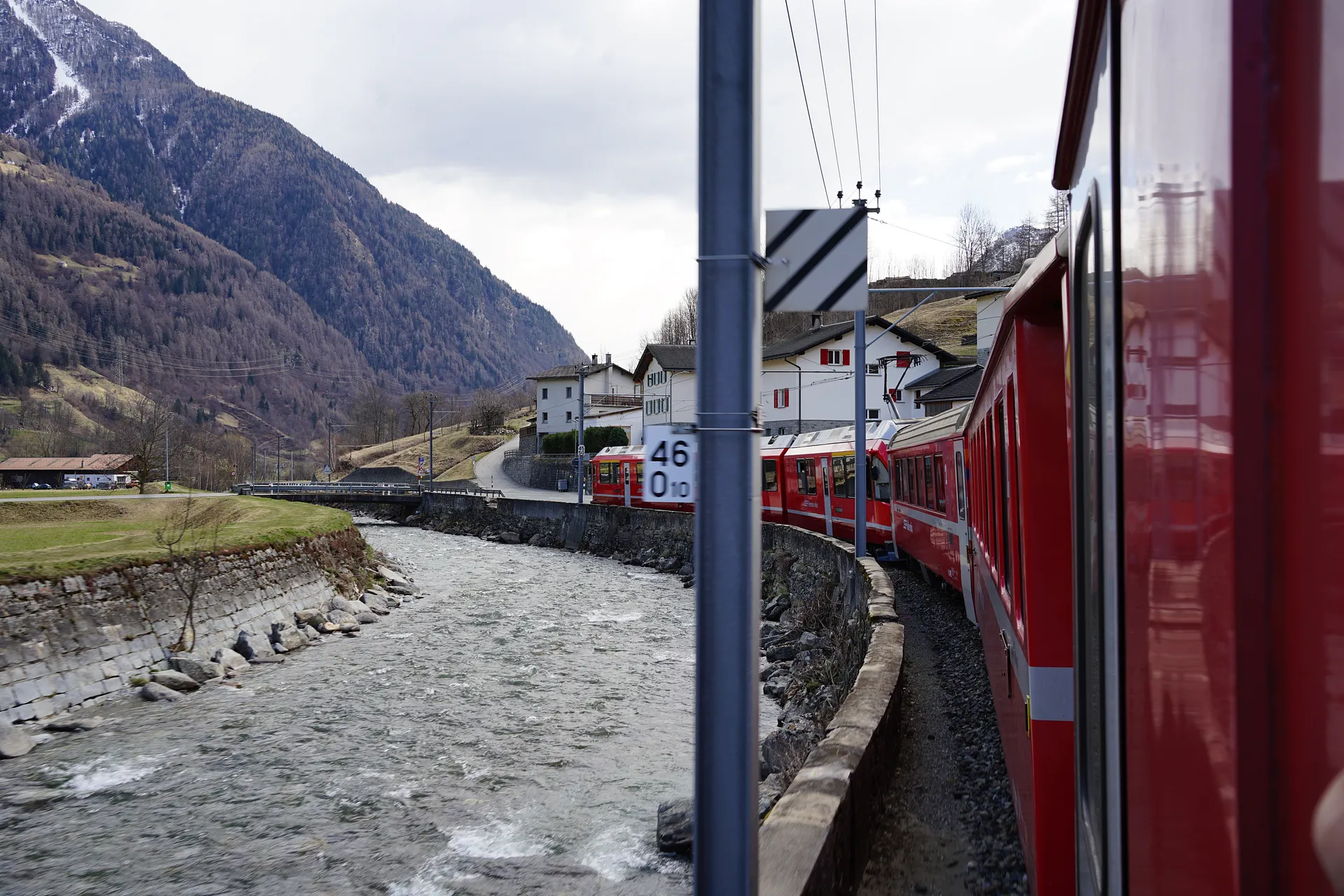
Even from this distance, the villages in the valley feel grounded, a world apart from the swanky streets I left behind in Zermatt.
No resorts, no Gucci gondolas, no pretending. For the first time in a week, I really breathe. The cold, icy air fills my lungs, and I'm drunk on the feeling of being completely untethered on these tracks.
This is the Switzerland I came for.
Essential Tips for Your Bernina Express Trip
Time Your Journey
Morning or late-afternoon rides give you the best light for photos. Midday can be bright but a bit harsh.
Pack Snacks & Water
Unlike the Glacier Express, the Bernina has minimal onboard service. Bring a picnic or grab something at a station along the way.
Dress in Layers
The train climbs high Alpine passes. Temperatures can vary dramatically from valley to summit, especially if windows are open in the carriage.
Pick a Direction
Both directions are scenic, but traveling north-to-south (St. Moritz to Tirano) gives a sense of “descending into Italy” with greenery, villages, and palms appearing as you go.
Allow Time at Stops
Small towns like Poschiavo or Alp Grüm are worth a quick leg-stretch or photo stop. Even a short wander will add to the experience. It's something I regret not doing on my own journey.
Charge Your Camera
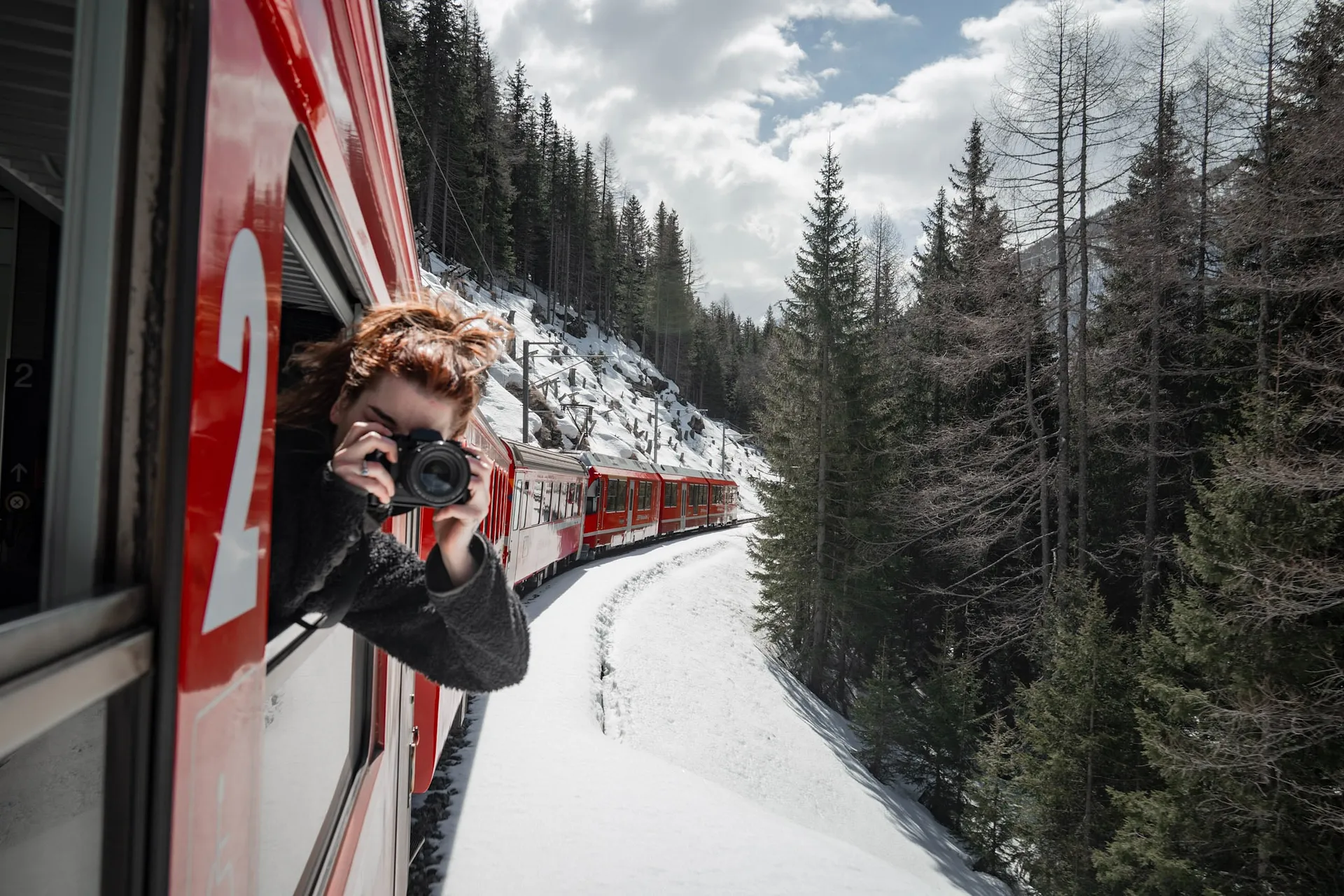
The landscapes are dramatic and continuous — you won’t want to miss a shot.
Embrace the Pace
Unlike luxury trains, the Bernina Express feels grounded and real. Relax, watch, and enjoy the journey.