My Visit to the Rebel Headquarters of the Zapatistas

Akasha Loucks
If someone asked you to visit a paramilitary encampment deep in the Mexican jungle, would you?
I did.
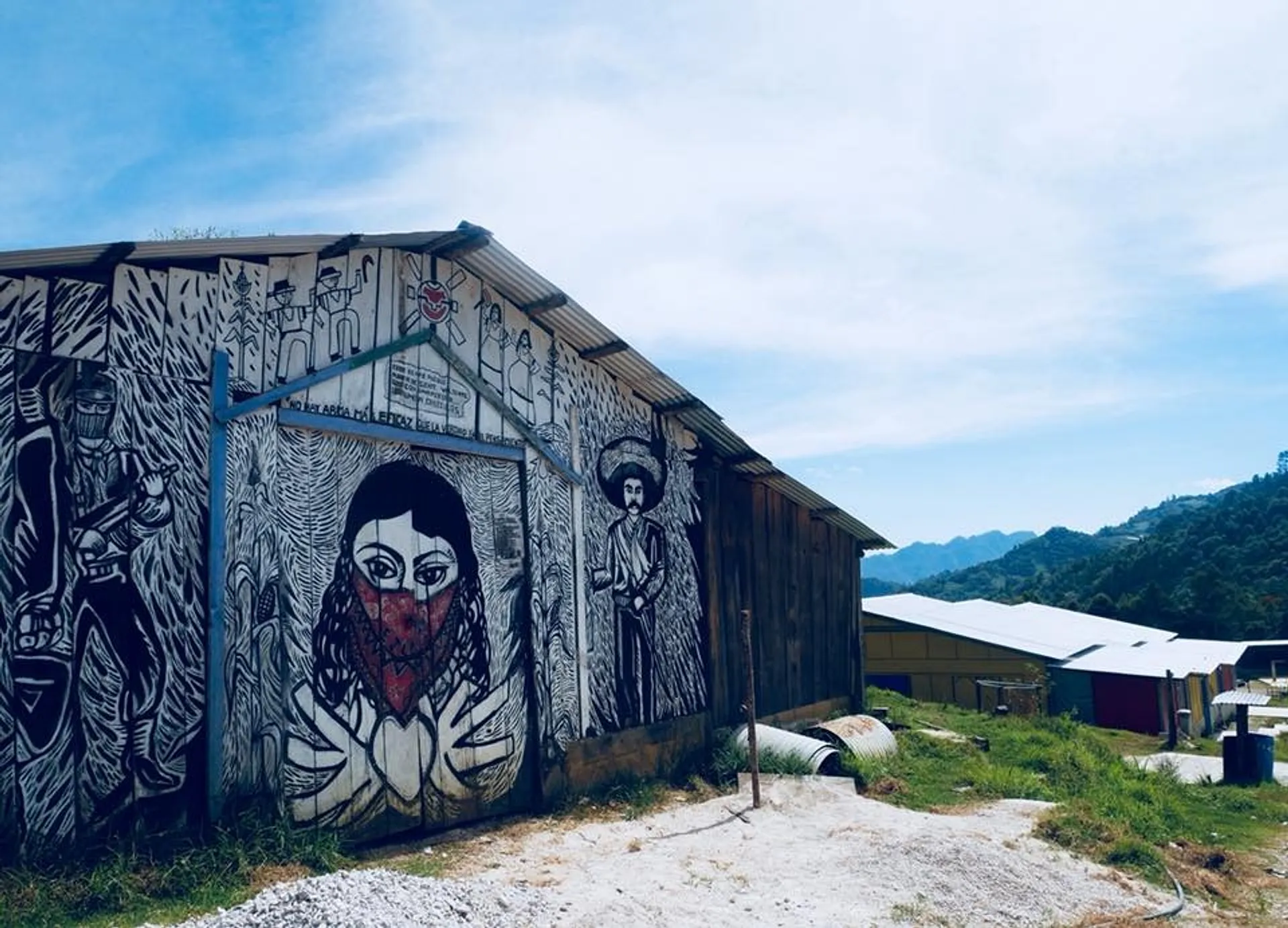
“This is my town, race of brave people who with a stone overthrows castles. There is no gun more effective than truth in thought.”
Blame it on my insatiable curiosity or the restless stupidity I’ve still yet to subdue; they’re the same, both friend and foe, luring me to head out on some pretty questionable side quests during my time here on earth.
Like waving goodbye to my soul-sucking 9-5 desk job in favor of harem pants and Central American hostels. Or marrying a 6-ft-something prepper-turned-fugitive without shoes. Or worse, growing dreads (we don’t talk about that one).
Anyway, without a hardcore Jungian to unravel my twenties, let’s just chalk it up to the fact that I was growing weary of my surroundings in San Cristóbal de las Casas and had a day off work (if you could even call it that; at the time I was volunteering in a hostel in exchange for a bunk—they had two resident cats; I was a simple girl).
Intuition brought me here. I had no intention whatsoever of even stepping foot in Mexico as a green solo female traveler, but Guatemala’s “expat” (I hate using that word) bubble of Lake Atitlán began to grate on me, and I needed a change.
Originally, I was gearing up to climb the volcano Acatenango. It’s a 2-day hike, where at the top, you can camp under the stars while watching its neighbor, Fuego, erupt in near-constant spurts of scarlet rubies. The hike was paid for. All I needed to do was hop in a colectivo and say a prayer that my nature-adverse legs would get me to the top.
But at the eleventh hour, something in my gut told me—or I should say screamed at me—not to go.
And let me tell you, I’m glad I listened. Later that day, Fuego would erupt in a colossal billow of black ash and smoke, its molten fury killing hundreds in what would be the deadliest eruption since 1902.
When someone tells you to trust your instincts, that’s what they mean.
So when, instead, I found myself clutching a last-minute bus ticket to the Mexican border, I had no choice but to do just that.
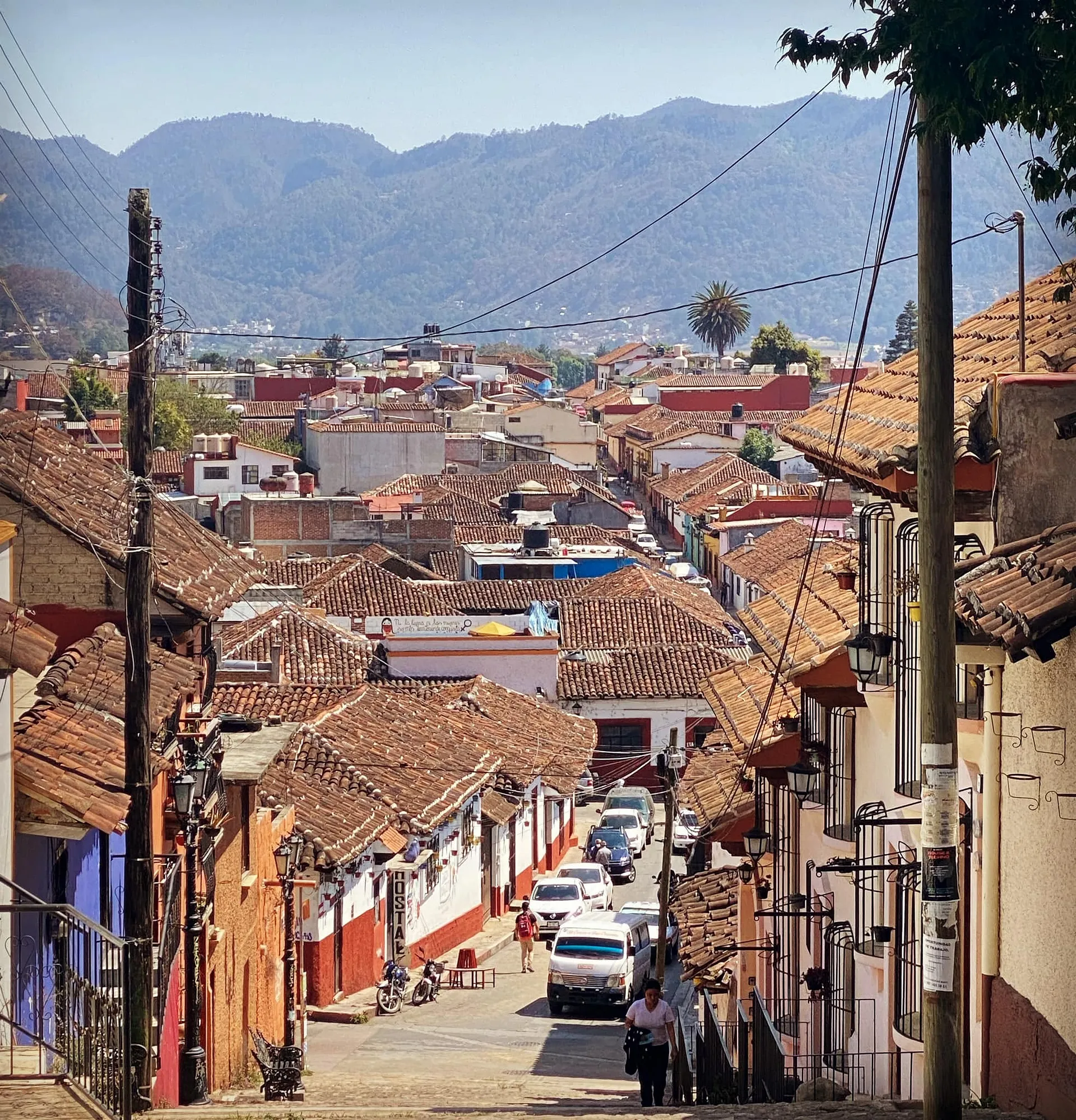
I came to San Cris, a town in the central highlands of Chiapas, with no real purpose. Seduced by its candy-colored murals, I was completely ignorant of their message and its soul—a ghost of the Zapatista uprising born from the battle in 1994. And like many tourists, I was equally blind to the living, breathing chokehold the cartel had under its red-tiled rooftops. But that’s another story.
Fast-forward a month, and the plan—if you could call it that—for my day off was hatched over a coffee and a sticky table in the hostel. What can I say? My bucket list was and still is heavily influenced by Atlas Obscura, Anthony Bourdain, and the Swedish “shaman” with a kuripe pipe in my hostel.
His instructions were simple:
“If you want to see the real Chiapas,” he said, his voice a low rumble, “not the postcard, but the nerve, you should get out to the Zapatistas.
It’s pretty easy; you just have to head outta town a bit, past the main drag in the direction of Mercado Viejo. Keep that market on your right and walk until you hit the dirt road with all the taxis and colectivos. Then just start yelling “Oventicccccc!” and someone will eventually give you a ride there. Take your passport too.
Your Spanish is decent, right?”
Wrong. But off I trotted, excited to add “Met the Zapatistas” to my weekly family check-in on WhatsApp. I had low expectations; the week before, I visited a sacrificial chicken church and still couldn’t look at Coca-Cola the same.
I had hoped, at least, that the woman I met in the market would be happy I’d made the effort. Weeks earlier, I’d found myself at her stall, a riot of woven colors against the stone street. Among the textiles were black balaclavas, each bearing the letters EZLN. When my curious gaze lingered, she didn’t miss a beat.
The scratchy wool was flung over my head, and, before I could even register the letters, her fingers yanked the mask down, poking and prodding at the hole near my eyes. I wasn’t going to just observe the symbol; nope, I was going to inhabit it. Stepping back, she gave a satisfied nod, grabbed my camera, and snapped a picture of my now-anonymous, flabbergasted face.
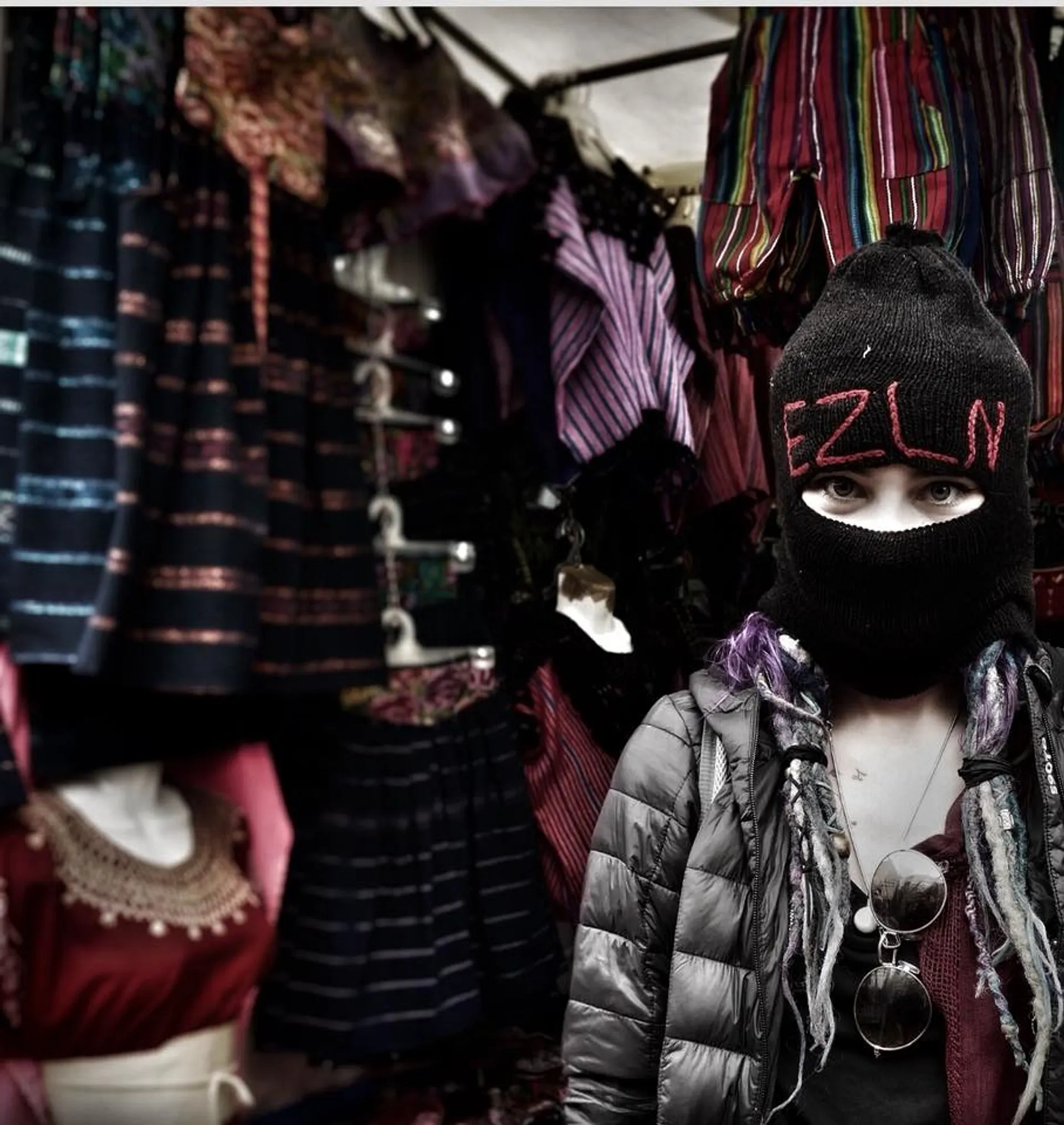
Then, with the swift practicality of any good merchant, she held out her hand.
“Cien pesos,” she said sternly, “for the mask… Y otro veinte,” she added, a glint in her eye. “For the photo.”
I fumbled in my purse briefly before handing over the cash.
The memory of that borrowed face flickered back to me now as I stood under the blazing sun of a dusty backroad. With my passport safely tucked in my bra and embarrassingly little Spanish, I mimed my way into a dinged-up taxi. Thirty minutes later, we were speeding into the Lacandón jungle.
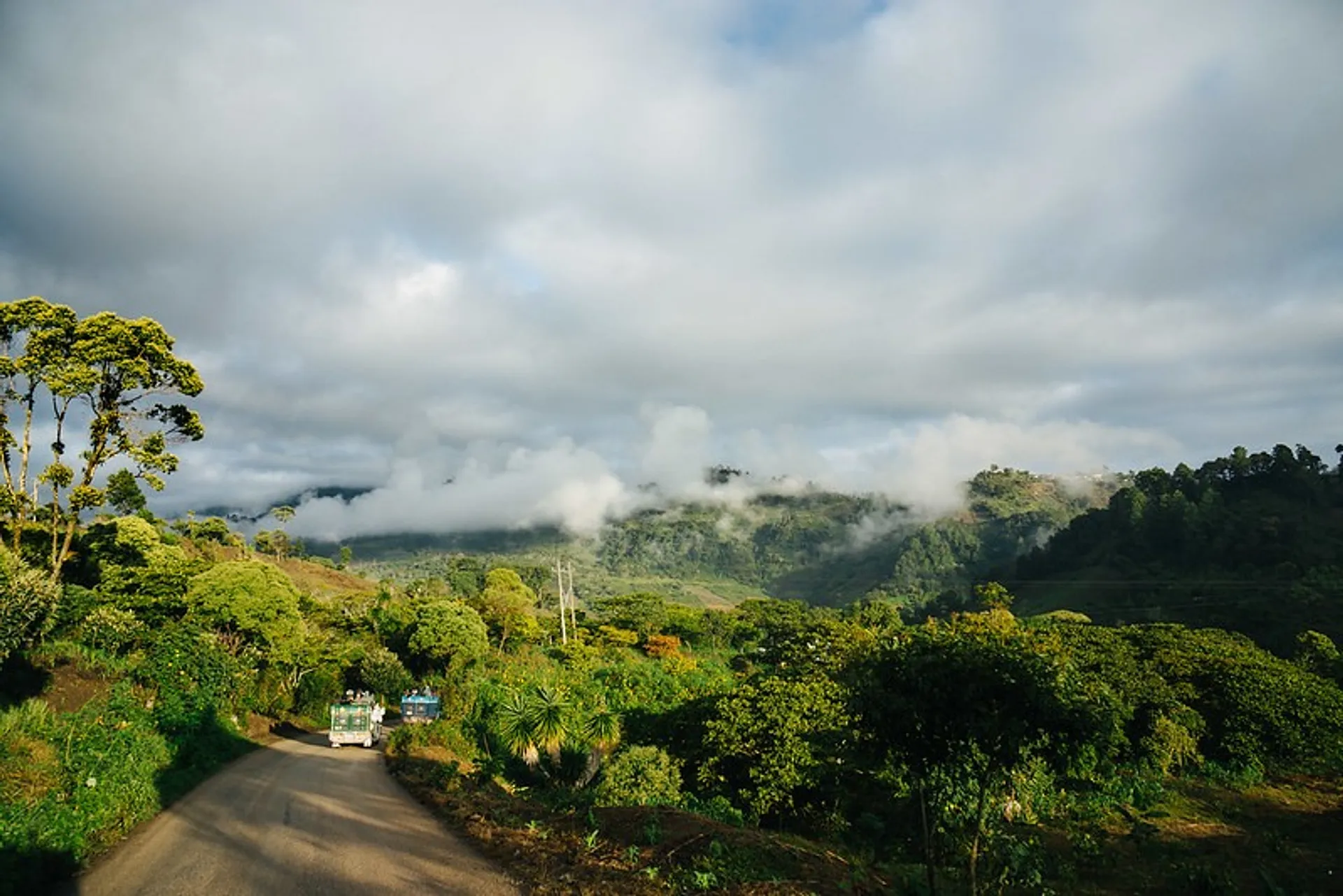
The air was hot and wet. I gazed out my window past the whip of cornfields and banana plants, my mind lost in thought.
An hour into the journey, something shifted. My taxi driver’s eyes caught mine in the rearview mirror. His eyes darted back to the road, and by the time we had reached a sign in Spanish marking our arrival, he was sitting bolt upright.
“Estás en territorio zapatista en rebeldía. Aquí el pueblo manda y el gobierno obedece.”
Translation: “You are in Zapatista rebel territory: here, the people rule and the government obeys.”
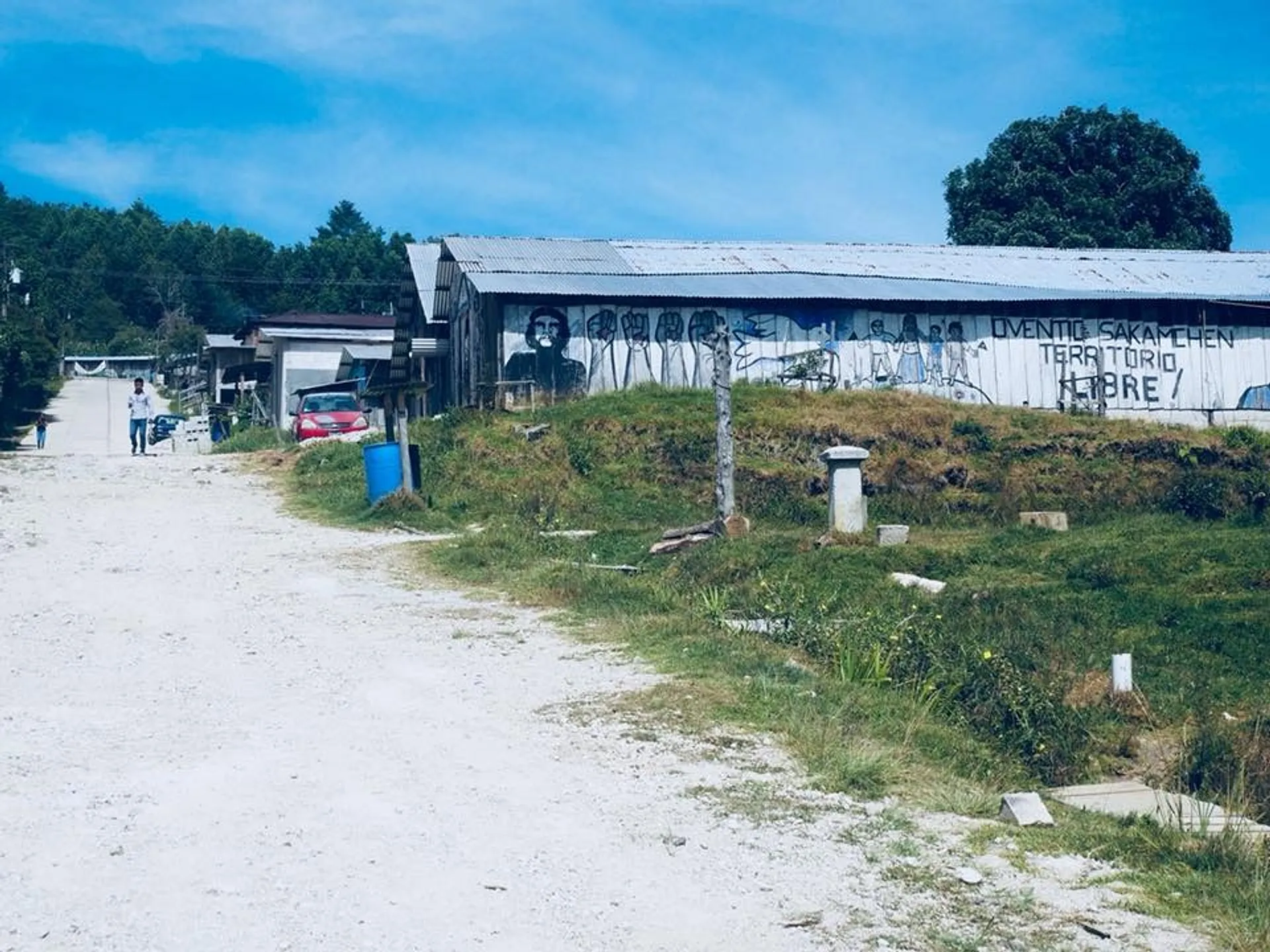
The Zapatistas, in case you didn’t know, are an Indigenous-led political movement that rose up in 1994, the same day that the North American Free Trade Agreement came into force. They declared war not just on the Mexican state but on the greater system that had quietly erased them for centuries.
Operating under the name EZLN, they carved out autonomous territories across the highlands of Chiapas, governing themselves through community assemblies, rotating councils, and a deliberate refusal of conventional power. No presidents. No campaigns. No promises. Just collective decision-making, an emphasis on holistic education, healthcare, and land organized from below, whether the Mexican government liked it or not.
We roll to a stop outside the checkpoint, not a soul in sight. The driver twists his shoulder over the tattered leather seats and gives me the universal look for “Pay me and get out.”
And before it dawned on me that I had only arranged this cushy ride one-way, his tires were spitting gravel back in my face, the sound of his engine dissolving into the green. It was just me and the closed wooden gate.
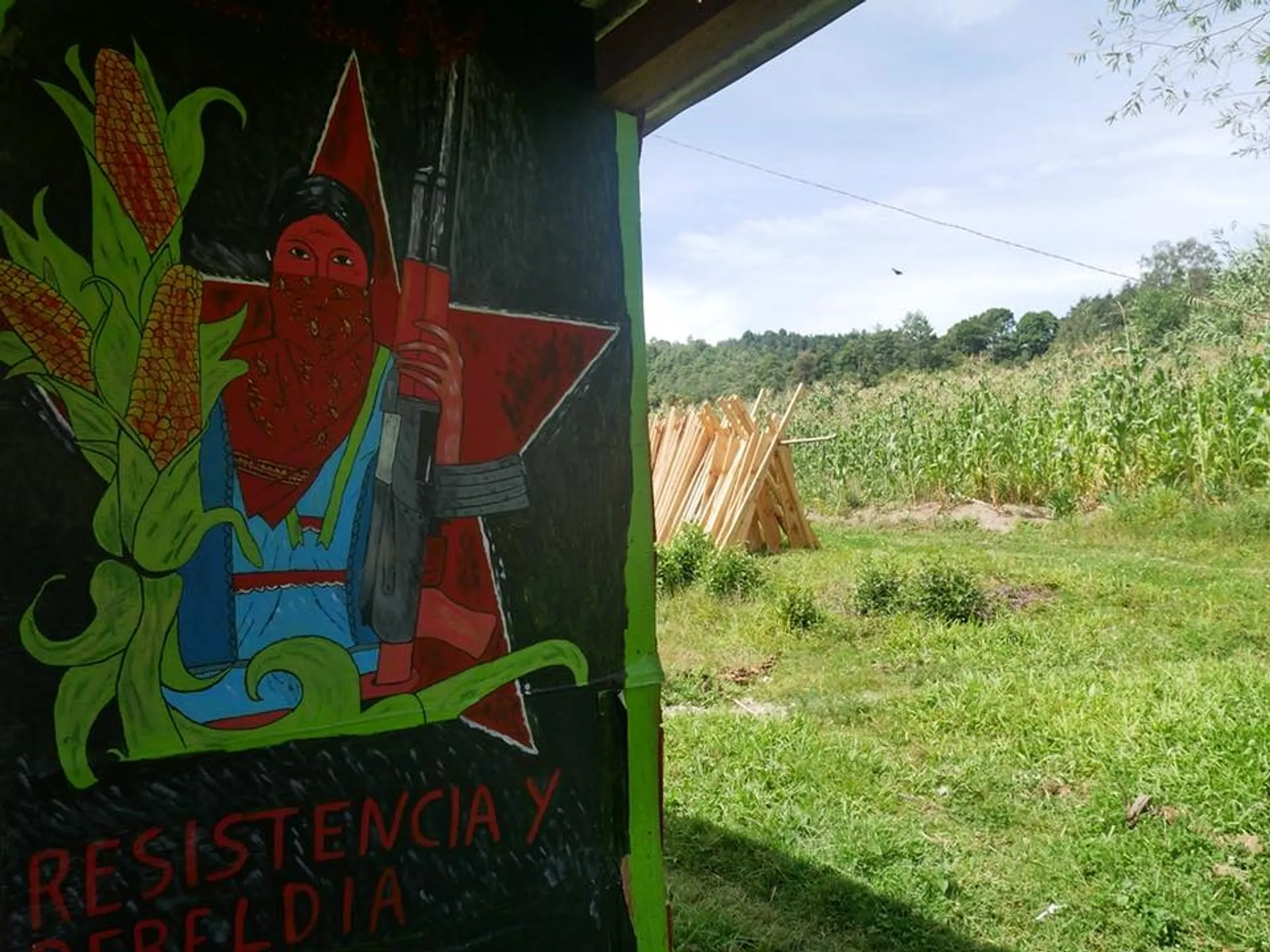
I muster up the courage to knock loudly. Seconds later, the gate opens, and two figures in black ski masks appear. One masked guard moves toward me, his eyes sharp and intense behind the mask. He jerks his chin and says, “identificación.” I reach for my ID and hand it over. We inspect each other. He flips through my passport, and I take stock of the rifles casually slung over their shoulders.
My internal monologue pipes up: “This is where that famed intuition of yours led you, hardy har har!”
“A qué te dedicas?” the rebel grumbles. “Shit,” says the voice in my head, mentally flipping through the Practice Makes Perfect textbook that I bought last week. “What’s he saying?” I stare blankly back at him, searching for answers in the sluggish heat.
"¿Cuál es tu trabajo?" He slows it down like I’m five. Or an idiot. Hard to tell which. But at least I know he's asking about what I do for work.
“Oh! Soy dentista!”
Pause. Flash teeth. Smile.
Working in exchange for cat cuddles and selling crystals on Etsy wasn’t on last week’s one-page vocabulary list. You know, the one with lawyer, policeman, politician. None of those felt wise to declare while maintaining eye contact with his gun. Dentist it was.
“Mm,” he says. His mouth tightens, and his eyes slide sideways to the other guard. He takes my passport and turns on his heel. The other guard follows, and they disappear behind the gate, leaving me on the wrong side of silence with nothing but the echo of my own explanation hanging in the air.
The next twenty minutes stretch themselves thin. Sitting on the curb, I take stock. No passport, no cell service, no ride back. Fantastic. At least the faux-shamanic Swede knew where I’d gone—if he wasn’t hitching his way to Tulum already.
My gaze settles on the wooden shack opposite, its loose tin roof rattling in the gentle breeze. Not a lick of pine unmarked by revolutionary graffiti.
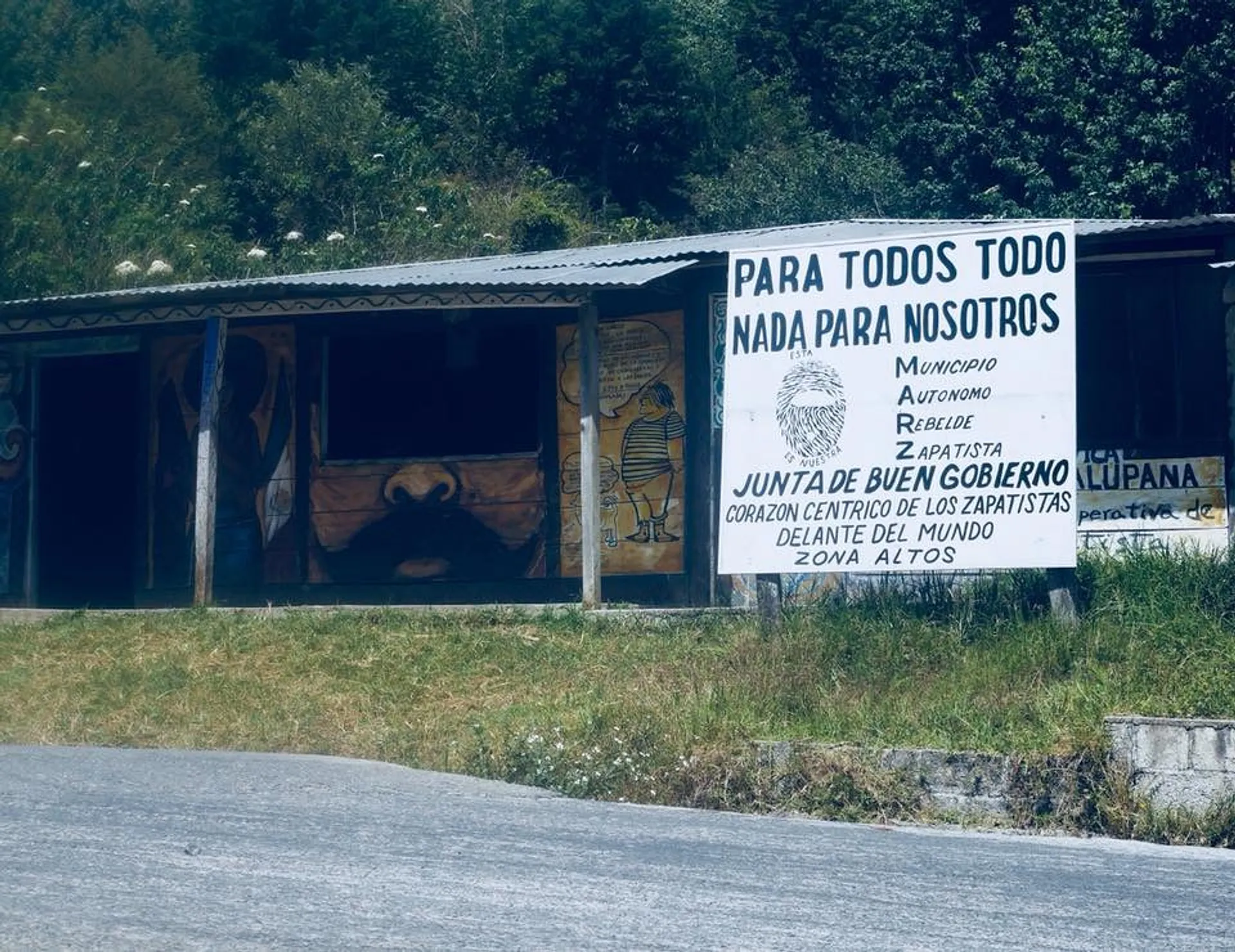
A thick, defiant, giant mustache dominates the wall, shrinking even the solemn Mexican flag. Emiliano Zapata’s unmistakably.
“Everything for everyone, nothing for ourselves. Autonomous Rebel Zapatista Municipality.
Good Government Council, the central heart of the Zapatistas before the world. Highlands Zone.”
Finally, the guards emerge once more, beckoning me over. “No preguntas,” he says, warning me not to ask any questions.
My “tour” was about to begin.
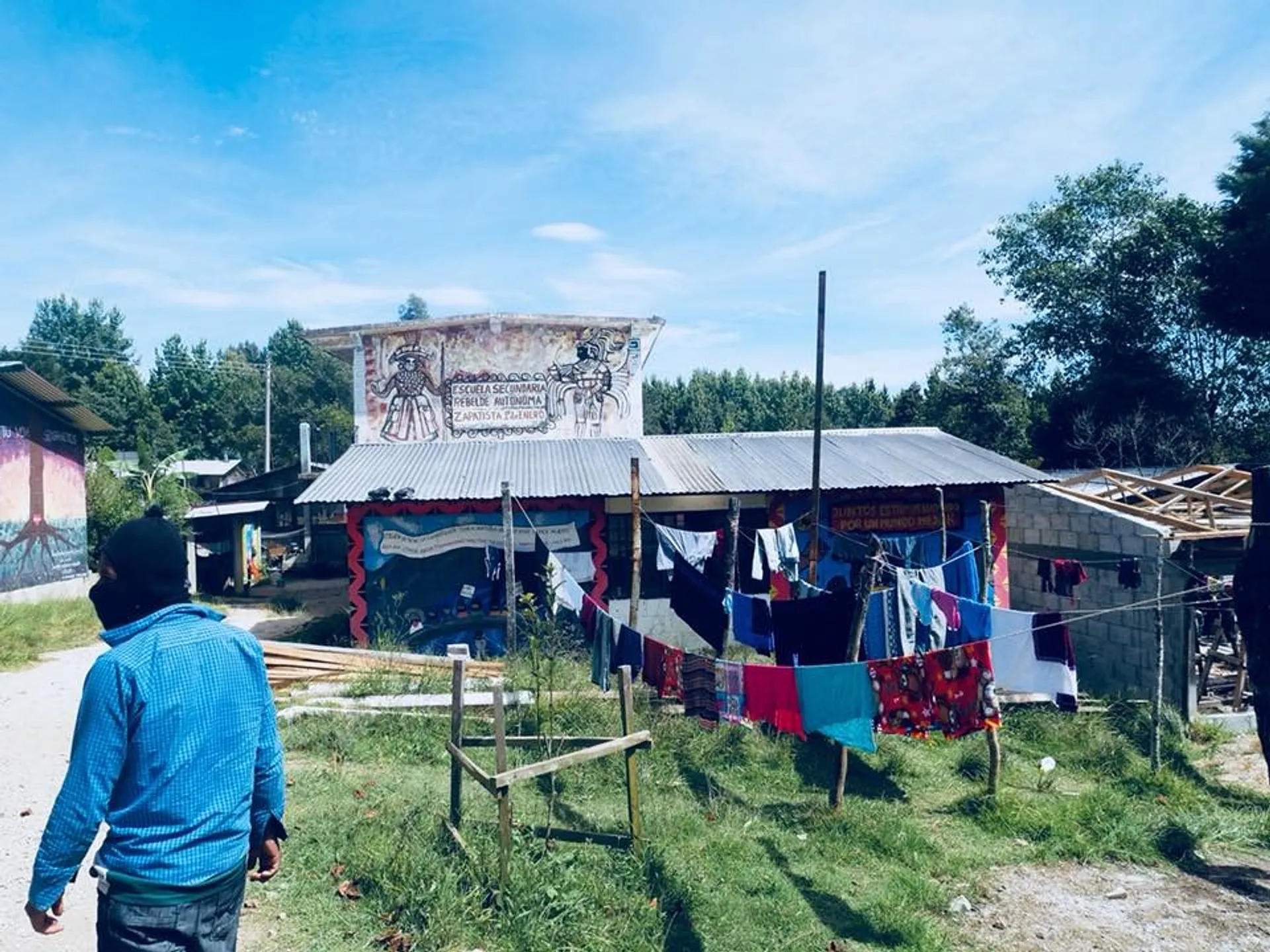
I wish I could tell you that I walked away with heaps of knowledge. That this clueless backpacker was now uber-informed and could tell you with certainty about their de facto self-governing communities.
Or about their parallel systems of governance, education, and healthcare built deliberately outside the Mexican state. About the caracoles, the Good Government Councils, and the way authority rotates so no one clings to it for too long.
But with the invitation to enter into buildings or to ask questions revoked, I left with more questions (and photographs) than answers. Research has since allowed me to fill in some of those gaps to accompany the photographs:
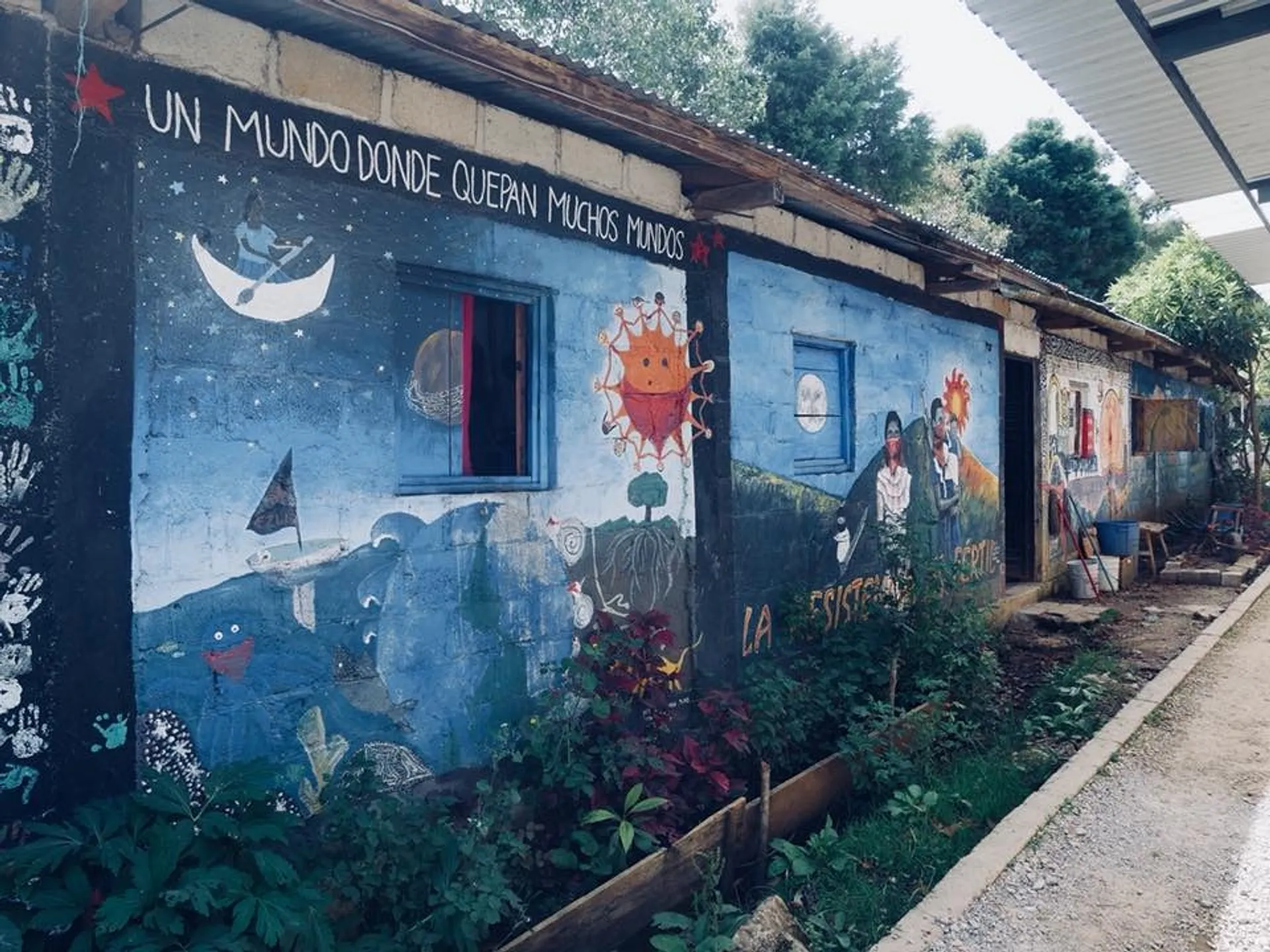
"A world where many worlds fit.”
The community is the classroom: Zapatista education was democratically formed in 2001 when indigenous communities withdrew their children from Mexico’s official school system due to racism, violence, and suppression of indigenous language and identity. In response, they built an autonomous community-run system known as “True Education”.
Here education focuses on blending the original curriculum with indigenous history, environmental care, and prioritization of social justice over individualism. Central to this is gender equality, as students learn about women’s rights and autonomy, enabling girls to challenge early marriages and take on leadership roles within their community.
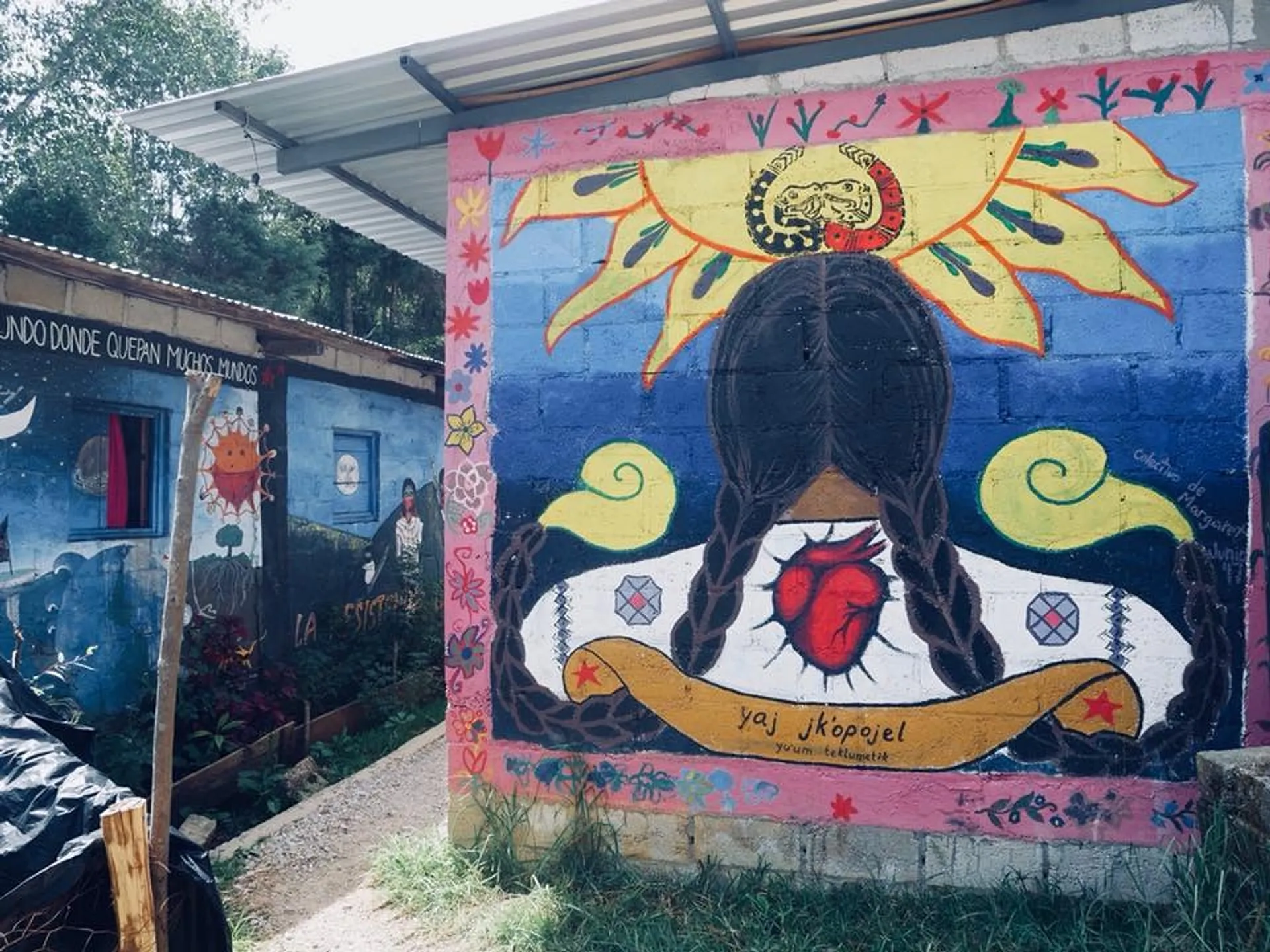
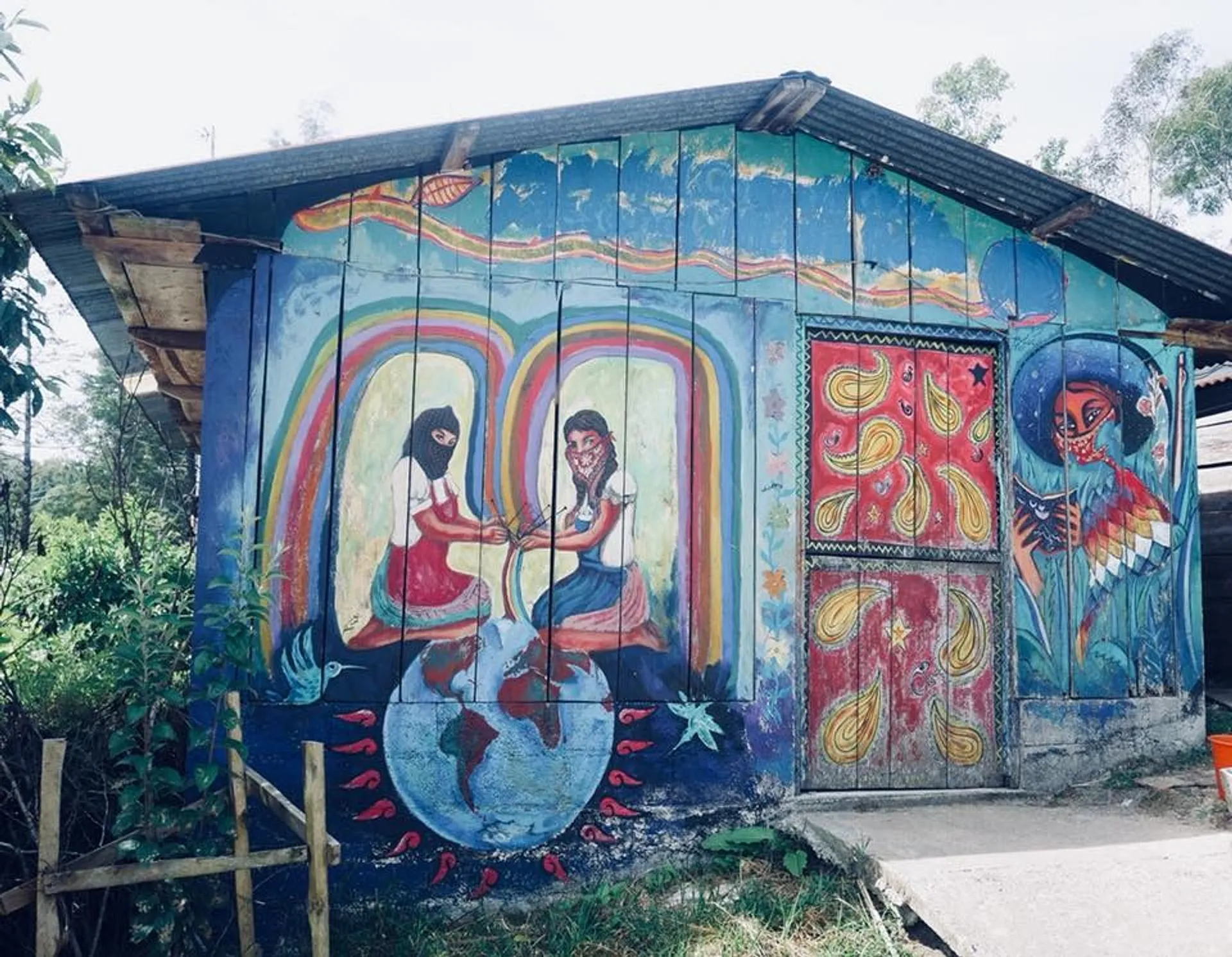
One mural stopped me longer than the others. The back of an Indigenous woman filled the wall, her braids thick and her face withheld—deliberately, no doubt. A vibrant heart pulsing against the white fabric of her blouse, not romantic but rebellious. Above her, a sun unfurling around a serpent, a clear echo of Mesoamerican cosmology so old it predates the nation-state entirely.
“Yaj jk’opojel,” words in Tzotzil, a Mayan language spoken widely in this area of Mexico, meaning “collective dignity.” No rifles or slogans shouted at you. Just a reminder that this rebellion at its core is about survival, history, and who gets to define both.
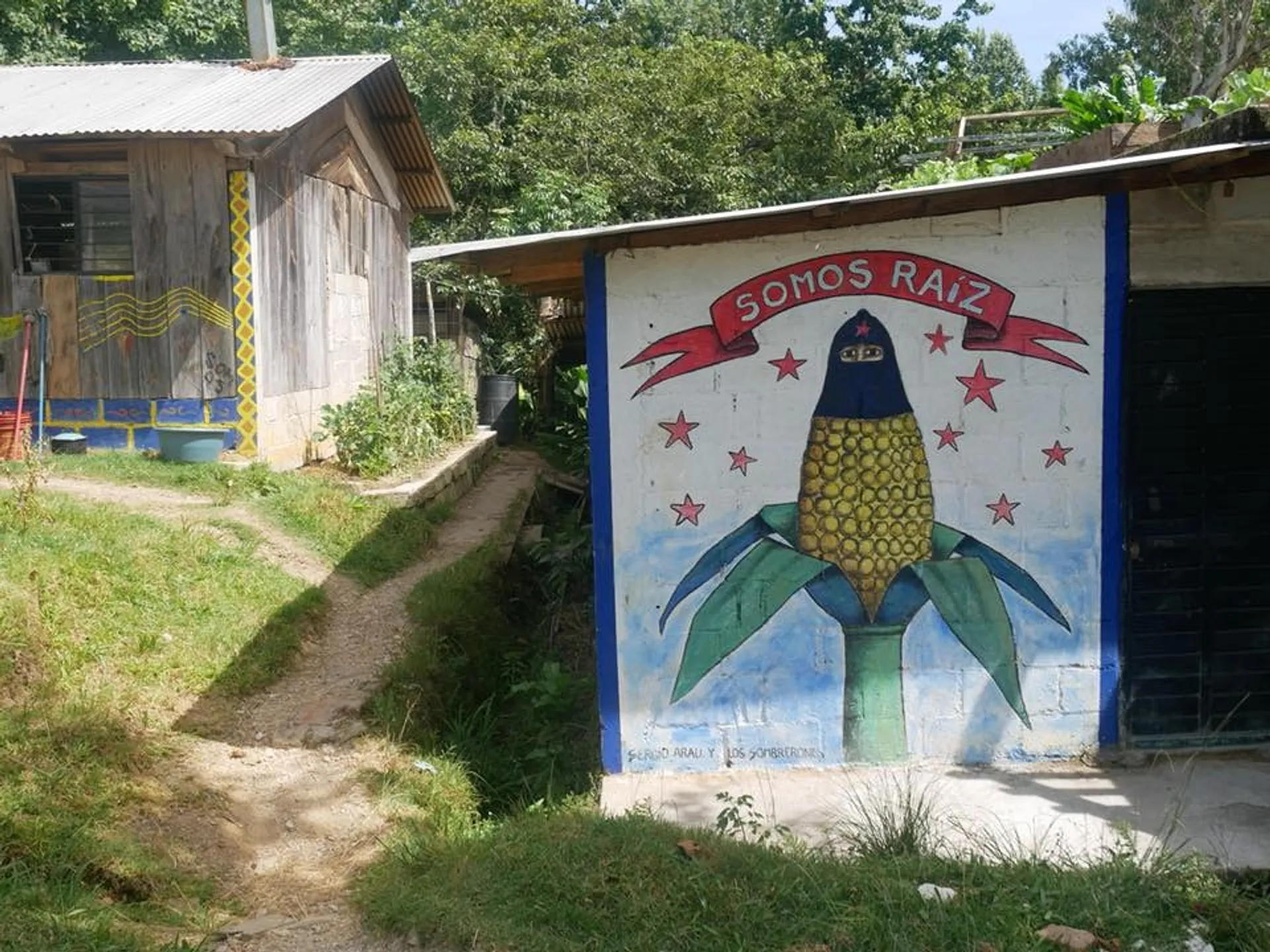
Reducing everything to a single sentence. “Somos Raiz”, “We are the root”. Not the seed, not the harvest, but the root. When pulled, the land collapses.
This reminded me of a conversation I had with a local a few days before. He told me that mythologically, many Mexicans believed people to be made from corn. The story went that the Aztec gods mixed corn with their own blood to create humans. “We eat it, but we are it. It’s what makes us who we are.”
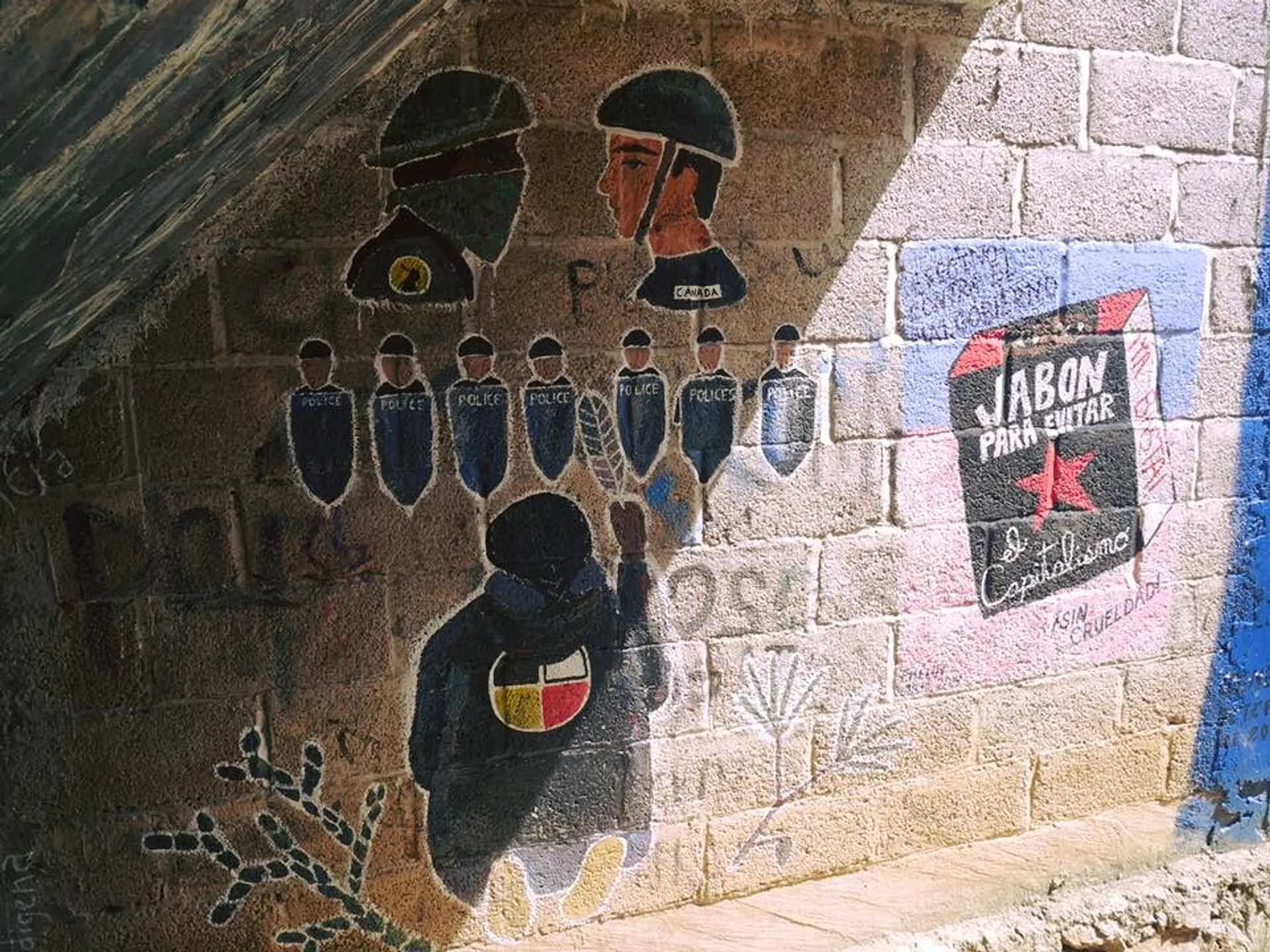
Another mural packing a punch. There’s no ambiguity here. A lone figure standing defiantly in front of a wall of riot police, their shields multiplying into a single force. Above them hover helmeted profiles, one marked “Canadá,” stretching the blame to foreign governments and extractive industries far beyond Chiapas.
I notice the medicine wheel on the figure’s chest, holding its ground against batons and body armor. To the side, a verdict is written plainly: “Soap to cleanse capitalism. Effective against the government… and thus, cruelty.”
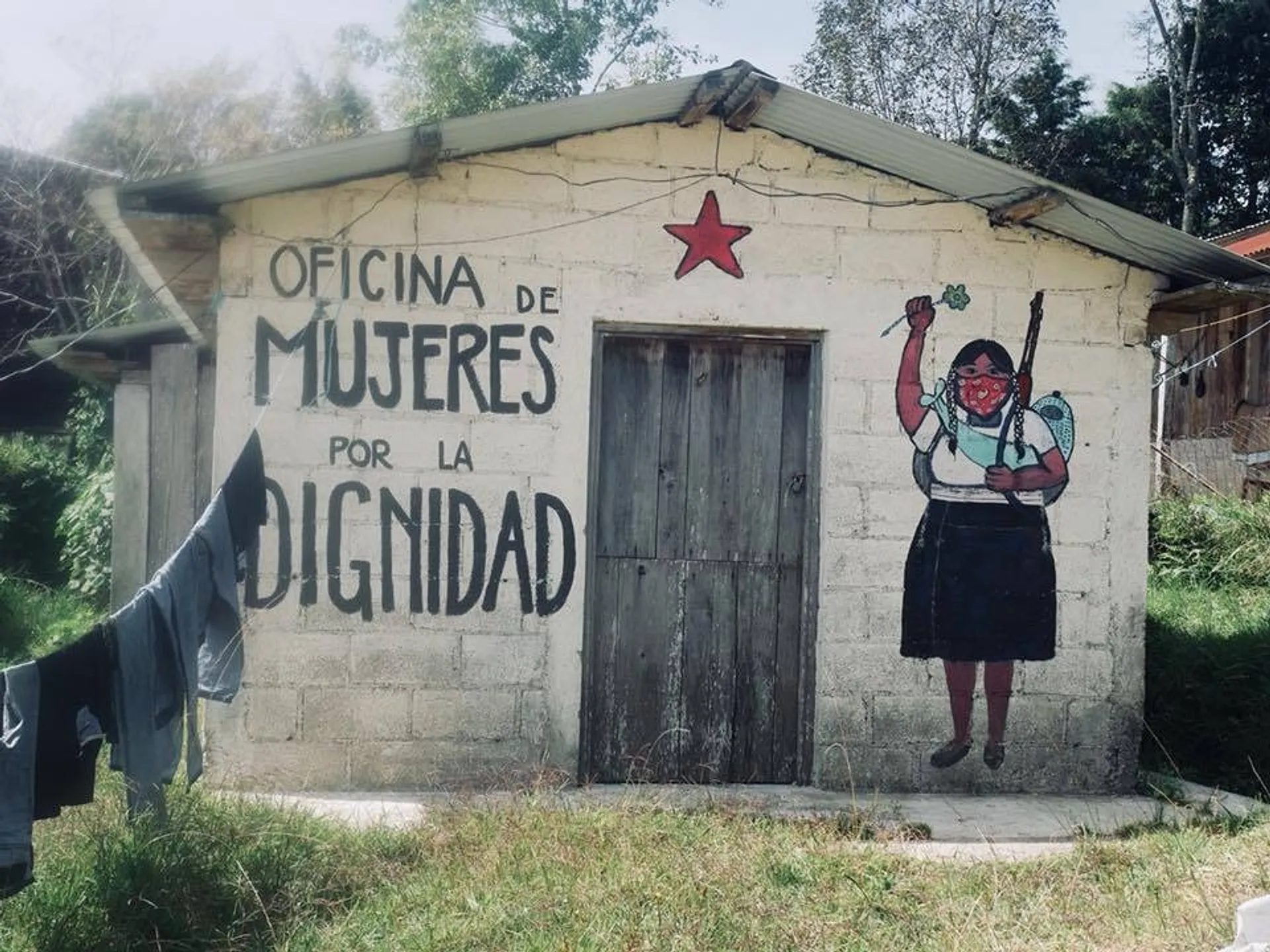
“The office of women for dignity.” Here, women lead workshops and coordinate programs to improve literacy and economic skills. Sessions on women’s reproductive rights and strengthening solidarity networks happen underneath this tin roof.
During the rebellion in 1994, women played a crucial role both on the front lines and behind the scenes. They fought alongside men, organized logistics, and shaped the movement's vision of gender equality.
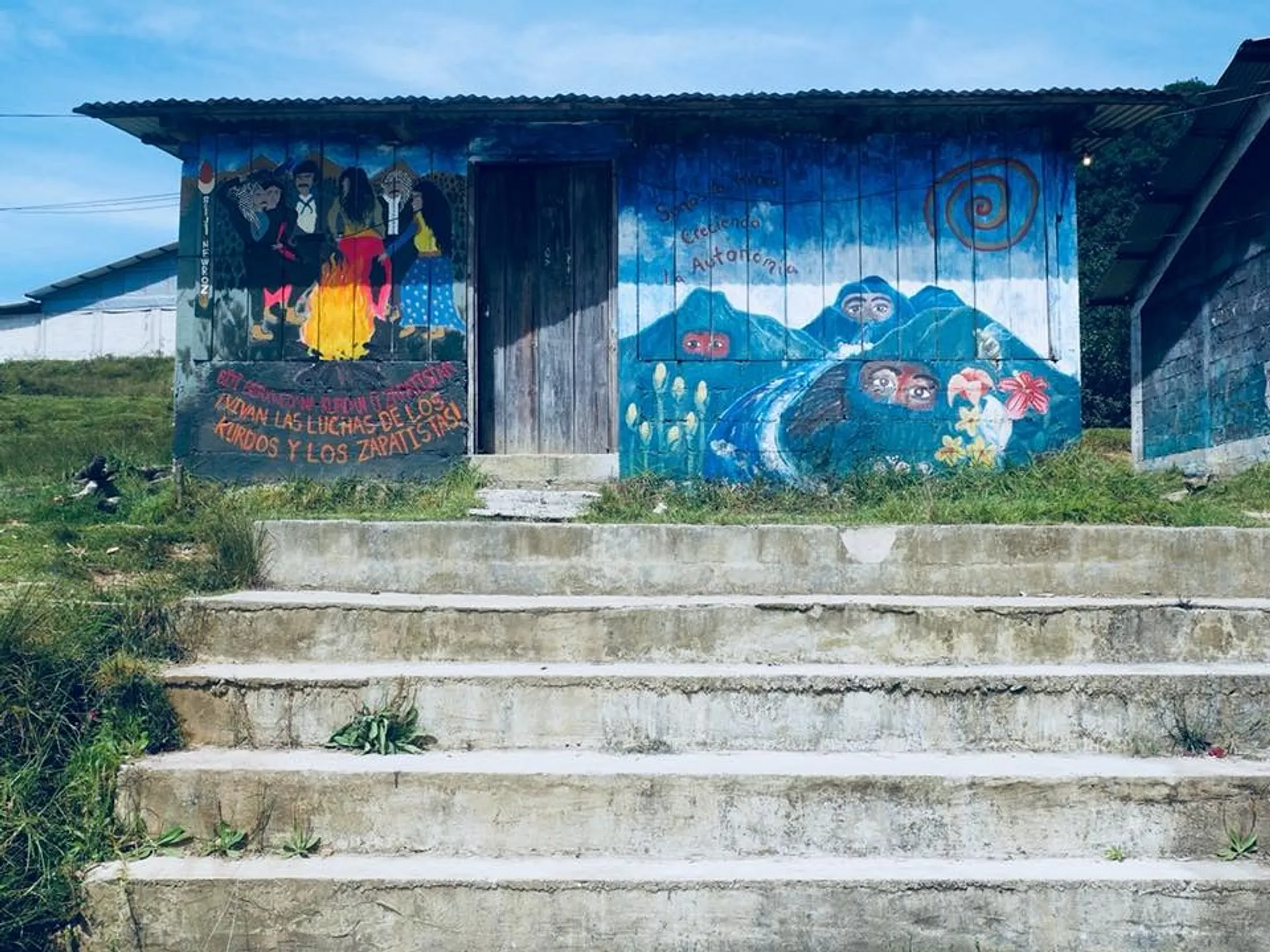
“Long live the struggles of the Kurds and the Zapatistas”
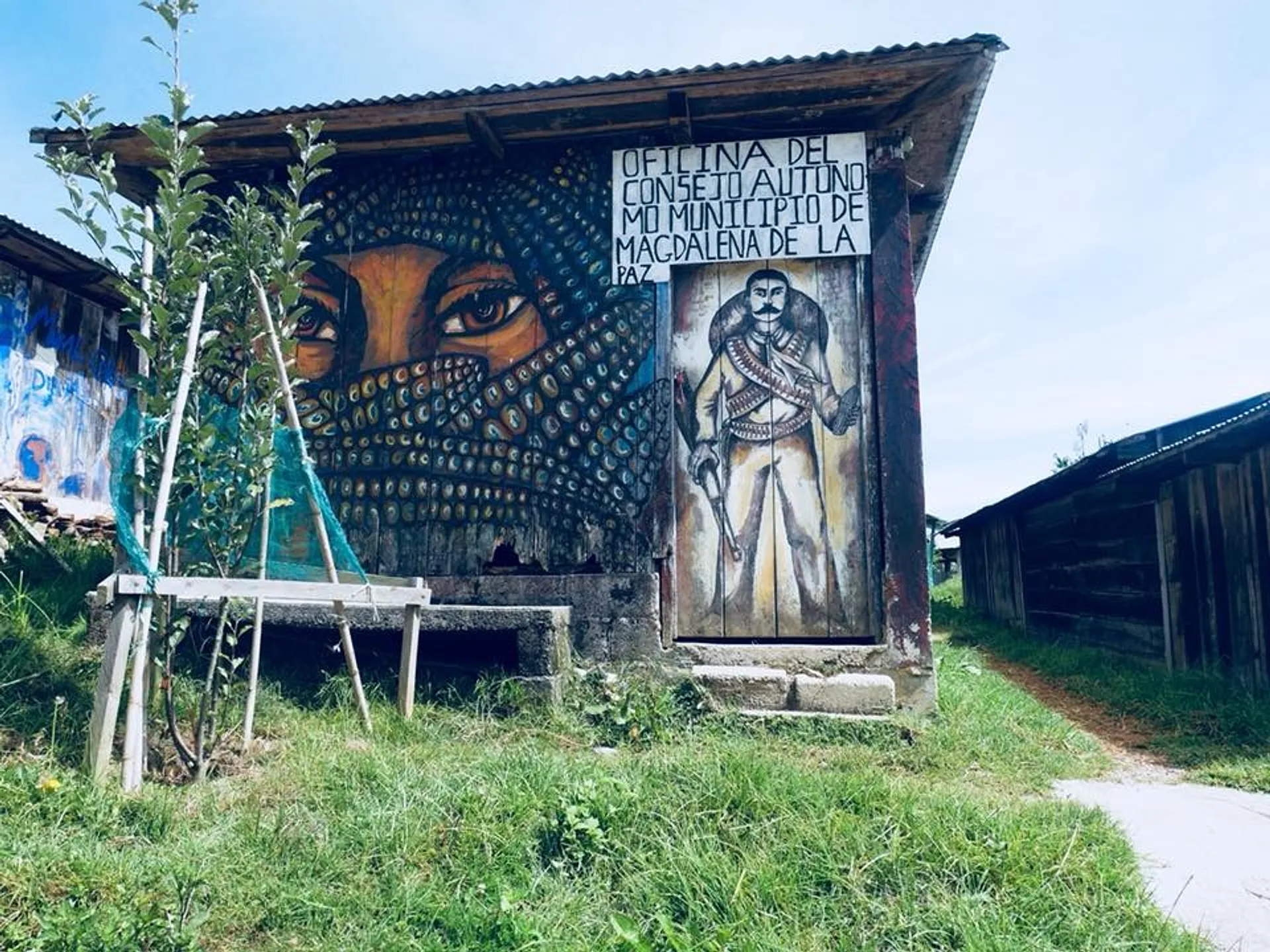
“Office of the autonomous municipality of Magdalena de la Paz.” The administrative and political center of this specific self-governing Zapatista community in Chiapas (in which there are 12 regional centers and 55 municipalities). Inside, discussions on community governance, resource management, and social programs all happen under the watchful eye of Emiliano Zapata.
After snapping the last picture of the murals, my mute comrade leads me to the entrance, waving to go through one building on the way out. “Finally,” I thought, “I get to see inside!”
It was a gift shop. Revolutionary posters and balaclavas. CDs and magnets. All splayed out on a long, rickety table in front of me. I couldn’t help but smile.
Stepping back out onto the street, I turned to face the door and whispered a quiet “Gracias.” The masked man looked at me for a second, opened his mouth as if to say something, then closed it again, deciding against it, closing the gate shut behind me.
Outside, the sky was beginning to bleed into evening. I walked out onto the dirt road toward a small village, hoping to hitch a ride back to San Cris. But from the corner of my eye, I spy a beat-up blue Toyota tailing me. It pulls up, and two men lean forward from the shadows of bandanas and balaclavas, vehemently shaking their heads. “No. Back.”
I high-tailed it back along the road I came up, the niggling question louder than the cicadas humming in the heat: “What’s down there?”
I had come here seeking another notch in the traveler's belt, a story to tell my family, a glimpse into a life so foreign from my own. But I walked away with more questions than answers: what is power really? And whose power counts?
Sure, the Mexican state doesn’t recognize the Zapatista’s sovereignty. But does it have to? Perhaps they have indeed won—not by seizing power, but by rendering it meaningless to begin with.
Hand raised, thumb out, dust clinging to my shoes, a phrase from the murals circled back.
“Un otro mundo es posible.”
Another world is possible.