The Lycian Way: a Hike to Ruin All Others

Will Stornbrook
Conquered the Camino de Santiago and looking for something more challenging? Or maybe off-peak flights to southern Turkey have caught your eye? Not surprising when the idyllic shores of the Turquoise Coast look so alluring. So pack your boots, don your hardiest hat, and take to one of the world’s finest hikes: the Lycian Way!
Named after the ancient Lycian civilisation, this trail winds over 500 km through the southwest of Turkey, past stunning valleys and immovable ruins.
You might need to save up a whole year's worth of time off work if you intend to undertake the entire 30-day adventure, but you can also split it into sections as you see fit.
Travel Tip: If cheap flights mean you'll be flying to Antalya, you can do this exact same route, just backwards! That is, walking the itinerary in reverse, don’t actually walk backwards…
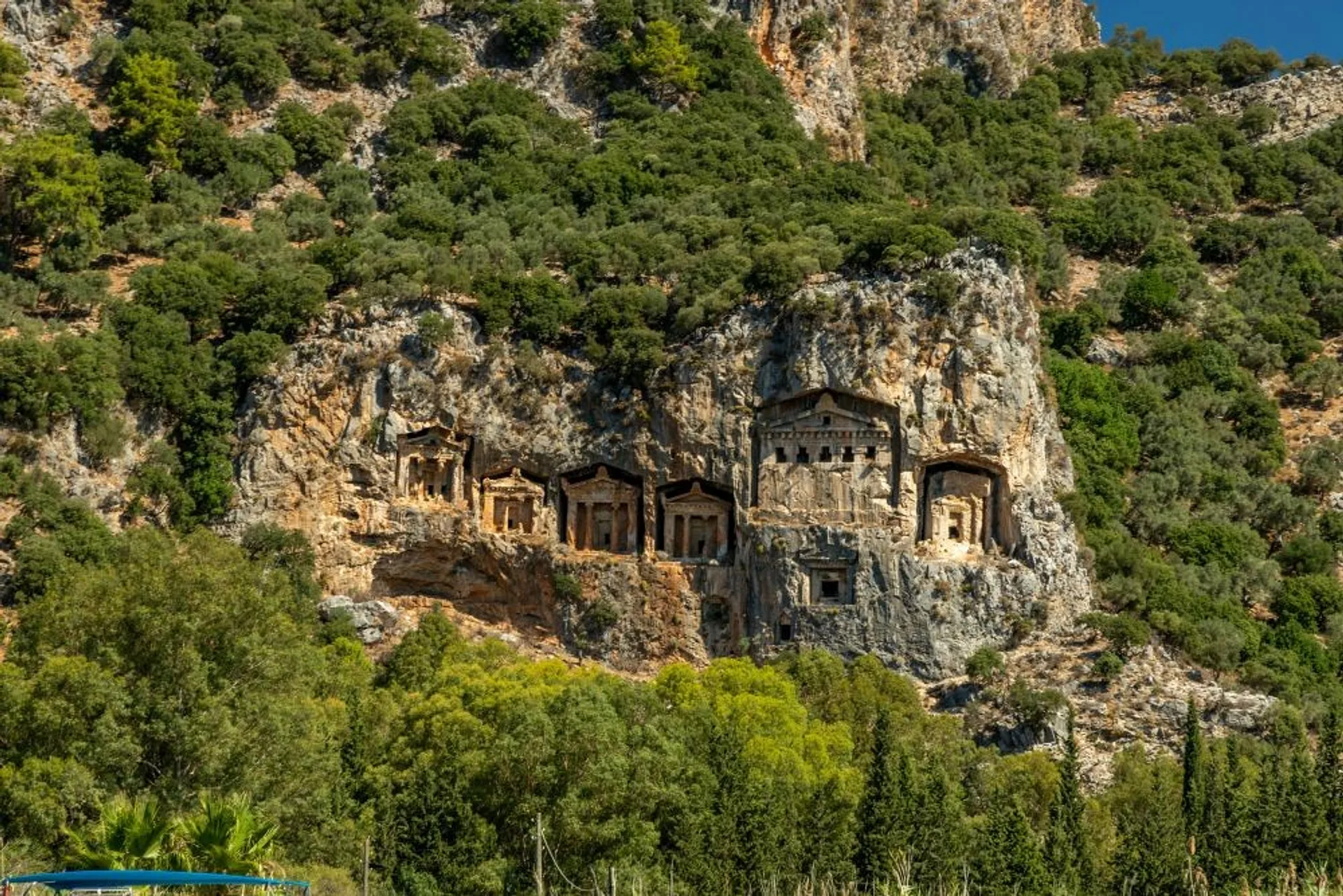
After landing in Dalaman, grab a bus to Fethiye and kick things off with a “light” warm-up walk to admire ancient tombs hewn into the cliff edge. Then grab some grub, and it’s off to bed. You’re going to need all the sleep you can get for the early-morning start.
Snooze the alarm once or twice, and then bolt up, remembering you have to catch a local dolmuş (minibus) to Ovacık in Ölüdeniz. Fill your thermos with some proper Turkish coffee, and then find your way to the trailhead, where your adventure truly begins. Spend approximately 10 seconds stretching before assuredly nodding to yourself that that’s a sufficient amount of stretching.
Then you begin. It's up-up-up you go (bet you're glad you warmed up), winding the ridges of Mount Babadağ and gazing over the jaw-dropping crescent of Ölüdeniz Bay.
The ground flattens out as you wander through the village of Faralya, and as soon as you catch your breath, be prepared for it to be taken away by the magnificent Butterfly Valley, a canyon teeming with views and wildlife (no surprise, but it's mainly butterflies).
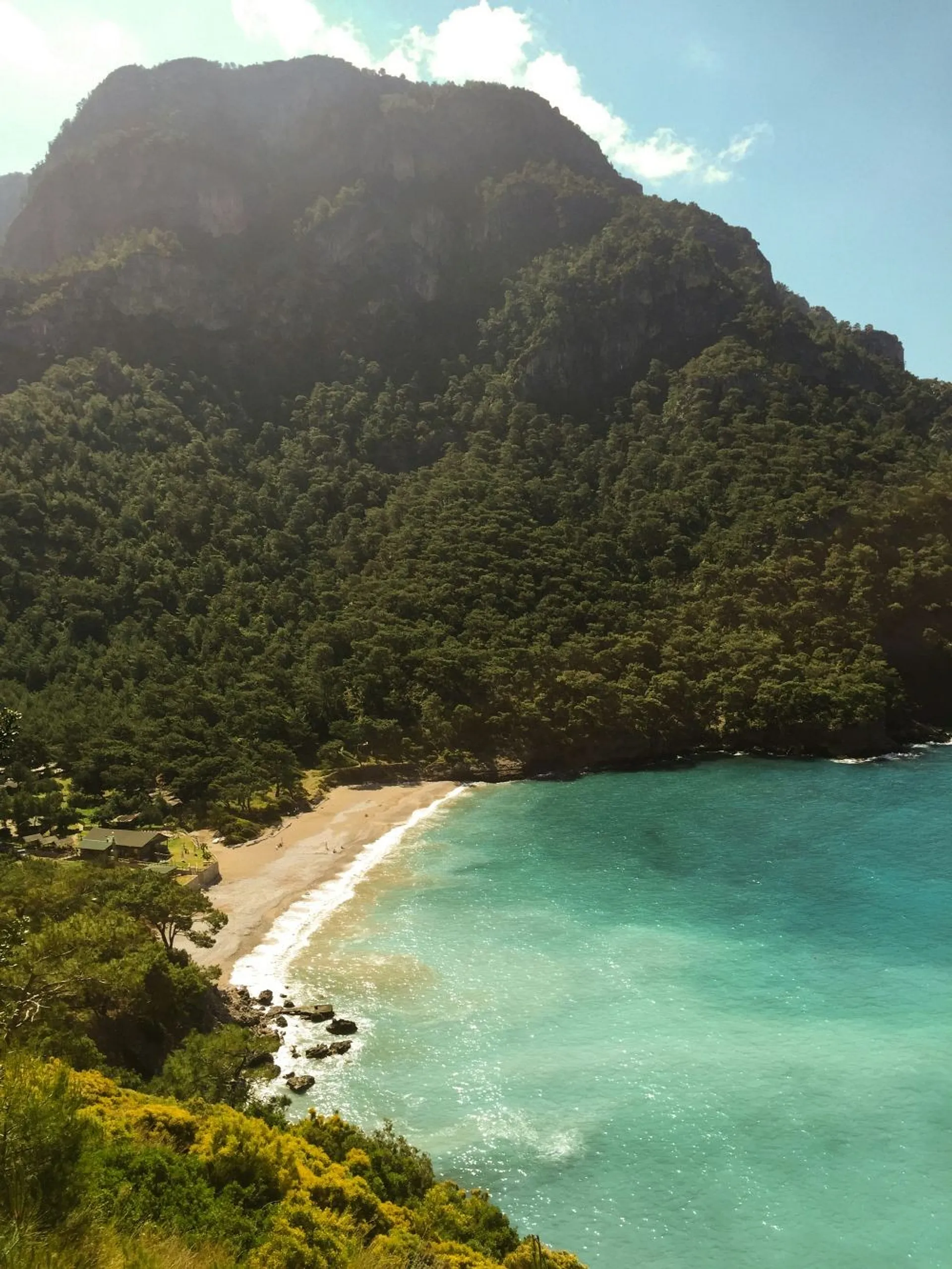
Hugging the Mediterranean Sea, descend through thickets of pine and meadows of beehive (you might even stumble on a local honey shop!) before ending at Kabak Valley, where a rewarding dip is on offer. Rejoin the trail and track the jagged terrain that decorates the Babadağ massif, making your way to Alınca while stopping along the way for a view that will stay with you for the rest of time.
Yediburunlar (or Gey) is your next step (that is, if you managed to resist the enchanting glamping domes in Alınca), and the hamlet provides sweeping landscapes of the Mediterranean Sea, framed by the imposing ridges of the Taurus Mountains. Alternatively, you can choose a different path leading you to Dodurga and the ruins of Sidyma, a member of the Lycian League whose remains of sarcophagi and agoras pepper the surrounding olive groves.
Follow farm and field to the village of Bel for some quiet respite before the rocky descent into Gavurağılı, where you’ll stumble upon the enduring 2nd-century ruins of a Hellenistic fortress at Pydnai.
Haven’t got enough of a history fix? Just you wait…
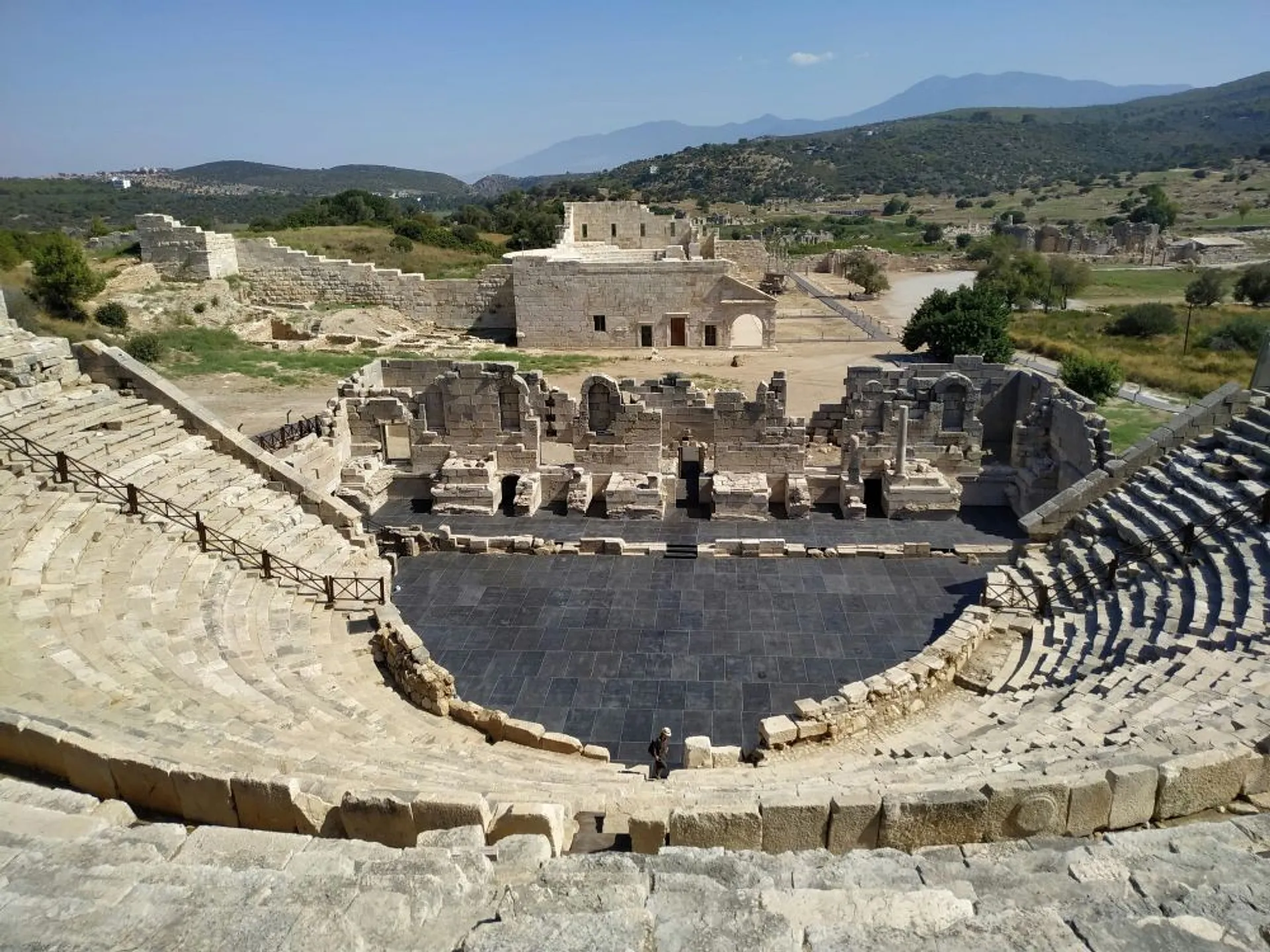
It’s onwards to Letoon, where temples and sacred springs serve as a peaceful spot to put your feet up, followed by the impressive UNESCO Heritage city of Xanthos, brimming with obelisks and mythically decorated tombs. Lastly, you’ll check out Patara’s Roman theatre and the Arch of Modestus before literally walking over the aqueduct of Delikkemer. If that’s a bit too much history for you, though, make a beeline for Patara Beach instead (it’s Turkey’s longest!), where adorable loggerhead turtles nest.
Then it’s along Kalkan, through the charming villages of Gökçeören and Çukurbağ, and passing the striking ruins of Phellos (in case you haven’t guessed it yet, this hike features a lot of ruins). Eventually, you’ll come to Kaş and be greeted by a Hellenistic theatre that gazes out across the vast sea, providing the best seat in the house to watch an unforgettable performance from the setting sun.
Hopefully you haven’t run out of storage on your phone by this point, because your camera roll is about to become inundated with even more photos of sweeping seas as you cosy up to the coastline.
Dotted along this route are the gorgeous bays that lead you to Demre. Along the way you’ll pass Limanağzı, channelling your inner Lara Croft by using ropes to traverse across cliffside tombs; Aperlai, with its shallow offshore ruins; Kaleköy’s towering hilltop fortress; and the gateway to the sunken city of Kekova.
A short (but some might say compulsory) detour as you wander through Demre to the ruins of Myra, highlighted by the Church of St. Nicholas (aka the inspiration for Santa), the iconic rock-cut tombs that tower above, and a well-preserved amphitheatre adorned with terrifying heads of Medusa. Just don’t make eye contact…
Sadly drag yourself away from all the archaeological adventures and make headway towards Finike. This route is notoriously remote and filled with difficult terrain. Once you’ve trekked to the town (or opted to just reach it via dolmuş), you’ll carry on to Karaöz, in what is regarded as one of the least scenic parts of the journey. Maybe it’s better to extend that dolmuş ride…
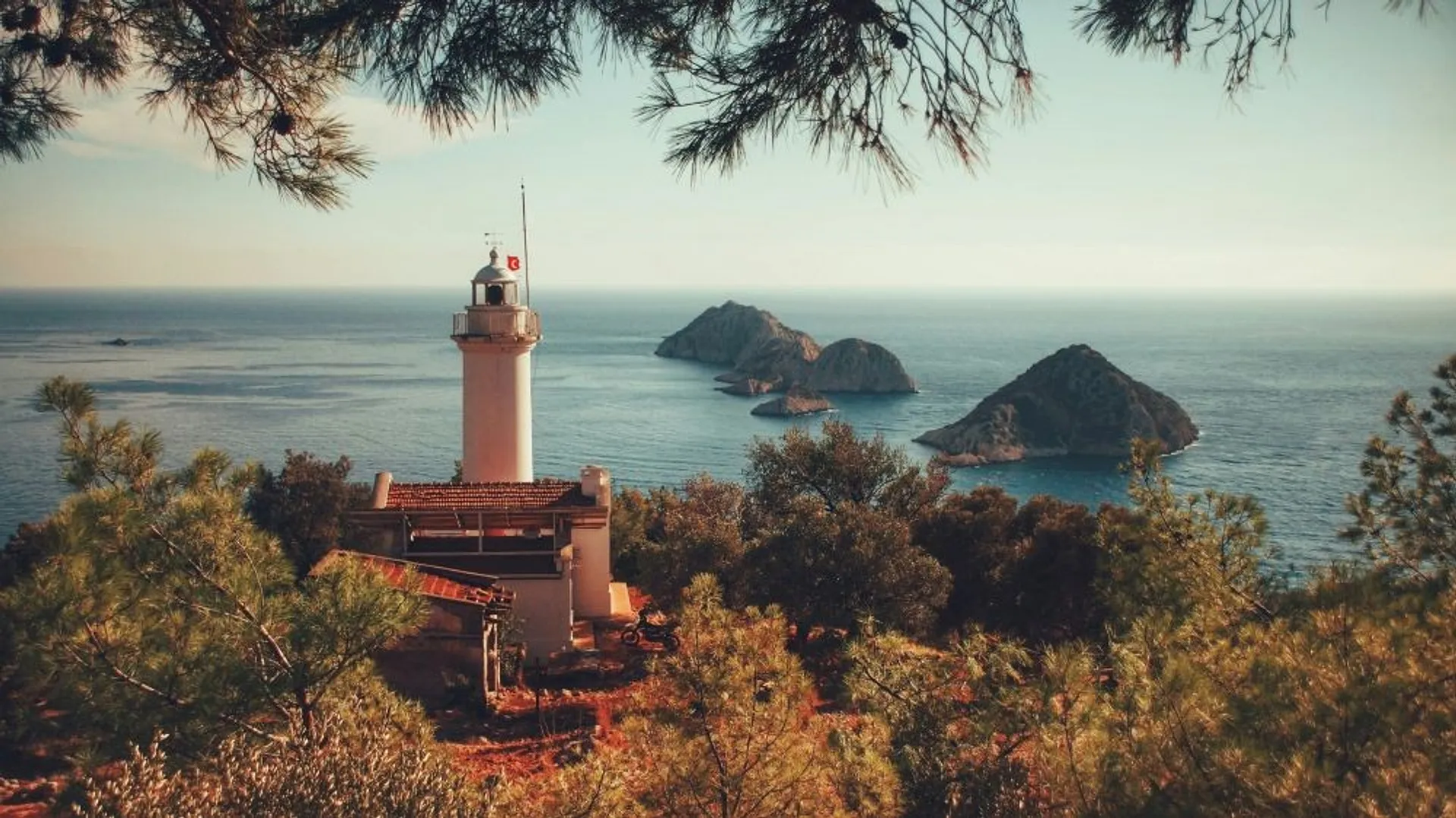
But after Karaöz, things take a complete 180 (the scenery, not your direction of travel), as you’ll be in one of the most spectacular parts of Antalya, heading towards Adrasan. Lying ahead is the secluded Pirate’s Bay cove, picturesque views off the peninsula, and the dramatic Gelidonya Lighthouse perched high above the Mediterranean.
Got room in you for another ruin? The vast ancient city of Olympos, nestled in a valley and dwarfed by Mount Lycian Olympos (Tahtalı Dağı), sits between you and your goal of Çıralı. But if you prefer your ancient history a bit more ‘interactive’, you may fancy rushing ahead to Çıralı and encountering the remains of the wicked Chimera! This fire-breathing beast, named after Mount Chimaera, had the head of a lion, the body of a goat, and a snake-headed tail. It terrorised Lycia until the Greek hero Bellerophon rode the winged Pegasus into battle, and the fearsome foe was slain. Nowadays, only the eternal flames flicker, piercing the rock of the mountainside — best experienced at night with some s’mores to smoke.
You know all those times you’ve been asked if you’re a mountain or beach person? This is what it’s led to: After Çıralı it’s off to Göynük Yayla, with a tricky choice between the rugged mountain route via Beycik or the coastal route via Tekirova. The former is filled with plunging waterfalls, crossing streams, and passing the peak of the indomitable Lycian Olympos, the highest point of the Lycian Way. The latter route is the easier of the two, filled with beaches galore for a refreshing swim, a few more ruins (of course!), and even a Roman stone bridge to cross before taking you back inland.
From Göynük Yayla, you’ll pass Göynük Canyon, abounding with deep gorges, pine forests, high-flying rope bridges, and a zip line or two for the adrenaline junkies. Press on a bit further, reaching Hisarçandır, the original end of the Lycian Way. Before finally, after all the sweat, blood and blisters, you reach Geyikbayırı, the final point of this epic hike! Take it all in. Process the accomplishment. Celebrate with some indulgent baklava and a glass of Anatolian wine. Relax at a hamam.
And then walk alllllll the way back to Dalaman!
Nah, just kidding. Hop on a dolmuş to Antalya and catch a flight home, or a bus to Dalaman for your return flight.
Or if you didn't quite scratch that hiking itch, you could always add on another 500km with the St Paul Trail…
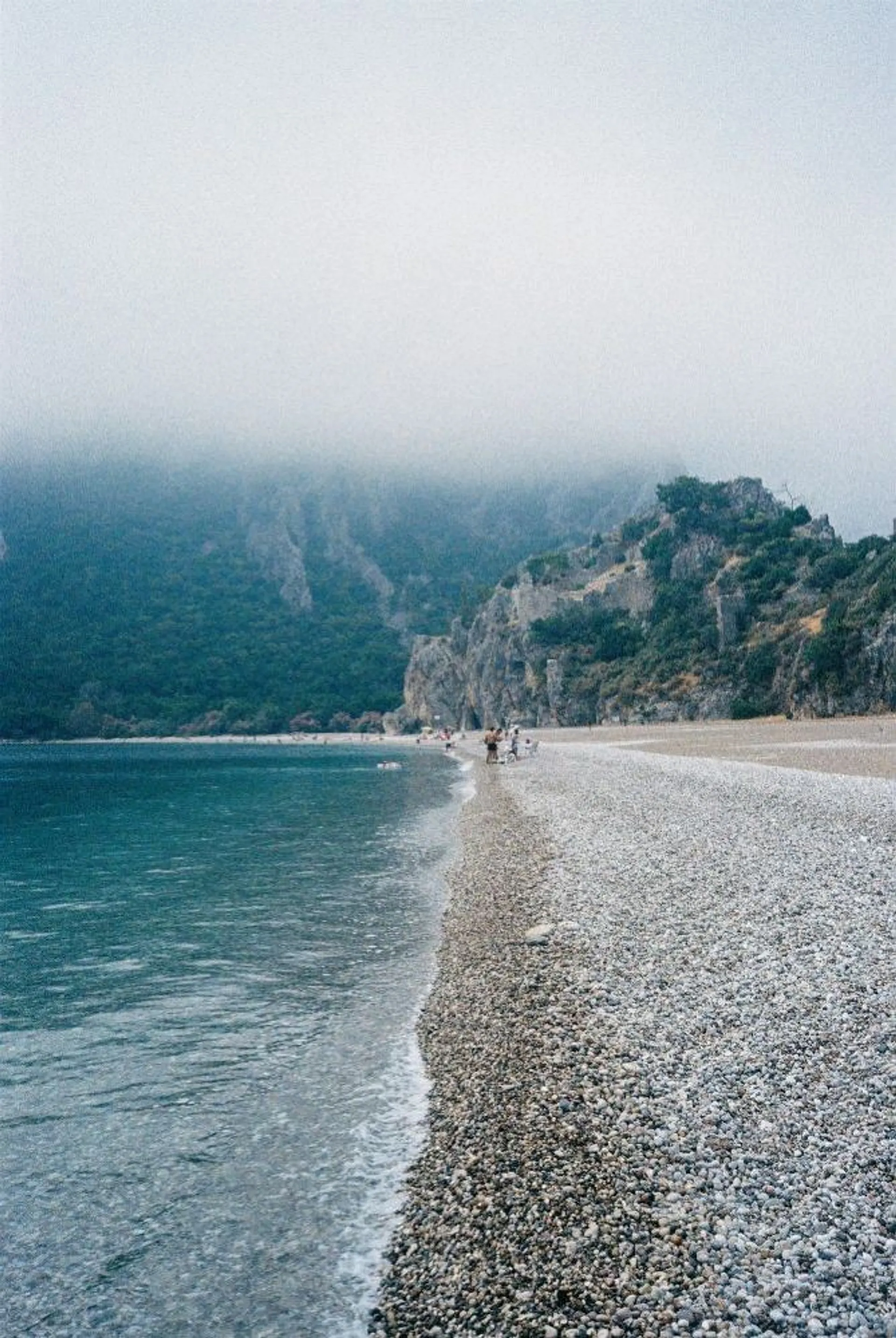
Tips and tricks for hiking the Lycian Way
How long does it take to walk the Lycian Way?
The Lycian Way is a 500 km-long hiking trail through southwest Turkey, and walking the full length will probably take you about a month.
This hike is a behemoth, and one that doesn’t need to be 100% walked to say you’ve done it. Select certain sections, or hop on taxis and buses around more difficult parts. It’s completely up to you.
When is the best time to do the Lycian Way?
The trail can be done year-round, but spring and autumn are considered the best times. Walking in summer can lead to heat exhaustion and dehydration due to areas with little shade and temperatures reaching over 35 degrees Celsius, and winter brings intense rain, snow, shorter days, and fewer shops and accommodation options.
Accommodation on the Lycian Way
Campsites and pansiyons (family-run guesthouses) can be found along the route. You may need to book these in advance and plan your route accordingly.
Money
You’ll need to carry cash for this one. Whether it’s for food, supplies, or stumbling on a pansiyon in case you forgot to pre-book one, card payments aren't always accepted at rural spots along the Lycian Way.
Wildlife
The trail is filled with stunning nature and scenery, and where there's nature, there's also wildlife. You may have chance encounters with wild dogs, pigs, and, although rare, even scorpions. Keep your eyes peeled and take basic precautions.
Other Guides
Check out this handy blog and this dedicated Facebook group for more detailed advice.