
Jack's Festive Facts from Around the World

Katy Maclure
As soon as December arrives, some of the Jack's Navigators kind of lose the plot. In particular, our Member Experience Lead, Jo, gets a little carried away with all the festivities, and this year, she decided to share Christmassy facts from around the world with the team.
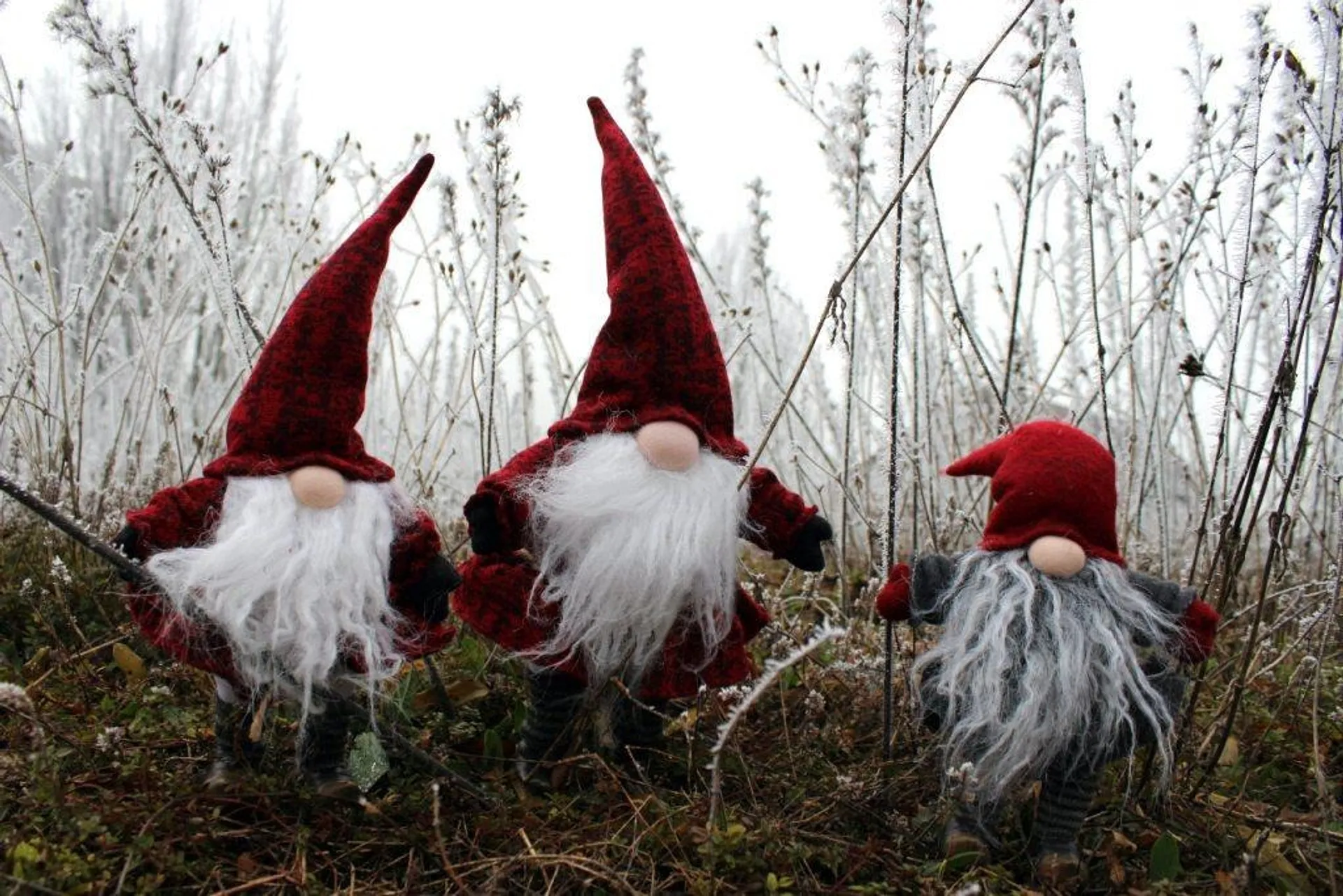
In the spirit of the season of giving, I thought I'd gather all our fave nuggets of seasonal wisdom together in one place to share them with you. And where better to start than with the cute little gonks that have been creeping into Christmas decor in recent years?
The eyeless infiltrators started life in Scandinavia as nisser, small spirits that live in a family’s house or barn and secretly act as their guardian. All would go swimmingly if a nisse felt appreciated - they would protect the family and its animals from evil, and they might even do the farmyard chores.
You don’t want to offend a nisse, though. One too many tea breaks or forgetting to leave out the obligatory bowl of porridge on Christmas Eve is enough to get you in the bad books, and that’s when the pranks start. Tying cows’ tails together and turning objects upside down sounds fairly silly and mostly harmless, but word has it they’d also break things or even attack people.
These days, nisser are considered friendly Christmas spirits who might still pull a few pranks here and there (much more elf on the shelf). They became the bearers of gifts in Denmark in the 1840s, with Sweden and Norway following suit later in the 19th century. The Yule Goat had previously held the reins on Scandi Christmas, but now they occasionally show up to hand out gifts together.
Iceland does things a little differently, of course, with not one but thirteen Jólasveinar, aka Yule Lads, and their rather unorthodox family. The Yule Lads come down from their mountain home one by one on the nights leading up to Christmas to give gifts.
Much like the nisser, their mean and violent tendencies have been softened over the centuries, so now they’re just seen as mischief-makers. Their appearance has also changed with time - the story goes that their mother, Grýla, is a troll, so they used to resemble weirdly proportioned elves, but have been increasingly depicted as human over time.
Icelandic children traditionally leave a shoe on their windowsill each night from 12th December until Christmas Eve in the hopes of getting a gift from the Yule Lads. Naughty kids needn’t bother, however - unless they really want to get a potato (sometimes raw, sometimes rotten). And that’ll certainly be your fate if you forget to leave out a laufabrauð for them, too.
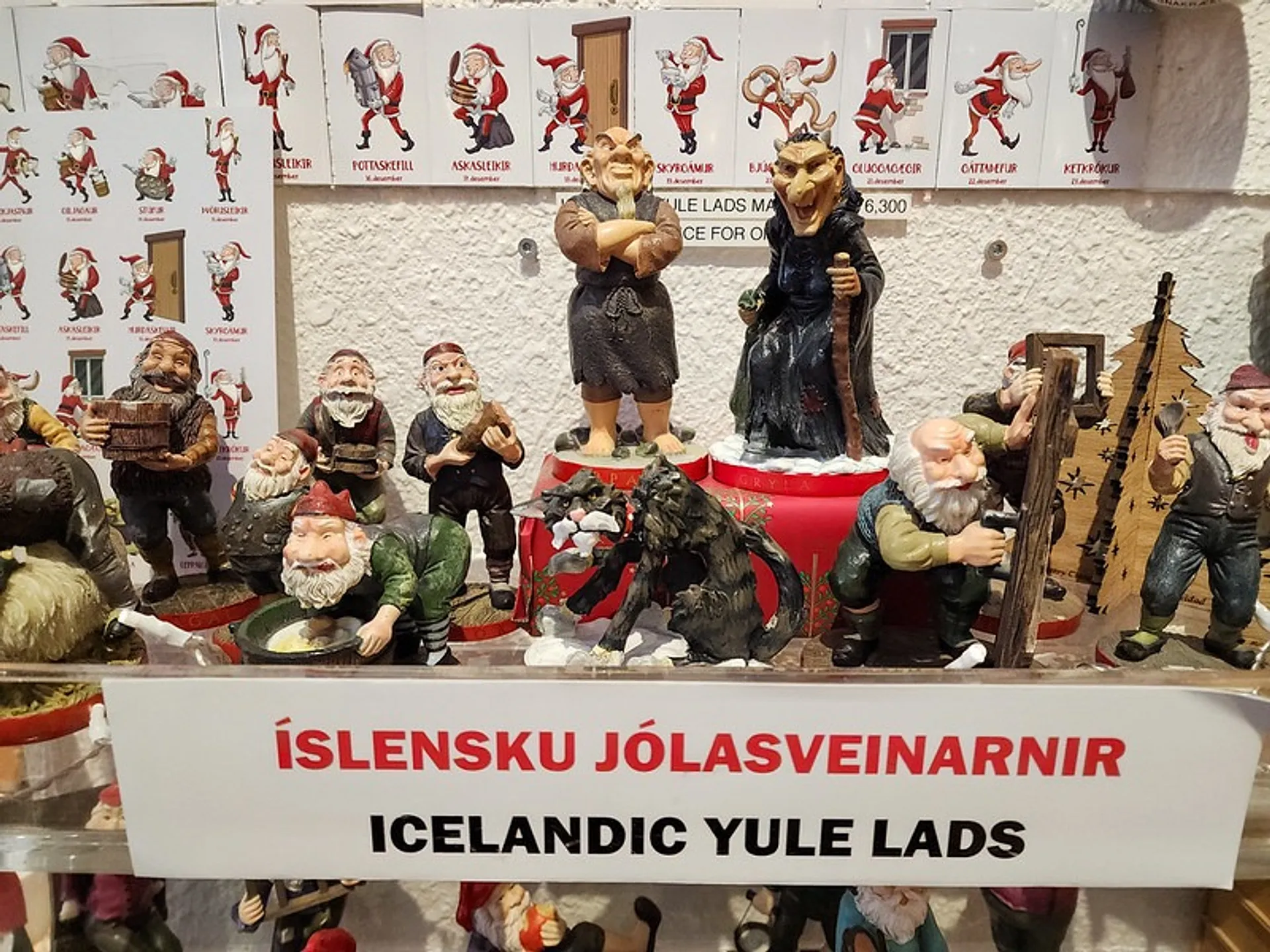
CC image courtesy of Joe Slabotnik on flickr
So here are the 13 lads you’ll want to be looking out for over the next week. Thanks to nordicvisitor.com for the clear explanation!
- Stekkjastaur (Sheep-Cote Clod) on 12th December – He sneaks into barns to steal milk from sheep.
- Giljagaur (Gully Gawk) on 13th December – This Yule Lad has a taste for cow’s milk and he’ll take it straight from the barn.
- Stúfur (Stubby) on 14th December – The shortest of the lads, he swipes leftover food from frying pans.
- Þvörusleikir (Spoon Licker) on 15th December – He licks spoons, of course.
- Pottasleikir (Pot Licker) on 16th December – This guy will steal unwashed pots from the kitchen so he can lick them clean.
- Askasleikir (Bowl Licker) on 17th December – He snatches bowls out from under beds and gobbles up any morsels of food.
- Hurðaskellir (Door Slammer) on 18th December – He slams doors, and he’ll do this all night if he finds any open.
- Skyrgámur (Skyr Gobbler) on 19th December – He’s ravenous for skyr, Icelandic yoghurt, and will pinch any that's up for grabs.
- Bjúgnakrækir (Sausage Swiper) on 20th December – Hide your sausages or this guy will eat them.
- Gluggagægir (Window Peeper) on 21st December – He’ll peep through windows in the hope he can steal something.
- Gáttaþefur (Door Sniffer) on 22nd December – You’ll find this large-nosed lad sniffing doorways in pursuit of baked goods.
- Ketrókur (Meat Hook) on 23rd December – He’s hungry for meat, so lock up your lamb chops!
- Kertasníkir (Candle Beggar) on 24th December – Finally, the last of the Yule Lads is known for making off with candles.
We’re sure we’ve already spotted a few of these guys out at work Christmas parties… looking at you, Spoon Licker!
But that’s not all - their evil troll mother is like the Icelandic Child Catcher, said to venture around Iceland looking for naughty children to whisk away in her sack. The only thing all the legends agree on is that she and her husband Leppalúði were cannibals, otherwise it’s up to us to decide how many tails and how many children they each had.
But one thing we know for sure is that together they own the giant Jólakötturinn, or Christmas Cat. She stalks the darkness on Christmas Eve, preying on anyone who didn’t get new clothes as a gift this year…
CC image courtesy of Vicious Bits on flickr
The only thing better than Halloween is Christmas! The only thing better than that is an amalgamation of the two (Nightmare Before Christmas). A perfect mixture of weird and dark with sparkly joy. If this sounds like your kinda holiday, well then I have some good news for you: there's a Christmas tradition in Wales that's made to order!
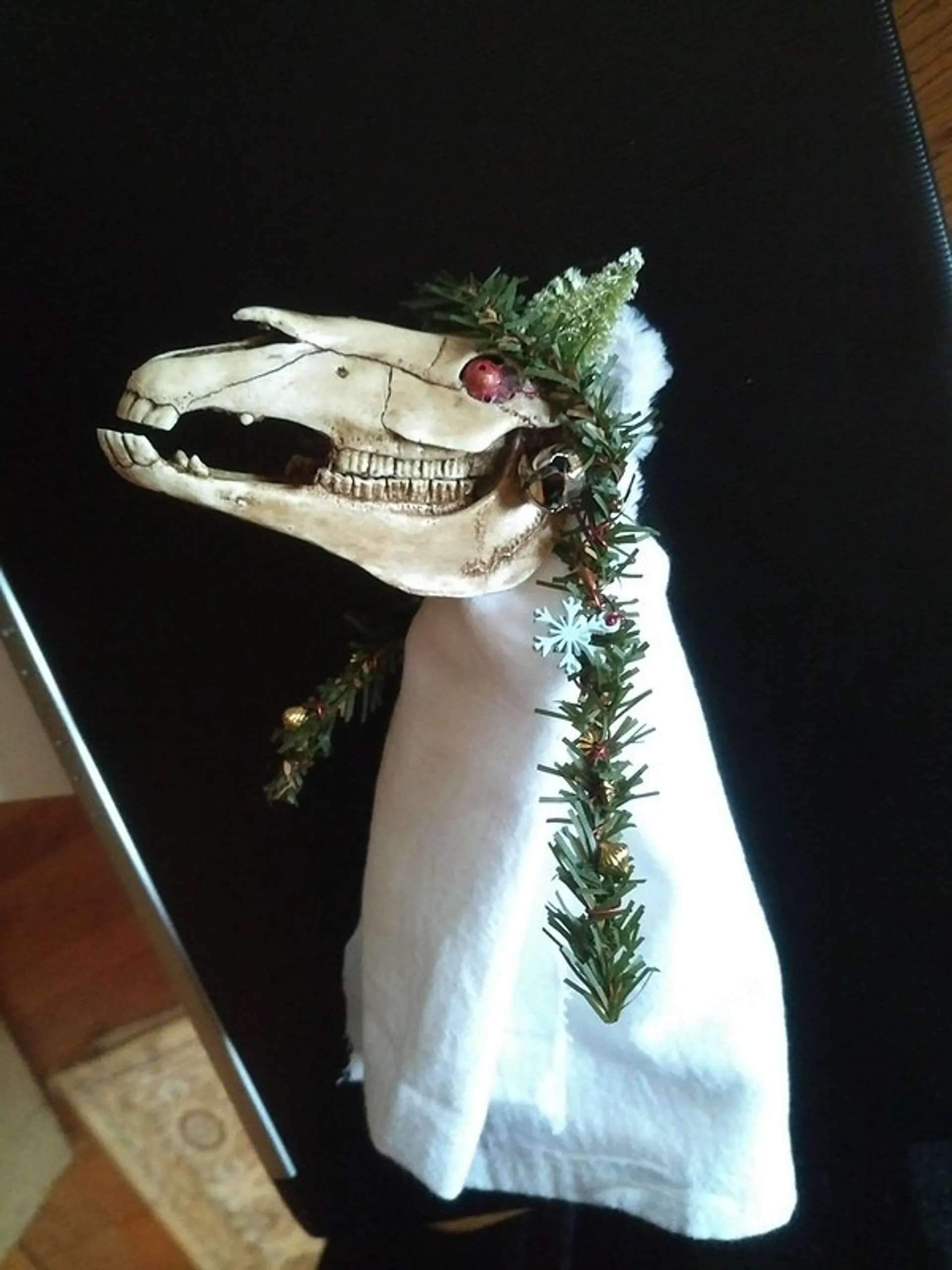
The tradition of Mari Lwyd dates back to the end of the 18th century, but it’s believed to have much older Pagan origins. A horse skull is mounted on a stick, decorated with ornaments and ribbons, and adorned with a large cloth to hide the person beneath. You'll find the former horse galloping door to door around Christmas, carried by a group of merry carollers, who also challenge the people inside with rhymes and riddles.
This ritual is known as pwnco, where the Mari Lwyd troupe tries to win entry to a household by outwitting its occupants in a battle of rhymes. You could call it some kind of ancient rap battle. If they succeed, the carollers are welcomed inside and treated to food and refreshments before moving on to the next house.
Mari Lwyd is considered good luck for every household it enters, so it’s rarely defeated in a rhyme contest. Win or lose, most are happy to welcome them in!
The festive season in the Czech Republic is all about finding love for the new year and predicting marriage. If you're in the market and bored of Tinder, here are a few tips:
Shoe chucking:
Stand with your back to the door (any door will do) and chuck a shoe over your shoulder. If the toe lands pointed towards the door, then it is meant to signify that you will marry in the new year. If the toe points any other direction, better luck next time!
The elder tree shimmy:
Třesu třesu bez, pověz ty mi pes, kde můj milý dnes! (Shake, shake, shake the elder tree, tell me, dog, where my love will be!)
These are the words that single ladies may want to recite while standing under an Elder tree and giving it a good shake. Once you're done, stand quietly and listen out until you hear a dog barking. Whichever direction the sound comes from is the direction from which your future husband will appear.
Barborky a.k.a. cherry tree twigs:
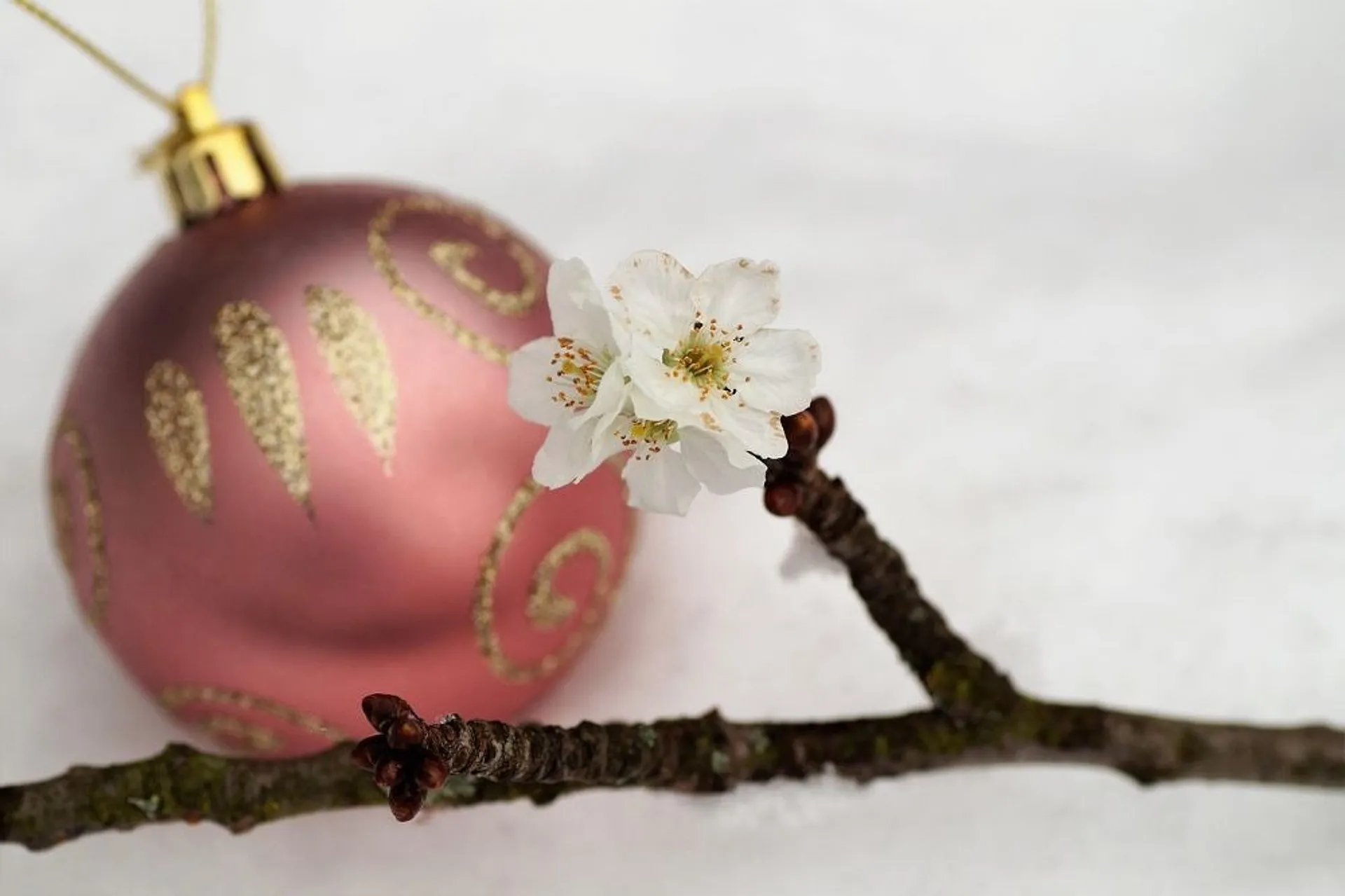
On St. Barbara's Day, which lands on the 4th of December, cut a twig off a cherry tree and place it in a vessel of water. If the twig blooms before Christmas Eve, there's a good chance we'll be hearing wedding bells in the new year!
Water faces:
Head down to your closest body of water, like a pond, river, lake, or even a big puddle. Bend over the water and think seriously about marriage. After some time, you'll see the face of your future husband in the reflection of the water. We're unclear exactly how long 'some time' is, but that's the thing about superstitions — they're rarely very precise.
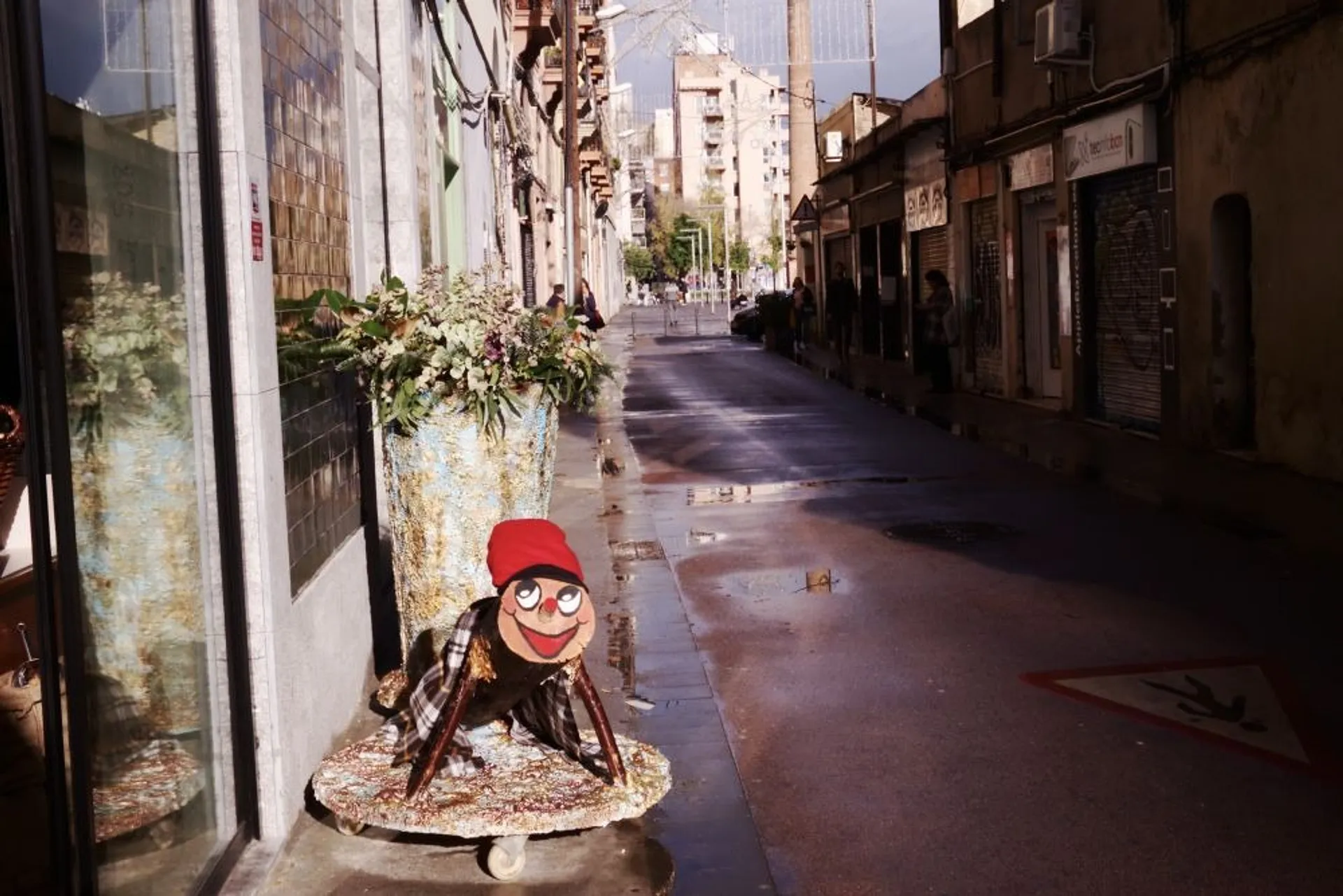
Tió de Nadal (a.k.a. Caga Tió, a.k.a. Poop Log) is a festive wooden log that appears in houses around Catalonia each Christmas. No Tió is complete without little stick legs, a painted cheerful face, and a traditional Catalan barretina hat. Every family has their own unique log, some with a simple charcoal face while others are more intricately decorated.
Tió de Nadal becomes part of the Christmas celebrations from the 8th of December (Feast of the Immaculate Conception) and stays till Christmas Eve, placed in his own special corner of the home. The kids in the house are responsible for keeping their festive friend covered with a blanket to stay warm, and for keeping him fed. Tangerines, cookies, nuts are ideal to 'prime' him for the big day.
Every evening, the children gather around Tió and sing him traditional songs while hitting him with a stick. It's all part of the process, honest! The better Tió is treated by the children during his stay, the better their rewards come Christmas.
On either the night of the 24th or the morning of the 25th, Caga Tió is taken from his corner and completely covered with his blanket, before being placed in the middle of the room. The kids then gently beat him with a stick one final time and lift the blanket to see what Tió has "pooped" out for everyone. The little treasures usually range from sweets and small trinkets to toys and large presents.
Equal parts whimsy and delight, the Caga Tió isn’t just about making a cheery log “poop” gifts. It is designed to help children learn values like patience and generosity, while also enjoying the magic of Christmas.
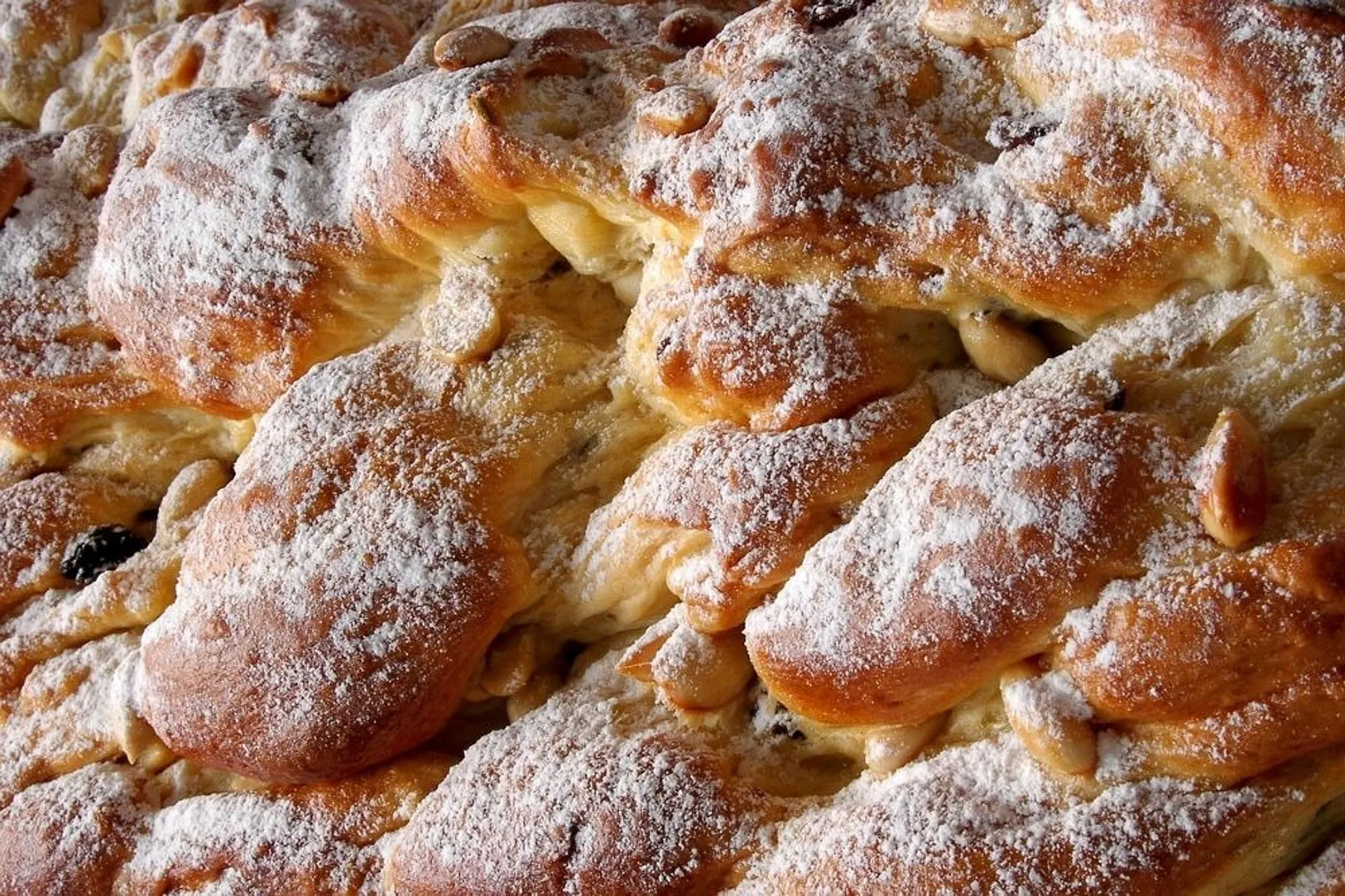
We’ll round off by heading back to Czechia for more seasonal superstitions. Christmas dinner is eaten on 24th December, and comes with an incredible plethora of food related customs and superstitions that need to be followed. It's quite the list and, if it were me, I would absolutely need to take notes and create a checklist. So, let's get stuck in:
- By chucking a piece of Vánočka (Christmas bread) into a well, your water will be good quality in the new year
- To make sure your bees produce enough honey, you should also sprinkle a few Vánočka crumbs in front of the bee hive
- Want your cows to be the best milk producers on the meadow? Feed precious Daisy a piece of bread on Christmas Eve!
- Tired of evil lurking around every corner? Place honey on your Christmas table to protect your guests against bad luck and evil in the new year!
- And if you don't place garlic under the table, are you even celebrating Christmas? These little cloves are believed to bring strength, and provide protection to everyone around the table.
- Sweeter milk from your family goat? Give them a sweet treat on Christmas Eve! By sharing your apples with Sally, you'll be blessed with sweeter milk.
- Traditionally, a meal called Kuba, made from onions, mushrooms, garlic, and barley, was served at Christmas dinner as part of the main course. Nowadays, it's often replaced by mushroom soup for supper. The mushroom portion of the meal is the important part, though, essential for providing strength and health in the new year!
- On the 24th of Dec, dip a sheaf of grain into holy water (ideally not obtained by nefarious means) and sprinkle the water all over your house, both inside and out, to ensure that your home is safe from being burnt down over the next year!
- Want enough eggs to feed an army? Heck yes, omelettes and the aforementioned sweetened goat milk cheese sounds delish. Well, in that case, you need to feed a variety of poppy seed, peas, wheat, and barley to your chooks on Christmas Eve to guarantee eggs for everyone!
What are your top festive facts from around the world? Drop 'em in the comments, or else Santa will bring you a lump of coal!