Cathedrals, Canyons, and Crimes: Wild West Mythos from the Nevada Desert

Olivia Louden
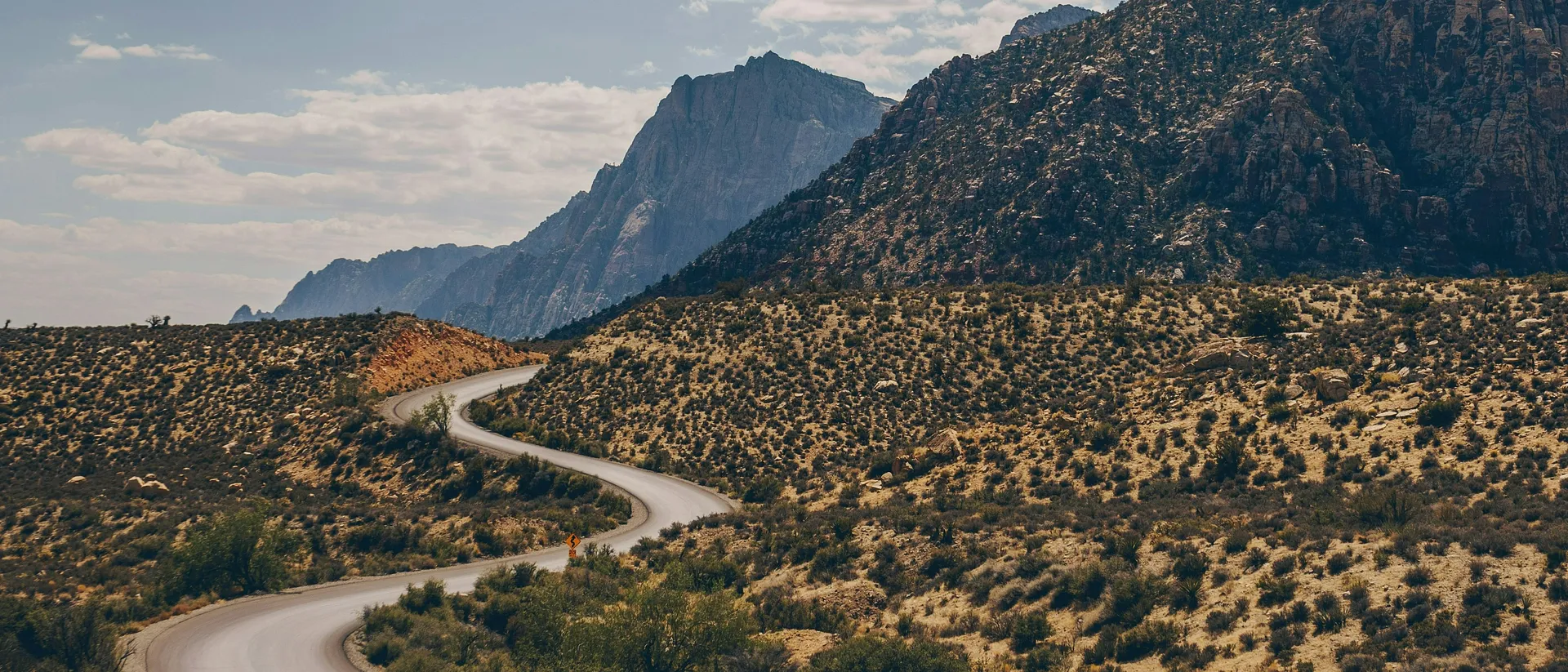
If you’re a regular reader of The Detour, you’ve probably heard at least one or two of my tales from the American deserts. I’ve got a lot of fun stories about Southeast California and Southern Nevada in particular — that’s one of my favorite areas, and I’ve spent a lot of time out there. At this point, I’m practically an evangelist for the Mojave and Colorado deserts. There’s simply nowhere else like it.
Growing up near the edge of that unbelievably vast, often inhospitable landscape sometimes felt like being at the edge of an enchanted forest. While I’m familiar with the region, I’m always going to be an outsider, just a kid wandering through the woods and trying to make sense of what they find. The more you stray from the towns and drive out into the wild valleys and canyons, the fewer rules seem to apply.
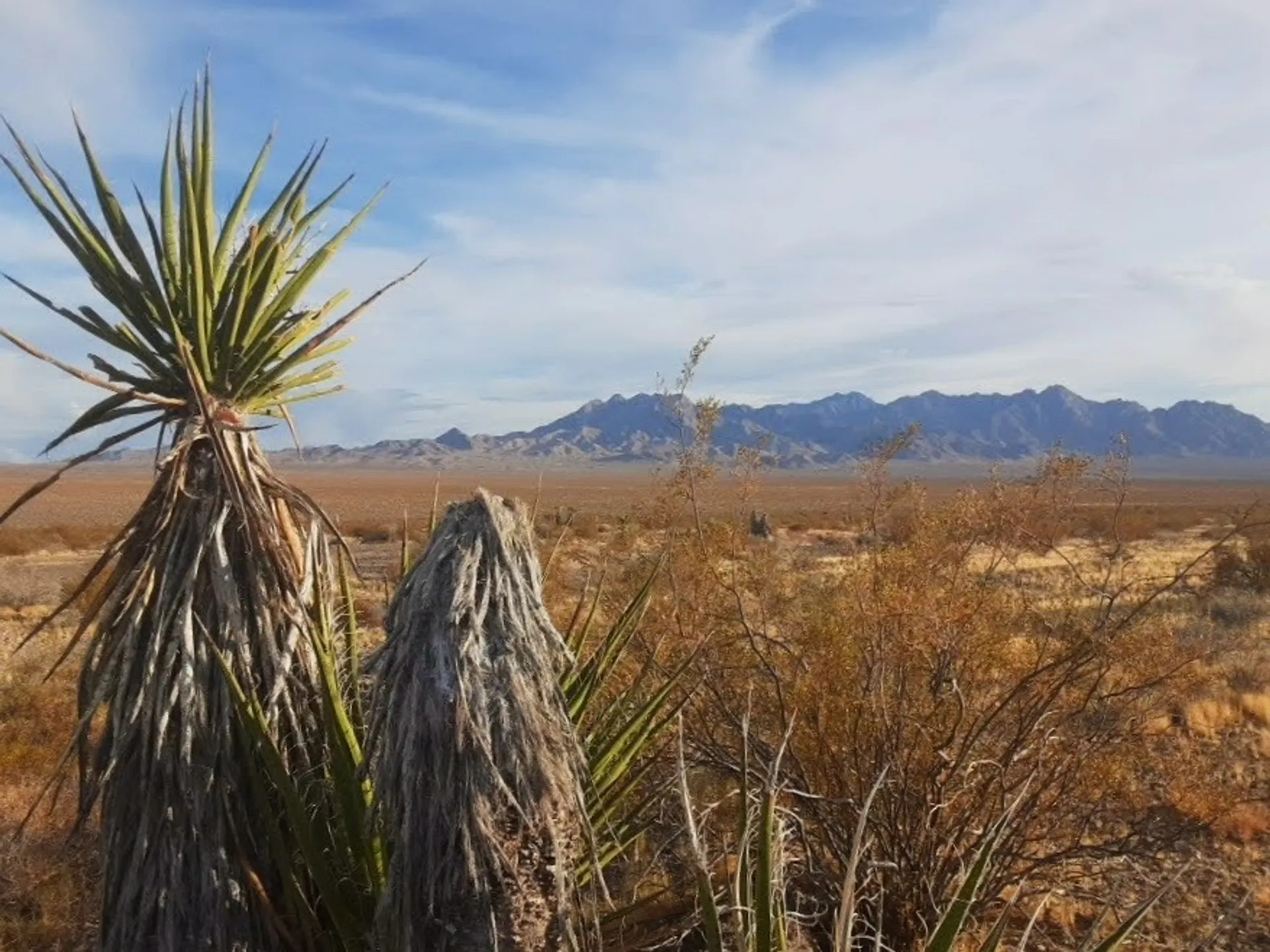
There’s a deep-rooted cultural idea that people take their worst secrets out of the city and into the dirt. After all, every crime thriller set in SoCal or Vegas has a scene where someone drives out to the desert to meet a shady contact or bury some evidence.
The darker tales are particularly common in rural areas of Southern Nevada, which has a century-long reputation of absorbing any actions too sinful even for Sin City. While Vegas has long since left its mafia heights in the rearview, there’s a reason no one was shocked when the receding water of Lake Mead reopened some old missing persons cases. Everyone knows that some pretty shady stuff has happened outside the reach of those casino lights.
If you repeatedly stick your nose into anything that looks interesting (and there are a lot of interesting, oddball things in Nevada), you might stumble upon the remnants of that darkness yourself. That’s what happened to me when I drove out to an unassuming canyon off the highway, and I couldn’t believe how much lore I learned in the process.
This is a story about one man’s attempt to build something beautiful out in the dirt, the Wild West legend connected to it, and how, sometimes, you never really know what horrible things have taken place on the ground beneath your feet.
What I found
This adventure started like most of my desert adventures: learning about some funky landmark off in the dirt somewhere, and deciding to try and find it. In this case, my target was a hole in the ground called “Cathedral Canyon,” which I knew absolutely nothing about, besides the fact that it was notable enough to be labeled on Google Maps.
An hour from Vegas and just barely inside the state line, the canyon is actually pretty easy to reach. You only make a couple of turns off the highway south from the town of Pahrump, head deeper into the valley backroads, then park in the dirt once you notice the ground opening up beside you.
As usual for spots like this, it was dead quiet when I got out of the car. Not a soul for miles. Just me and the rocks, the rustle of wind through the creosote, and the giant ditch I was about to enter:
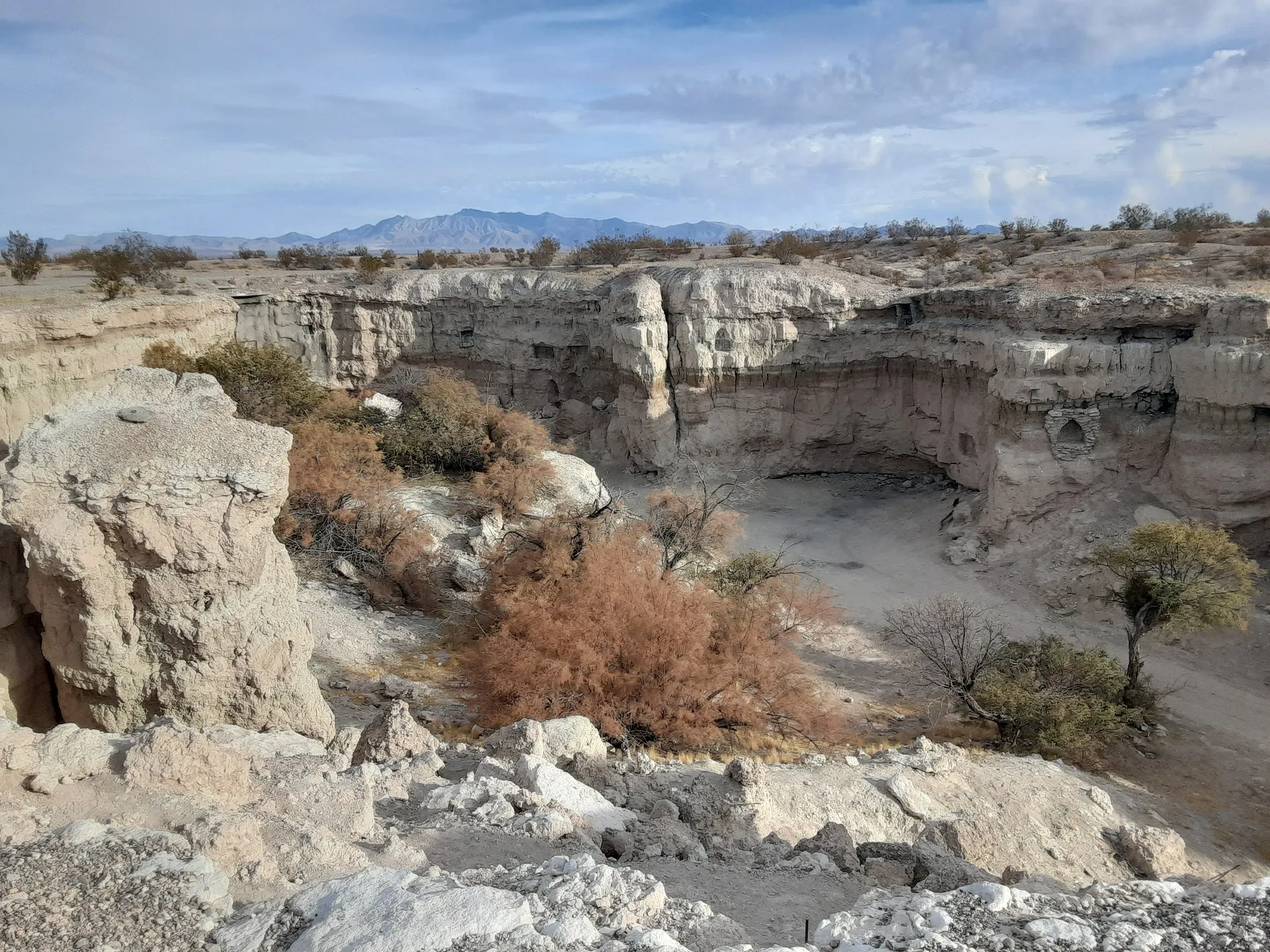
As I started climbing down into the canyon, my first thought was, “This place used to be something.” A crumbling plaster statue with a missing head, decorative brick frames built into the cliffs, doors carved into the canyon walls that led to nowhere and contained nothing, random sets of concrete steps — all worn down and clearly abandoned, but intentional. Someone tried to build something here.
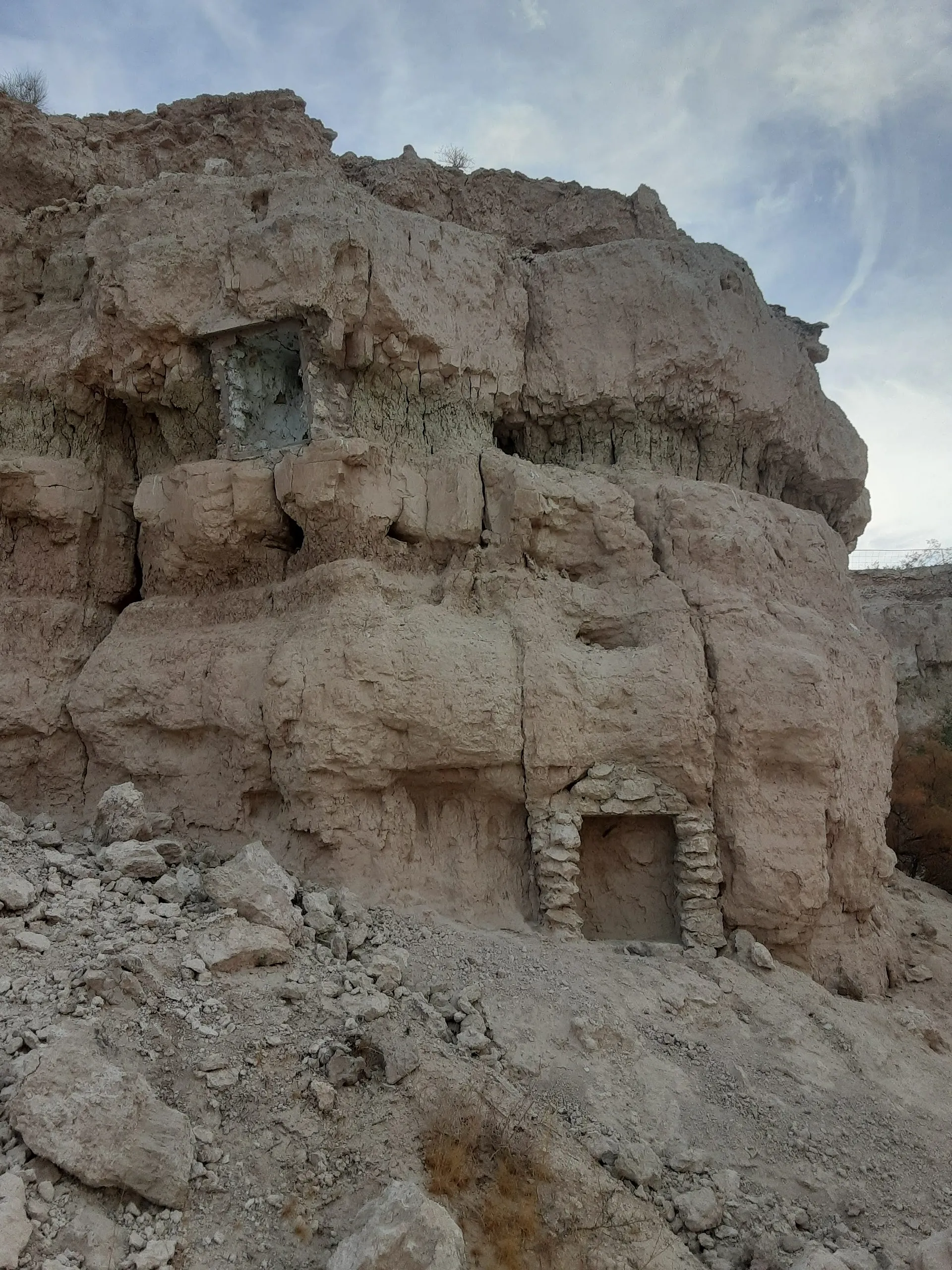
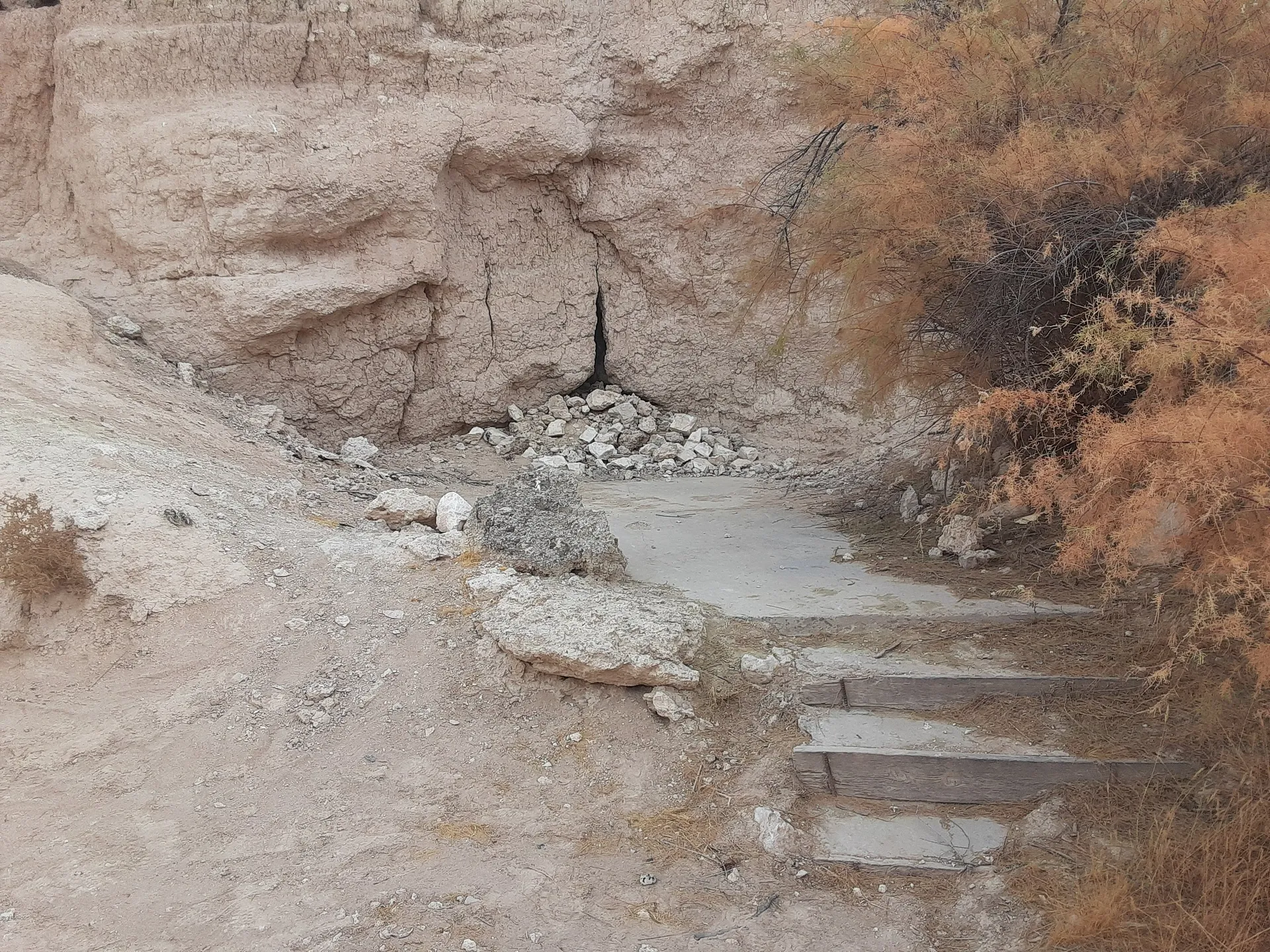
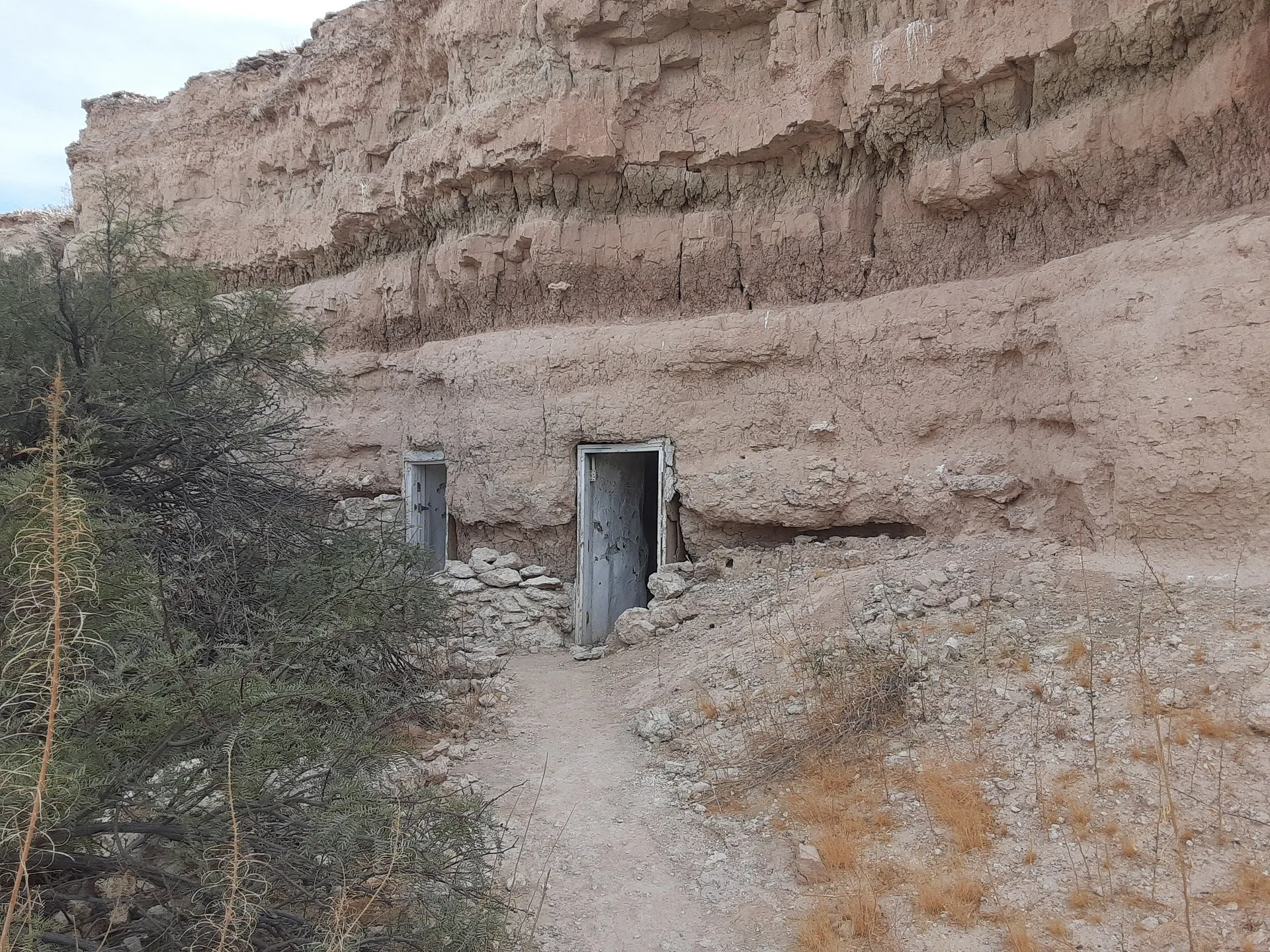
A theme quickly became apparent. The brick frames seemed to be shrines. A few crosses had been left behind. The plaster statue above me, desiccated beyond recognition, was labeled “CHRIST OF THE ANDES.” Okay, someone tried to build something religious here.
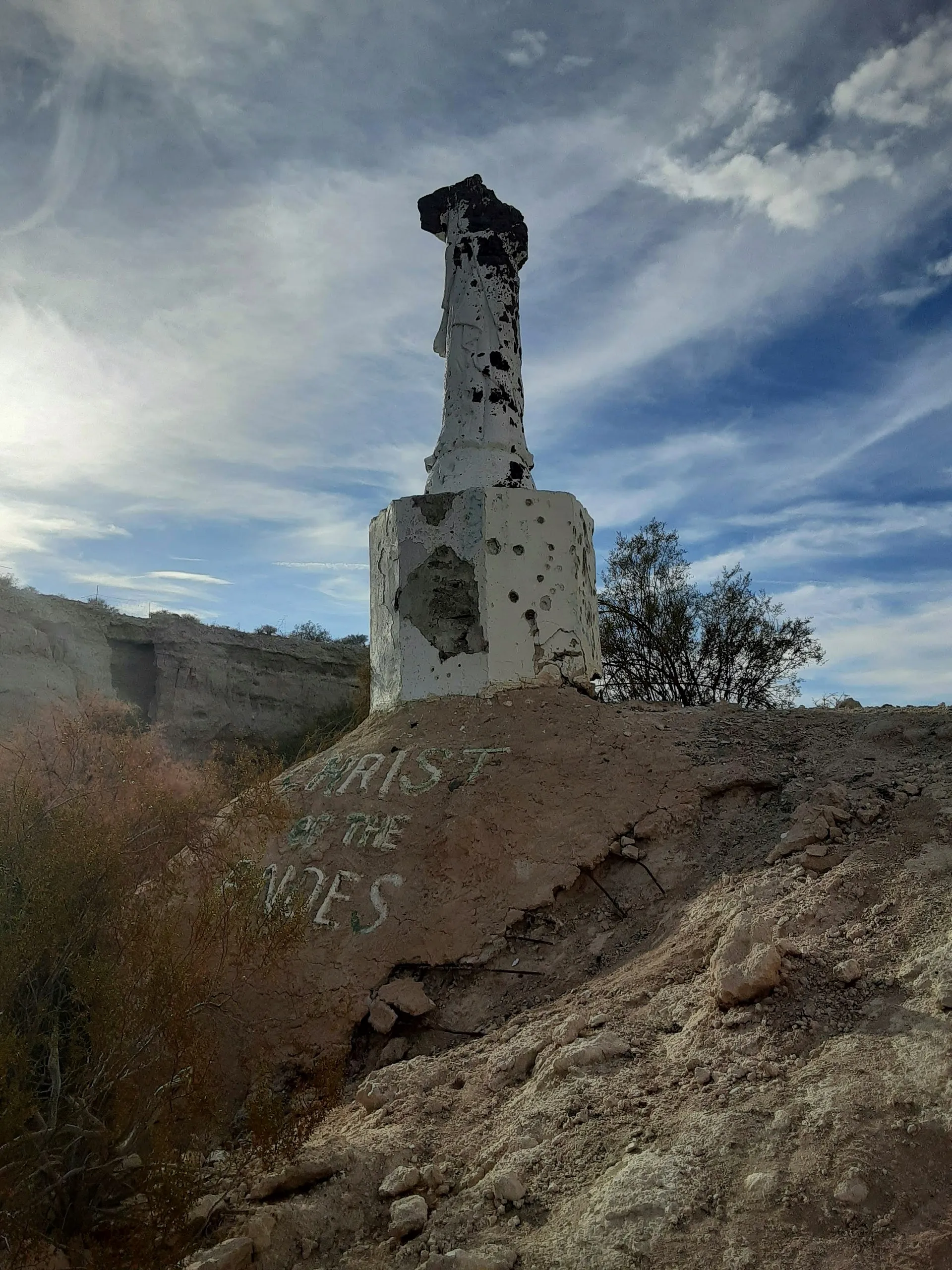
There’s a decent bit of overlap between desert hippie culture and Christian hippie culture (Salvation Mountain is a prime example) so this made total sense. Still, it’s easy to catch the heebie-jeebies when you’re poking around abandoned stuff in the desert, and the contextless, decomposing religious artifacts didn’t exactly help.
I felt like I was intruding. I was clearly alone, and in a spot labeled as open to the public by Google Maps! But I couldn’t shake the feeling that I was breaking that cardinal rule and sticking my nose in someone else’s business. It felt like someone was about to pop out of one of those strange door holes and fire a shotgun over my head. I’ve felt that way in the desert before, but it was particularly strong this time.
When I was finished investigating all the nooks and crannies, I walked under the rusted metal archway at one end of the canyon, and hopped back up to the surface.
If I believed in ghosts (and I very much do not), I might have attributed my heebie-jeebies to the tombstone I noticed on the way back to my car:
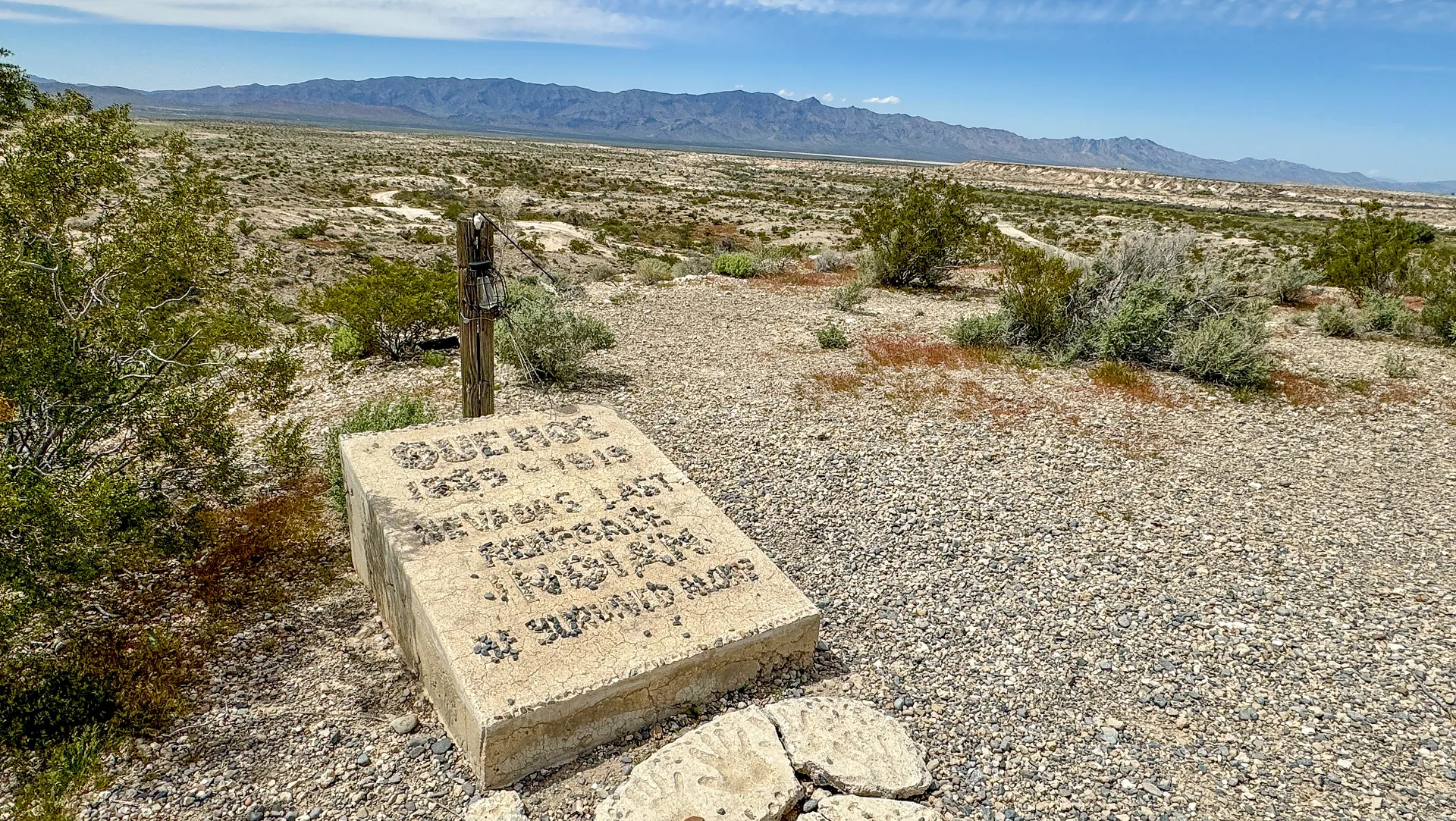
Image by Tami Force of nvtami.com
The inscription read:
“QUEHOE
1889-1919
NEVADA’S LAST RENEGADE INDIAN
HE SURVIVED ALONE”
I made a mental note of the name “Quehoe” and headed on home, head full of questions to research when I got there.
Here’s what I learned.
What is this place? Who built it?
The story of Cathedral Canyon begins with a man called Roland Wiley, who moved to Las Vegas in 1929 to find work as a lawyer. This turned out to be a smart career move, because he was elected as the Clark County District Attorney less than a decade later. You can read his entire fascinating story in this interview (featuring a cameo by infamous mobster Bugsy Siegel!), but our story is about the land he purchased with his DA earnings.
In 1936, Wiley bought a large swath of desert outside the city and began to develop a ranch. Decades into that process, in 1972, he experienced a vision. Some sources call it a “vision from God”; others say he simply had a fever. One very old blog post claims it was brought on by infected rabbit meat.
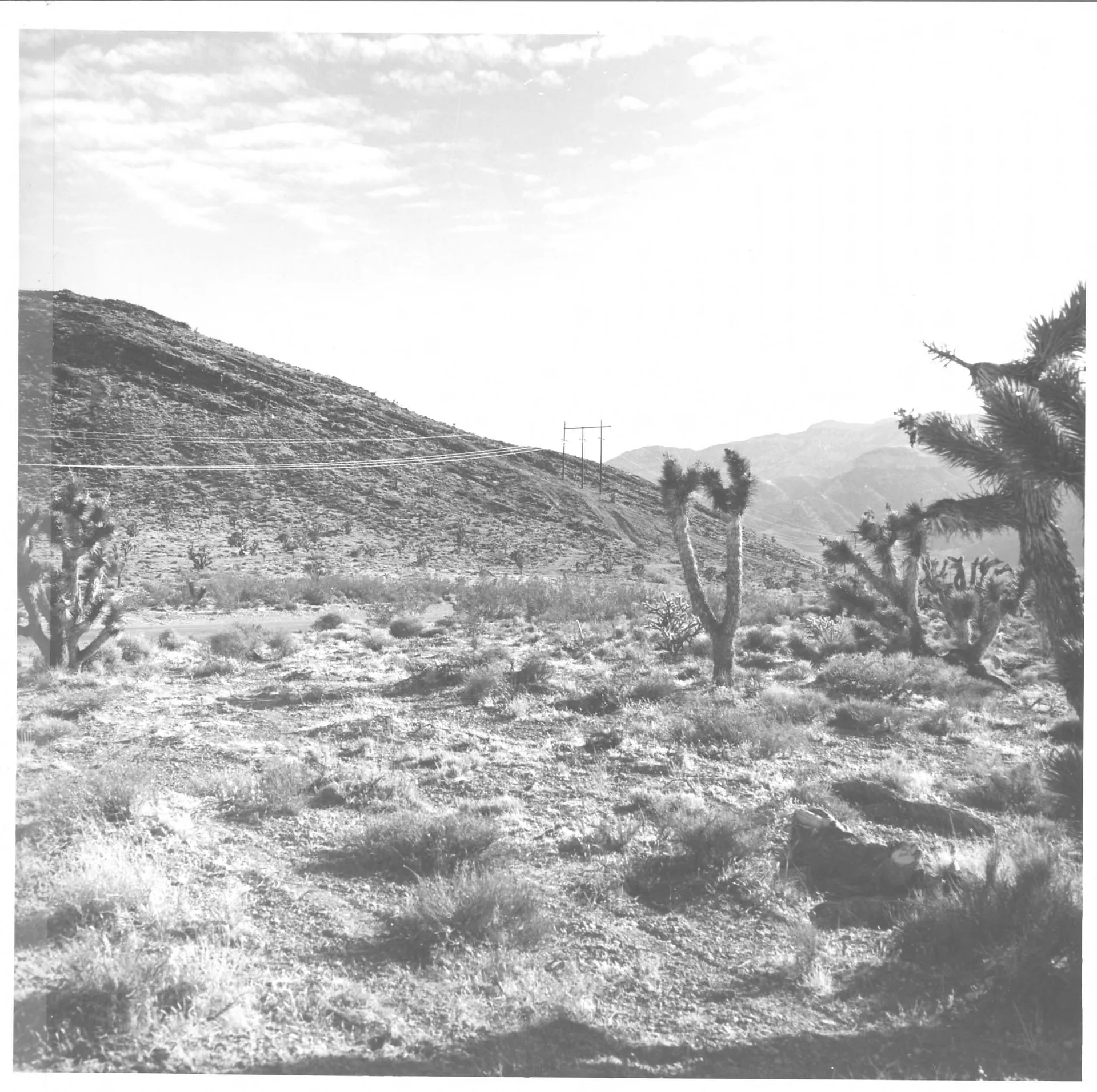
Pahrump Valley circa 1962. Image from the Bureau of Land Management.
Whatever the cause for this vision, Wiley began building his masterpiece immediately afterwards. Using a natural gorge on his property and spending exclusively his own money, he constructed a suspension bridge, a stairway, a network of paths, and dozens of artworks across the canyon. He even wired it all for electric power so it could be lit up at night and stay accessible to visitors 24/7. He called his project “Cathedral Canyon” and wanted it to be a peaceful place where folks could enjoy the beauty of the desert along with their spirituality.
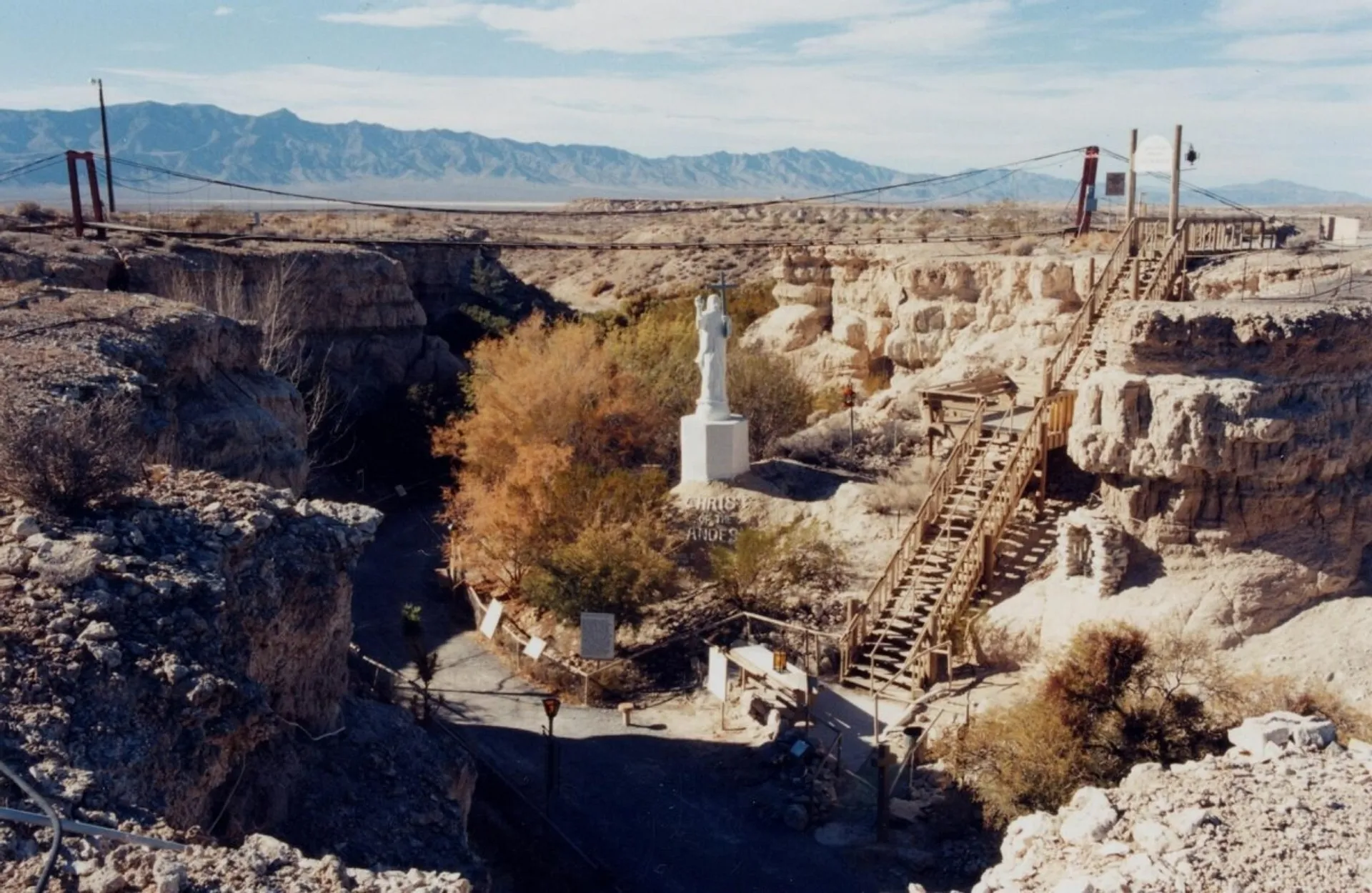
Cathedral Canyon during its heyday. Image from the Center for Land Use Interpretation.
For the next 22 years, Wiley and his canyon hosted regular church services and various events, including a wedding and a rock concert.
In 1994, Roland Wiley passed away at the age of 90, leaving no instructions or resources for the canyon’s preservation. Since then, the canyon has been slowly settling into disrepair. Artifacts and structural pieces disappeared one by one, and his artwork faded and was covered by graffiti. What I encountered on my trip in 2024 was all that’s left behind of Wiley’s masterpiece.
So that’s the rise and fall of Cathedral Canyon: one man’s mark on the desert, an attempt to turn an ordinary gorge into a place of reflection. And like most things that get abandoned in the desert, its bones will rest quietly in the sand for decades to come, occasionally hosting curious visitors like me. This story ought to end there, on a melancholic but tranquil note.
But we still have a tombstone to talk about.
Who’s Quehoe, and why is he buried at the canyon?
The next piece of this tale dips further into the past. Long before the casinos or the land developers, Nevada was deep in the core of the Wild West. Details from that era get pretty murky, so bear with me here as I give you the general consensus.
Some time around 1880, a woman from the Cocopah tribe died giving birth to a baby boy named Queho. He had a deformity in his feet, and based on the insults thrown his way, was also mixed-race. Little is known about his early life, but it’s clear that he was rejected by society.
As he grew up, Queho developed a reputation for having a short fuse and a tendency towards violence. It’s hard to tell if any old west legends are true, let alone the ones about a disenfranchised, disabled, Native American man. It’s possible that 99% of this story is racist nonsense. Nevertheless, Queho clearly rubbed people the wrong way. Here’s a fraction of the accusations that have been lobbed at him over the years:
- Killing his half-brother
- Killing a 100-year-old man
- Killing the wife of a mine boss
- Horse-stealing
- Putting a curse on the land
A recurring hypothesis in many of these accounts is that Queho did commit at least one murder, and was an easy scapegoat for every unsolved case thereafter.
In 1919, Queho disappeared while being chased by a posse of bounty hunters. He was never seen alive again.
Twenty-one years later, in 1940, the mummified remains of a man were found in a cave near the Hoover Dam. The body’s injuries and possessions suggested that this was Queho, and that he’d lived in solitude for at least a decade after his disappearance.
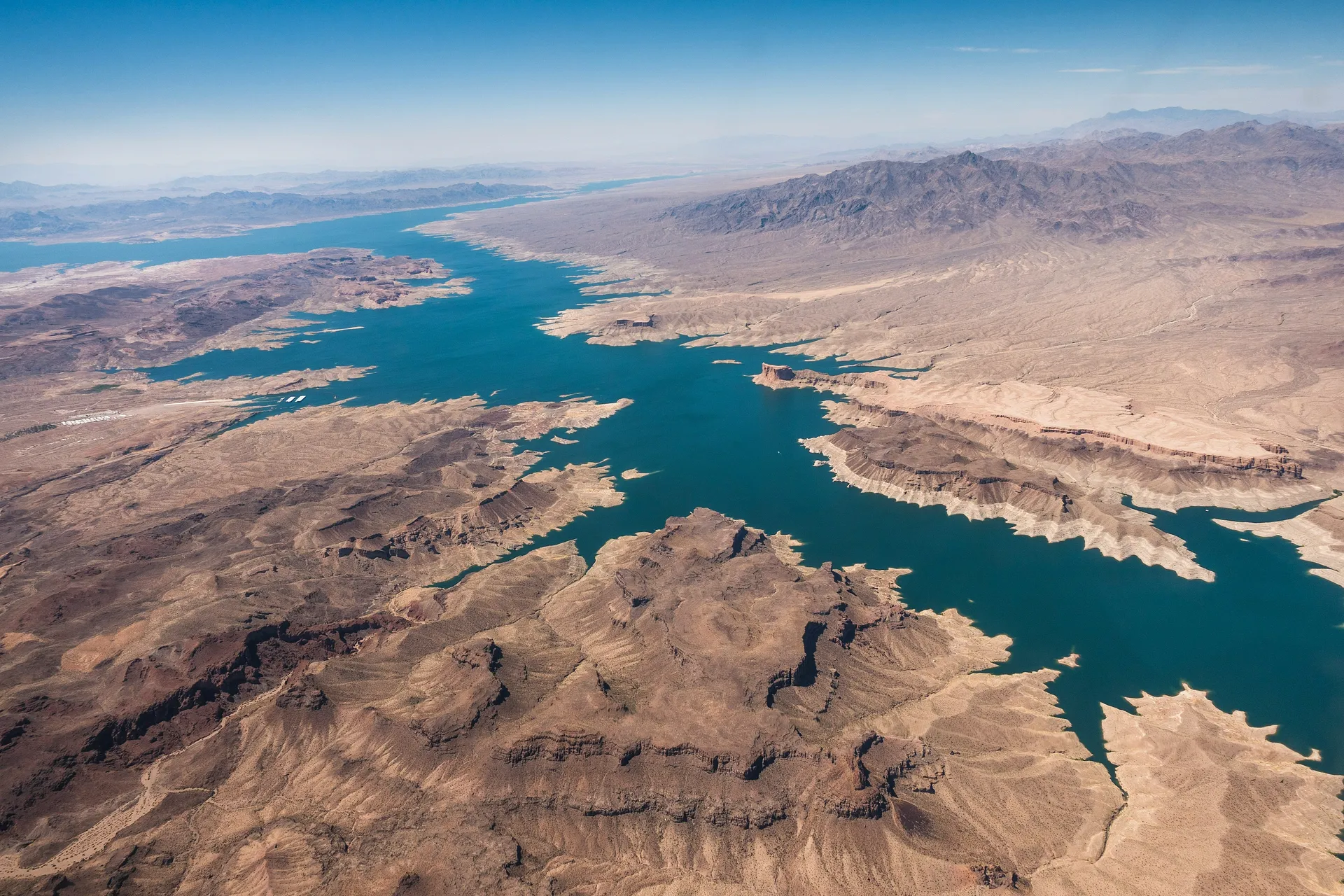
An aerial view of Lake Mead today — north of the area where Queho was found
Of course, when you find something as salacious as the rediscovered mummy of a notorious outlaw, and then drop it into boomtown-era Las Vegas, the situation doesn’t get handled with much grace. After being passed around, fought over, and even displayed in a country club, Queho’s remains were eventually procured by none other than our old friend Roland Wiley.
Seeking to give the man a proper send-off, Wiley buried him at Cathedral Canyon with a handmade tombstone, making his best guesses on his name’s spelling and on his birth and death years.
And that is the tombstone that I passed on my way back to the car, with no idea who it was for or how they ended up there. It was Nevada’s “last renegade Indian” who, just as Wiley wrote, survived alone.
And yet, there’s still more.
Somehow, the story doesn’t end there. Cathedral Canyon has witnessed a lot, and it only gets darker from here.
While Queho’s tale is certainly upsetting, it’s easier to tell upsetting stories that happened over a century ago. I’ll be much more brief and vague with this one, because it’s a horrible true crime case that took place in 2021. You can read the news stories yourself if you really want the lurid details.
To sum it up, a Las Vegas man was accused of child abuse by a neighboring mother, a claim that has never been officially proven or disproven. She gathered two men, and together they kidnapped the accused man, drove him out to the desert, and tortured him. His body was found at the bottom of Cathedral Canyon, where he’d been forced over the edge and riddled with shotgun shells.
I was back at my trailer in Pahrump, trying to get some answers the evening after my canyon visit, when I saw the news articles pop up in my search results. It made my blood run cold.
The tale of Roland Wiley was about what I expected as an explanation for the canyon’s existence, and Queho’s story fits in with every other Wild West legend I’ve ever heard. But this one caught me off guard. It was like a half-apocryphal tale from the cowboy days that you’d hear from a tour guide, but it was real, and it happened just a few years ago.
Like I said, I (mercifully) have zero belief in the paranormal, so my discomfort had nothing to do with hauntings or bad energy. It’s the fact that I’d poked around dozens of desert oddities before. I’m used to that spooky feeling you get sometimes when you’re alone in the desert investigating something abandoned, but I hand-wave it away. It’s just those darn heebie-jeebies again.
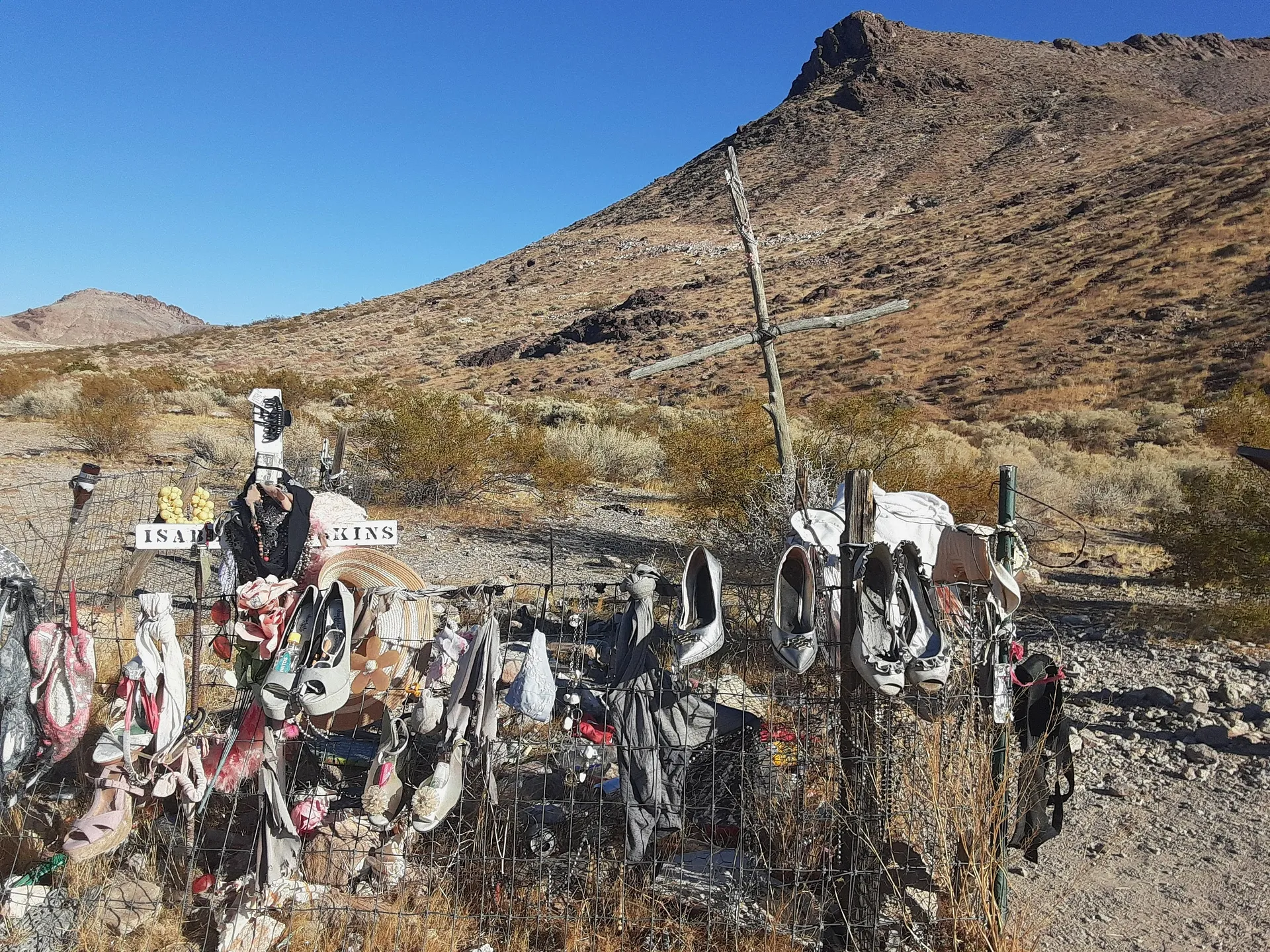
A memorial in the ghost town of Rhyolite — maybe a story for another time.
Sure, sometimes I get jumpy and think someone’s gonna pop out and wave a shotgun at me. But deep down, I never think there’s actually gonna be a shotgun. It’s one thing to vaguely understand that dark things have probably happened where you’re standing. It’s entirely another thing to find out for a fact that something so gruesome happened right down the road from you so recently, right on the dirt where you were just bopping around taking pictures and wondering why you have a case of the creeps.
It was a sobering reminder that the dark underbelly of the desert didn’t entirely fade with the old west, or with the mafia. Whether it’s 1940 or 2021, missing persons cases sometimes still turn into “body found in the desert” cases.
And that’s the whole story of Cathedral Canyon.
Finding a new set of eyes.
While it saddens me that Wiley’s beloved project became a crime scene, I think the whole tale perfectly encapsulates a lot of desert mythos. A man comes to Vegas, gets rich, rescues some old west remains from sleazy businessmen, and builds a massive project in the wilderness that gets abandoned when he dies, left to bear silent witness to whatever secrets its visitors came out there to bury.
Before I cap this off, I just want to reiterate that I really do love Southern Nevada, and that the entire desert is near and dear to my heart. As I’m sure any locals will be quick to point out, the region sometimes gets unfairly maligned by its reputation. The lore might run deep, but if you’re lucky enough to visit, you’re unlikely to face any danger more threatening than a bad poker hand.
On that note, I will leave you with a poem by Roland Wiley. These words used to be written above the canyon, and I’d like to end with them because they remind me why I keep coming back to the desert time and time again:
“The true value of your coming to this place
Lies not in finding a new landscape
But in having new eyes.
It is my hope that this cathedral under the skies
Will give you a set of new eyes
And a whole new way of seeing things.”