Fiji: Beyond the Resort

Larissa Shearman
Ticking Fiji off my ‘countries to travel to’ bingo card wasn’t really in my 2025 plan. I had already bagged a trip to Japan in February, filling my ‘long haul’ quota for the year. And unlike many other Australians, I’d never had a family trip there during my childhood. I had no nostalgic memories of all-inclusives and endless beaches. It had just never been on my radar.
That was until my Dad decided to celebrate his 60th birthday with a week-long trip at the Radisson Blu in Denarau Island. I was (in theory) excited to see my family, but it was a long way to go. I wasn’t jazzed about the looming extreme travel and jet lag combo, knowing I’d have to turn back around to London after 6 days. And if I’m being radically honest, Fiji has never been high on my list.
But after a hop via San Francisco to what is almost the exact antipode of London, I landed in NAN for what would become a really transformative family trip. And one I’m so, so thankful to have made the journey for.
Being part of quite an adventurous family (paddleboarding, bike riding, camping, sailing—if it’s ‘outdoorsy,’ my family does it), I knew we wouldn’t just be hanging out by the swim-up bar or posted up on a sun lounger on the beach. Don’t get me wrong, I love a relaxing holiday, but Fiji is one of those countries that is ripe for getting out beyond the resort. I knew next to nothing about life there, and I wanted to see it for myself.
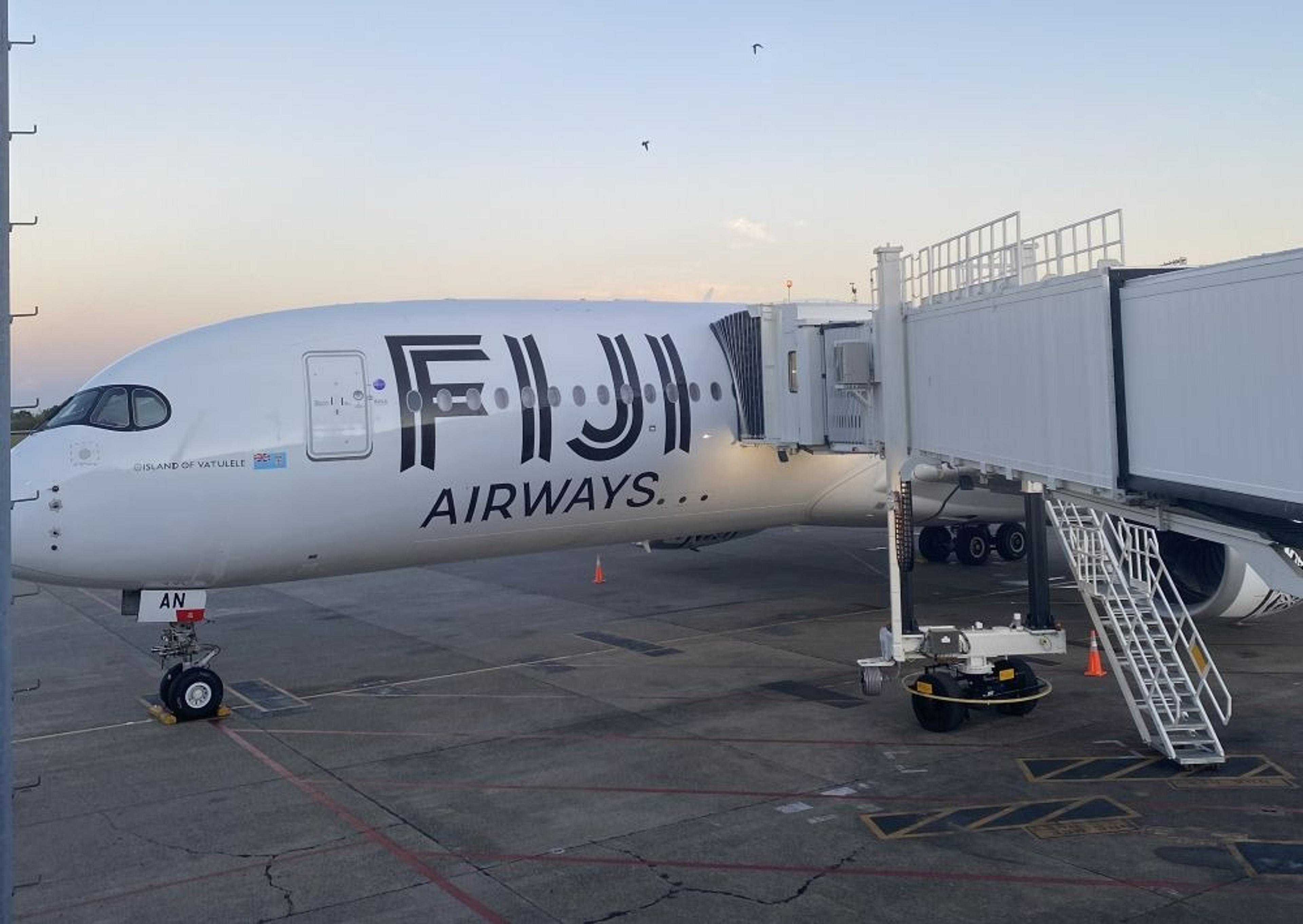
Arriving in NAN airport - that’s my plane!
After 21 hours of flying, we landed in Nadi on the western side of the island. The rest of my family got away with a 4-hour flight from Sydney…lucky! This is the main international airport for holidaymakers, with the popular resorts of Denarau Island a 30-minute taxi ride away.
Unsurprisingly, the airport is small. We deplaned on the tarmac, allowing the humidity and heat to hit me immediately. In case you’ve never experienced this before (clearly you’re not from Australia), it’s similar to the whoosh of heat you get when you open the oven door. And even though it was a cheery 5am, the heaviness in the air buzzed with an excitement (or maybe that was just my sleep deprivation being overtaken by adrenaline).
After a little bit of difficulty getting Fijian dollars out of the airport ATMs, I took a taxi to the resort.
Sidenote: I have a bone to pick with whoever decided to only put Westpac ATMs in Nadi airport. Yes, it was 100% my fault that I only took 1 bank card to Fiji (lesson learned), but the sheer panic I felt as I tried several ATMs in the terminal and they all rejected my card... cruel! I had no cash (lesson learned x2), so I was at the mercy of a very nice taxi driver. I told him my dilemma, and he drove me to an ANZ ATM on the way to the hotel with the assurance that it should work. Thankfully, it did!
Running around Denarau Island
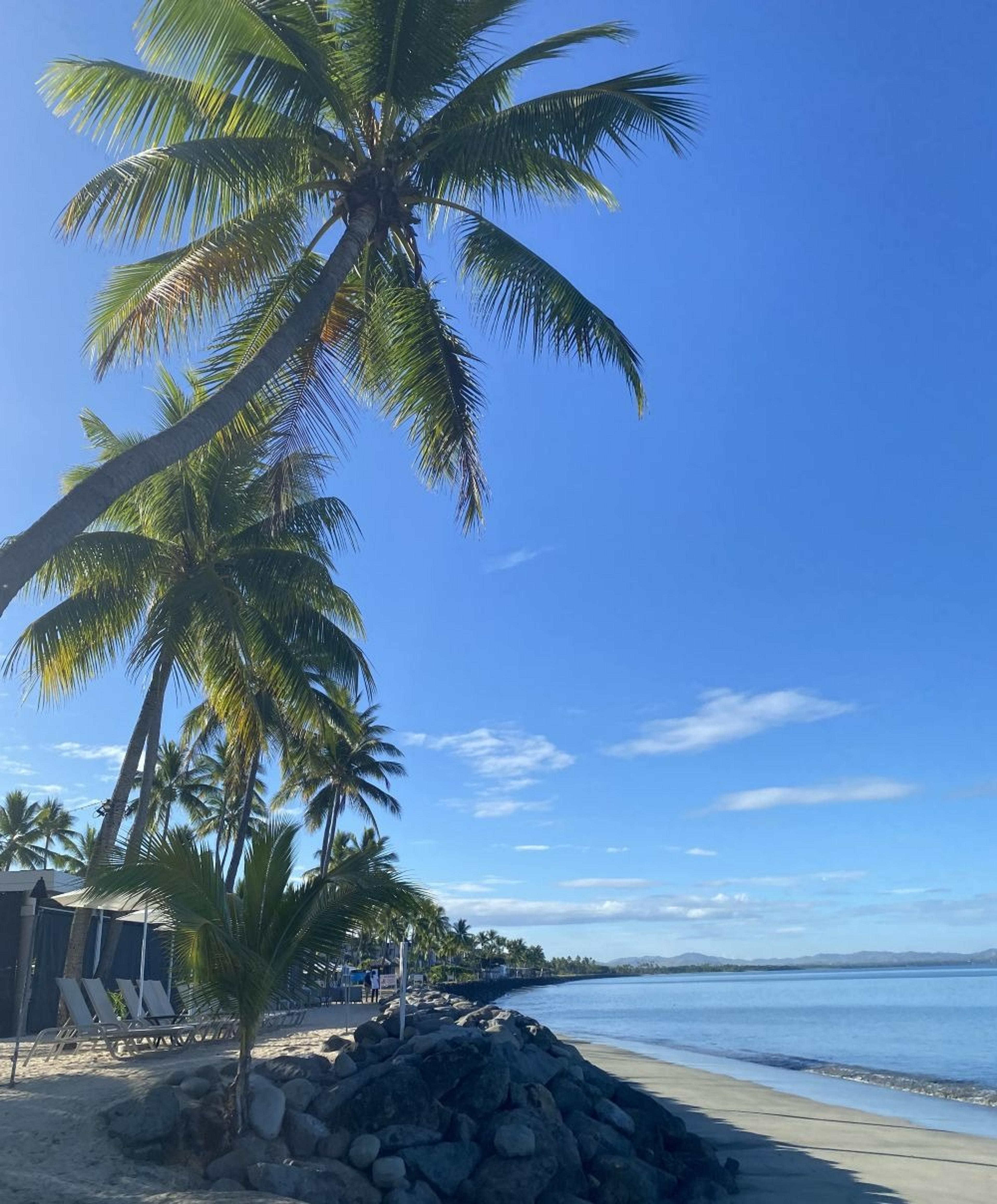
I took advantage of my severe jet lag on day 2 to go for a run around Denarau Island. To give you a bit of context, Denarau is where almost all the major resorts are, with hotels like the Hilton, Radisson Blu and Sheraton standing side-by-side along the beach. As you’d expect, the restaurants, bars, cafes, and shops in this part of the island are absolutely geared towards tourists, and it felt extremely safe for me to run by myself at 7am.
I ran up to the Hilton and back, and this photo was taken facing back down the beach towards my hotel. It’s easy to access the beach from most of the hotels (no one will check that you’re a guest if you just walk through the lobby, trust me — I was unsure at first when I ran up the stairs of the Hilton, but I kept my gaze straight ahead, and the confidence clearly paid off as no one stopped me. Maybe it’s athleisure privilege?) and it was interesting to see the differences between the spaces.
One thing that I remember vividly was the HEAT, even at that time in the morning. You needed a hat and sunscreen; otherwise, you’d be getting sunburned even before you hit the pool.
DIY trip to Koroyanitu National Park
While there are plenty of tours for loads of different activities across the island (and beyond, but we’ll get there later), my family decided to organise a DIY tour out to Koroyanitu National Park. The park is 35 square kms, and includes the third-highest mountain in Fiji: Mt. Batilamu. It’s around an hour’s drive (45 km) from Denarau Island to the national park entrance.
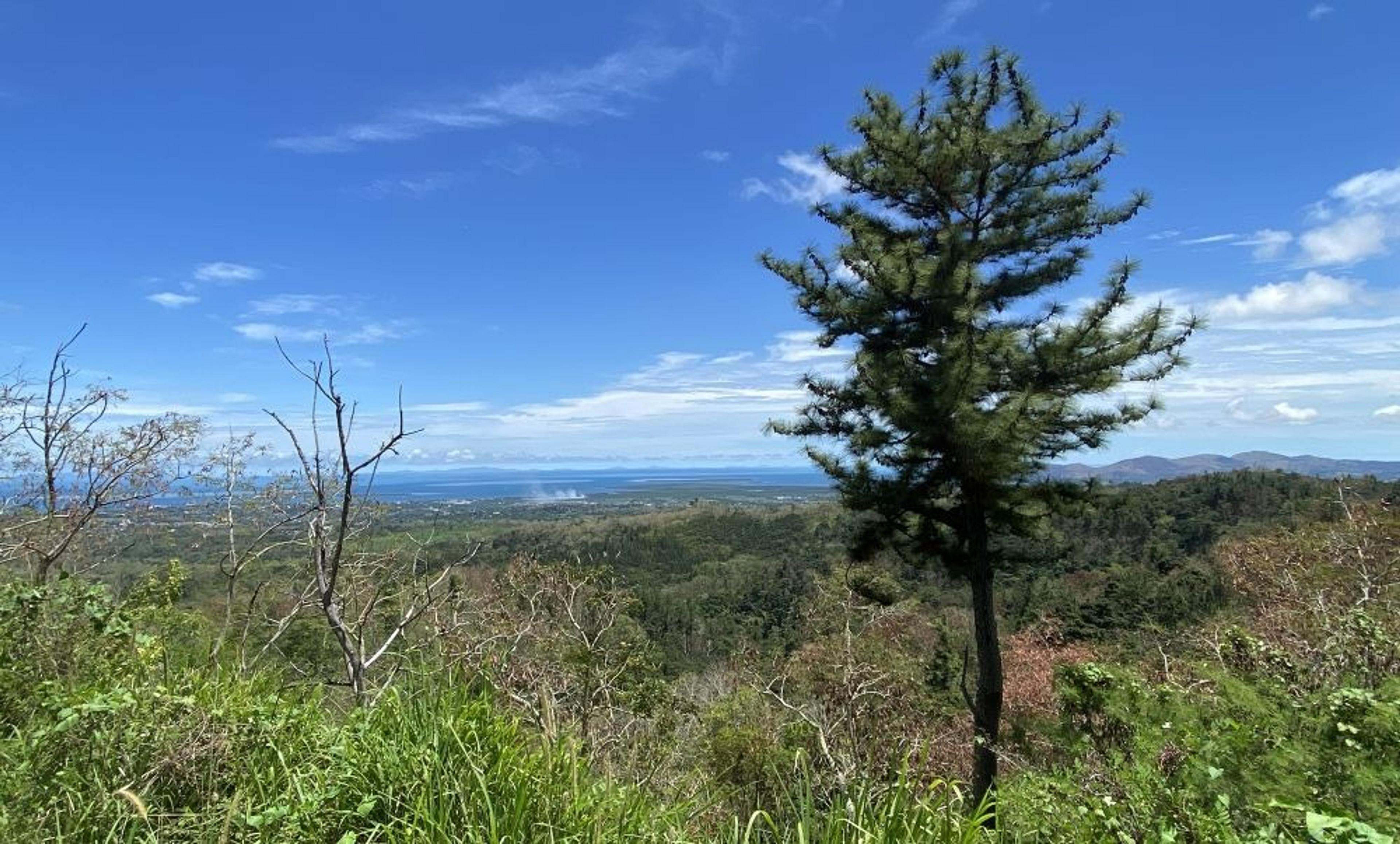
We organised a taxi there and back (the driver waited for us at Abaca Village, at the entrance of the park), which cost just over $100 AUD — around $150 FJD. This photo was taken on the way to the park, and you can see the coast and the ocean beyond the trees.
For those who don’t want to worry about the logistics, tours from the hotels in Denarau are plenty and typically cost around $200 USD/$450 FJD (with lunch included).
Spoiler alert: this walk was one of my favourite points in the whole trip, mostly because I was doing it with my two younger siblings. I’ve been living outside Australia for 6 years, and in that time they’ve both grown up into actual adults (wow!). This walk was one of the first times on the trip we were able to get to know each other better on the same level. These conversations about their lives, learning the names of their best friends, and just idle chit-chat about how they spend their days have really helped us reconnect. We now make an effort to send regular voice notes back and forth (the preferred communication style of Gen Z), and it’s hands down my favourite souvenir from the trip, even though it doesn’t quite fit in my bag.
Entrance to the park
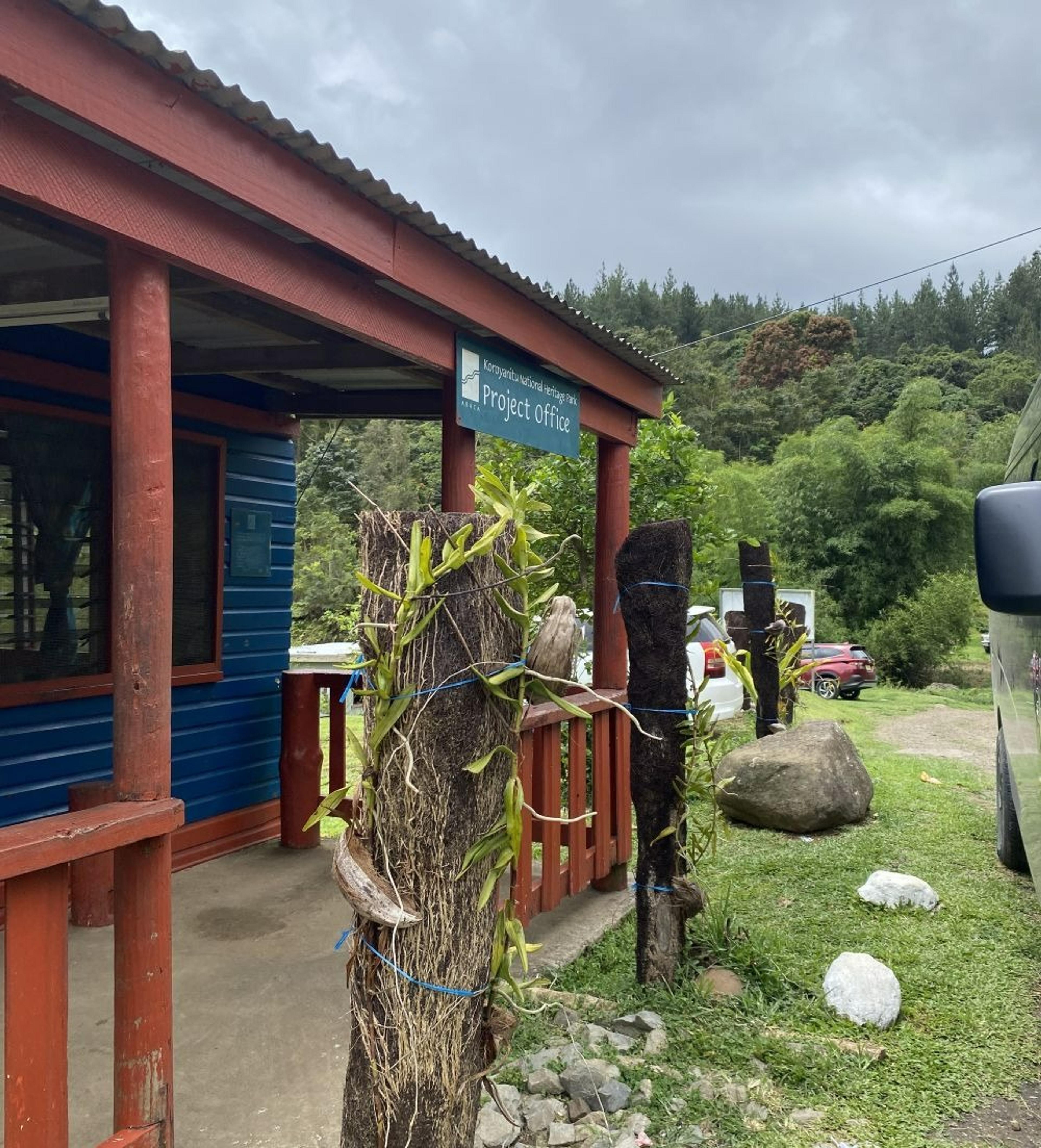
The entrance to the park is in Abaca Village (where you can also stay if you’d like the experience of a traditional Fijian village). From here, it took about 15-20 minutes to walk into the park proper. It is a little hilly, but you don’t need to be an experienced trekker to go there.
There is an entrance fee (25 FJD for tourists), and they’ll give you a map and directions on how to get where you want to go. There are 3 trails, one of which is the 4-hour round trip to climb Mt. Batilamu. We modified one of the trails and only did a 40-minute hike round trip.
Getting to the waterfall
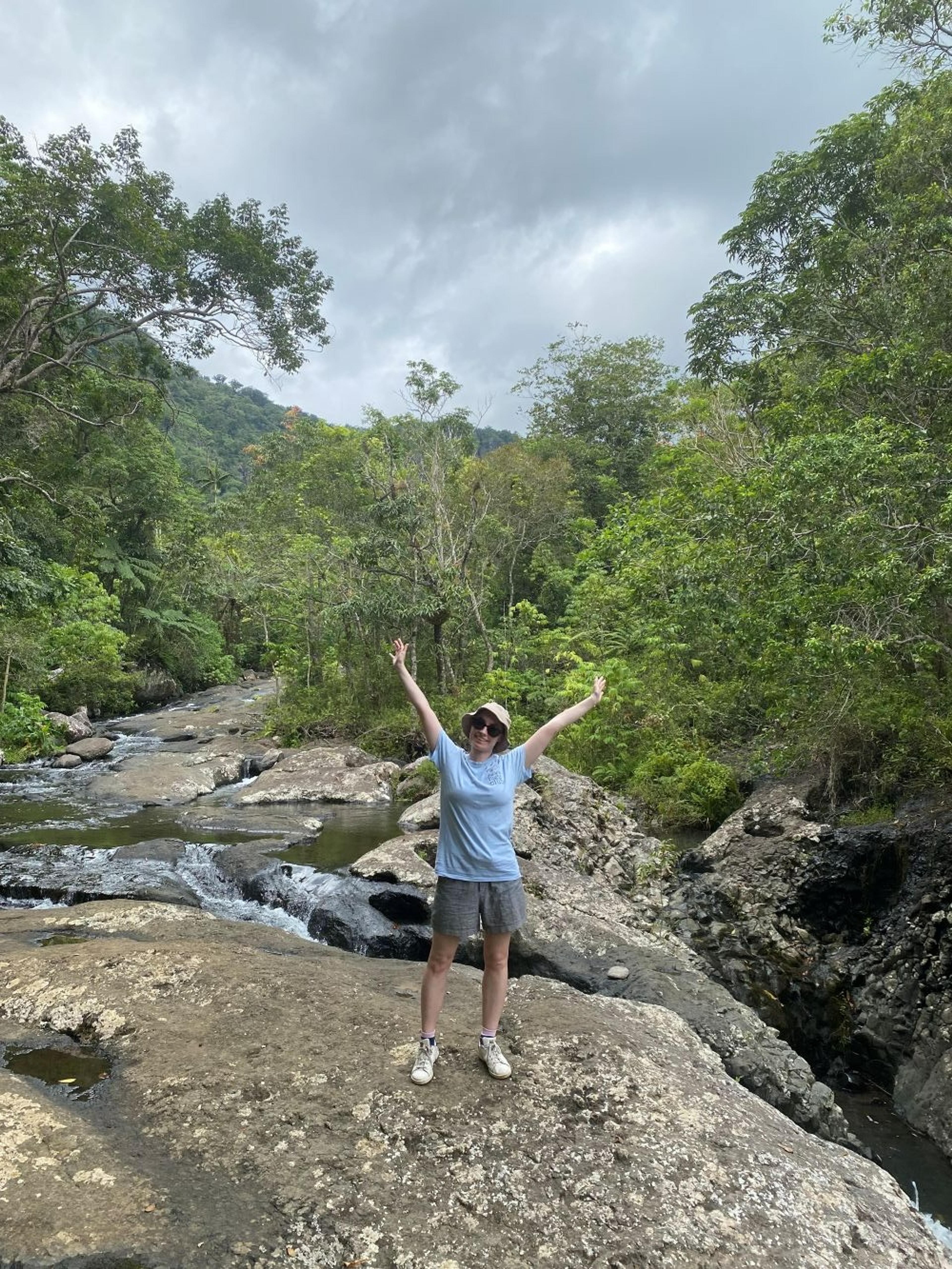
The staff at the entrance office gave us instructions on how to get to the closest waterfall. It wasn’t too complicated, with the path being marked. Once we got to the turnoff on the main path, it was a quick descent to the waterfall. As you can see here, the waterfall isn’t very steep at this point and is very safe/easy to cross.
You’ll also notice another thing about my pictures from this hike — there wasn’t another soul in sight, apart from my family. Our group had this whole part of the park to ourselves — not something you’d be able to say if you paid for an organised tour! We think they must take them to another waterfall in the park.
View from the top
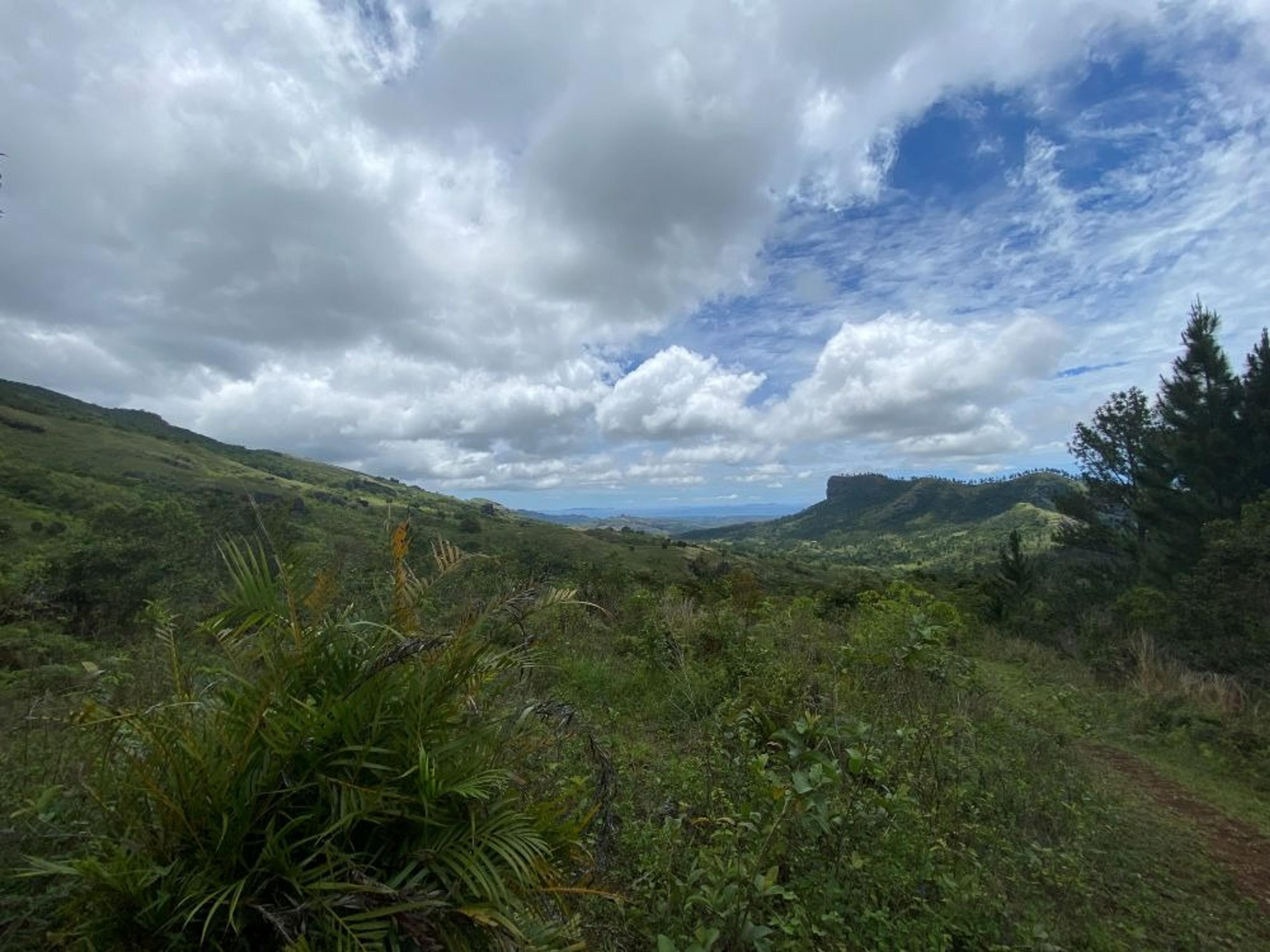
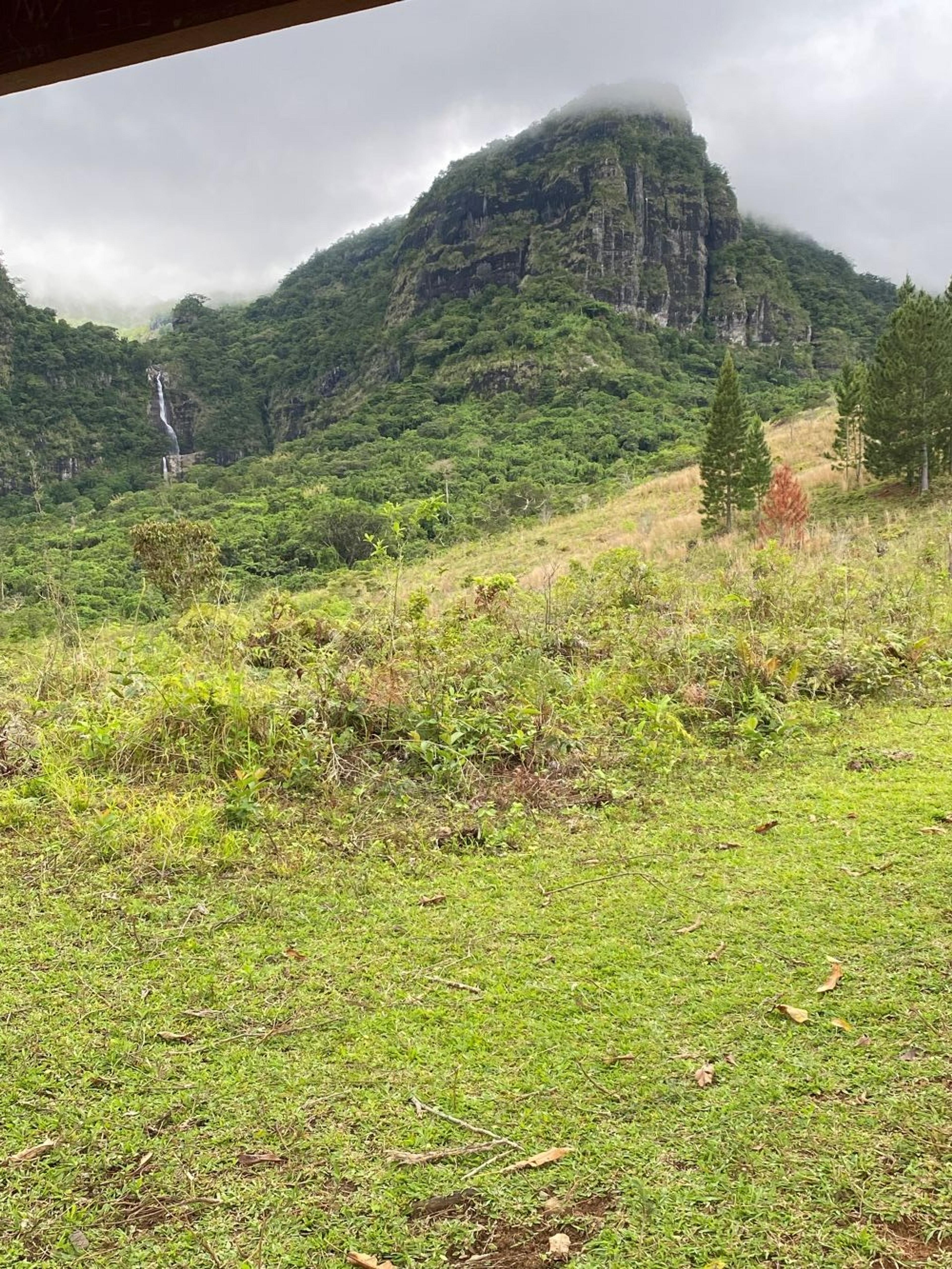
Our view from the top of the hike! As mentioned, we didn’t strictly follow the whole trail (I think that would have taken us closer to 2 hours all up), but we were happy to turn back at this point. To our east, we saw this rock towering before us, with the source of the waterfall we’d jumped over in the distance. To our west, we saw the ocean and the view down towards the coast. It was an incredible contrast and a really cool place to stop and refuel. Not pictured is the gazebo rest area, where we ate our snacks (Cheezels and party mix, if you were curious) and enjoyed the view.
While the walk wasn’t too strenuous, it was hot and muggy the whole time, so we were tired and sweaty, even without the sun being out in full force. One really cool thing: in the time we had stopped there (maybe 30 minutes), the fog had started to descend over the mountain. By the time we headed back, you couldn’t see where the mountain started and stopped anymore.
We followed the path the way we came and were soon back on our way to Nadi and our hotel, where we cooled off in the pool.
Nadi Town
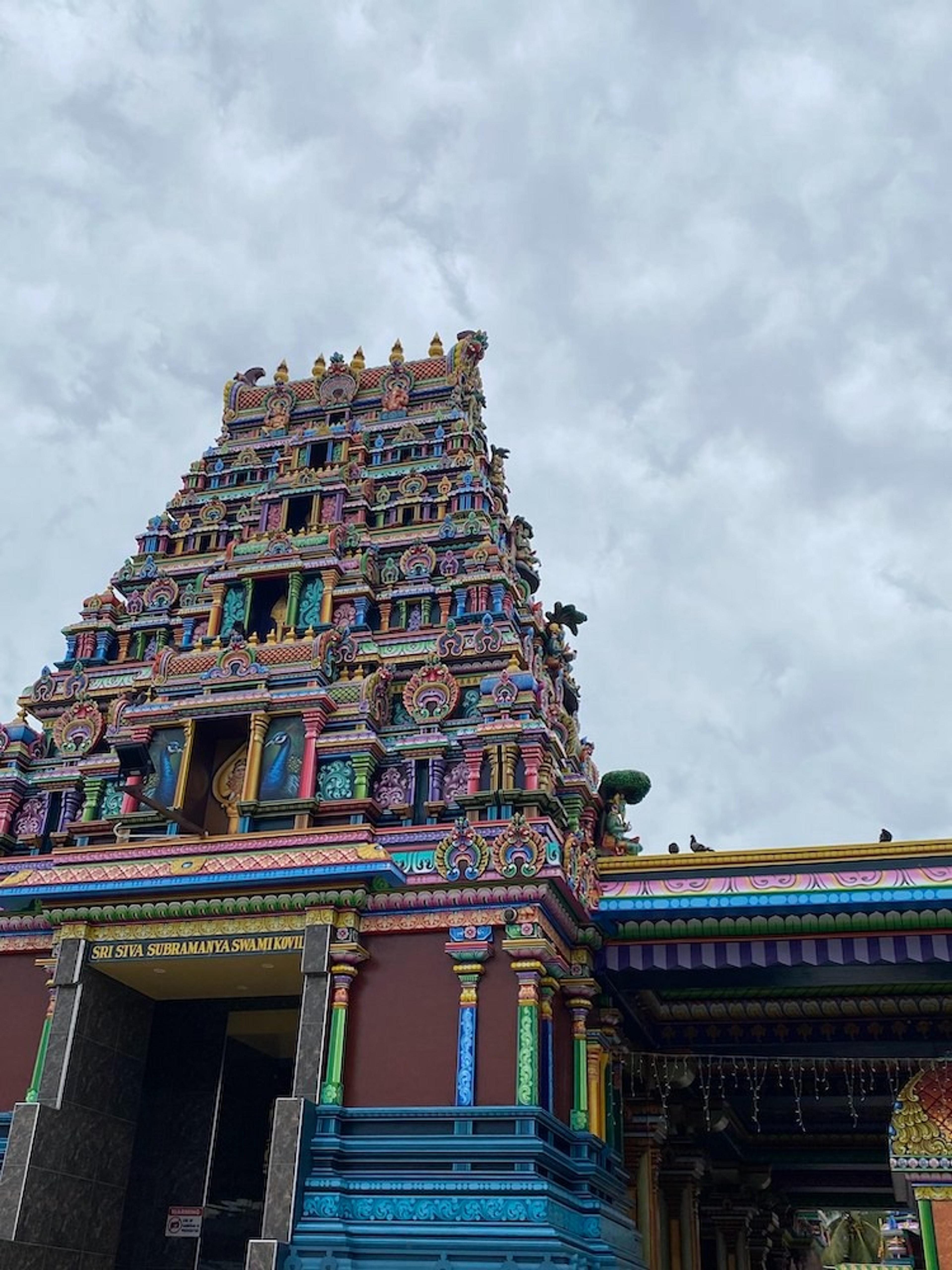
I’d highly, highly recommend visiting Nadi Town if you’re staying in Denarau Island. Unsurprisingly, it’s easy to forget that real life is going on just down the road when your days are full of pools, beaches, and breakfast buffets. And that’s where all the most fascinating attractions are.
You can get a taxi there, but we decided to take advantage of the public transport options! The bus runs regularly (around every 15 minutes) from the road alongside the hotel. In Fiji, you don’t pay until you get off the bus, so hold onto your cash until the end of the ride. The bus terminates at the bus station in Nadi, which is just off the main road, so no need to worry about missing your stop. The ride costs $2 FJD each — find more info about travelling around by bus here.
Note: the public bus is different from the ‘Bula Bus,’ which is a tourist shuttle service running a loop around Denarau Island, stopping at each of the hotels and the port. Tourists use this bus as a ‘hop on, hop off’ service (it’s $12 FJD for an all-day ticket) between resorts and the port (the only place on Denarau Island outside the resorts to go out to eat and shop). The public bus is used by locals and tourists alike to leave Denarau Island and go to Nadi.
The highlight for us was the Sri Siva Subramaniya Swami Hindu Temple, casually the largest Hindu temple in the Southern Hemisphere. It’s at the end of the main street (you can’t miss it), costs $5 FJD to visit, and you need to take your shoes off (and put on a shawl if your clothes don’t cover your legs or shoulders). From there, you’re left to wander around the temple buildings at your own pace, which includes shrines and spots for quiet contemplation.
You can’t take photos inside the building, so you’ll just need to trust me that the freshly painted ceilings were as beautiful as they were intricate.
Given Fiji’s population is around a quarter Hindu, this temple is fairly busy, so be mindful of your noise and don’t get in the way of locals visiting.
While in Nadi, we also visited the Handicraft Market, which is admittedly fairly touristy. You’ll find souvenirs of all types here at a cheaper price than you’d find at the resorts (but the prices are still inflated). There are ‘normal’ (read: not geared towards tourists) shops here too, including supermarkets for cheaper groceries than you’ll find elsewhere.
I helped my youngest sibling choose some jewellery for their friends back home, and they helped me pick out a drawing for my flat (which will have pride of place on the wall as soon as it’s framed).
Boat trip organised by the hotel to the Mamanuca Islands
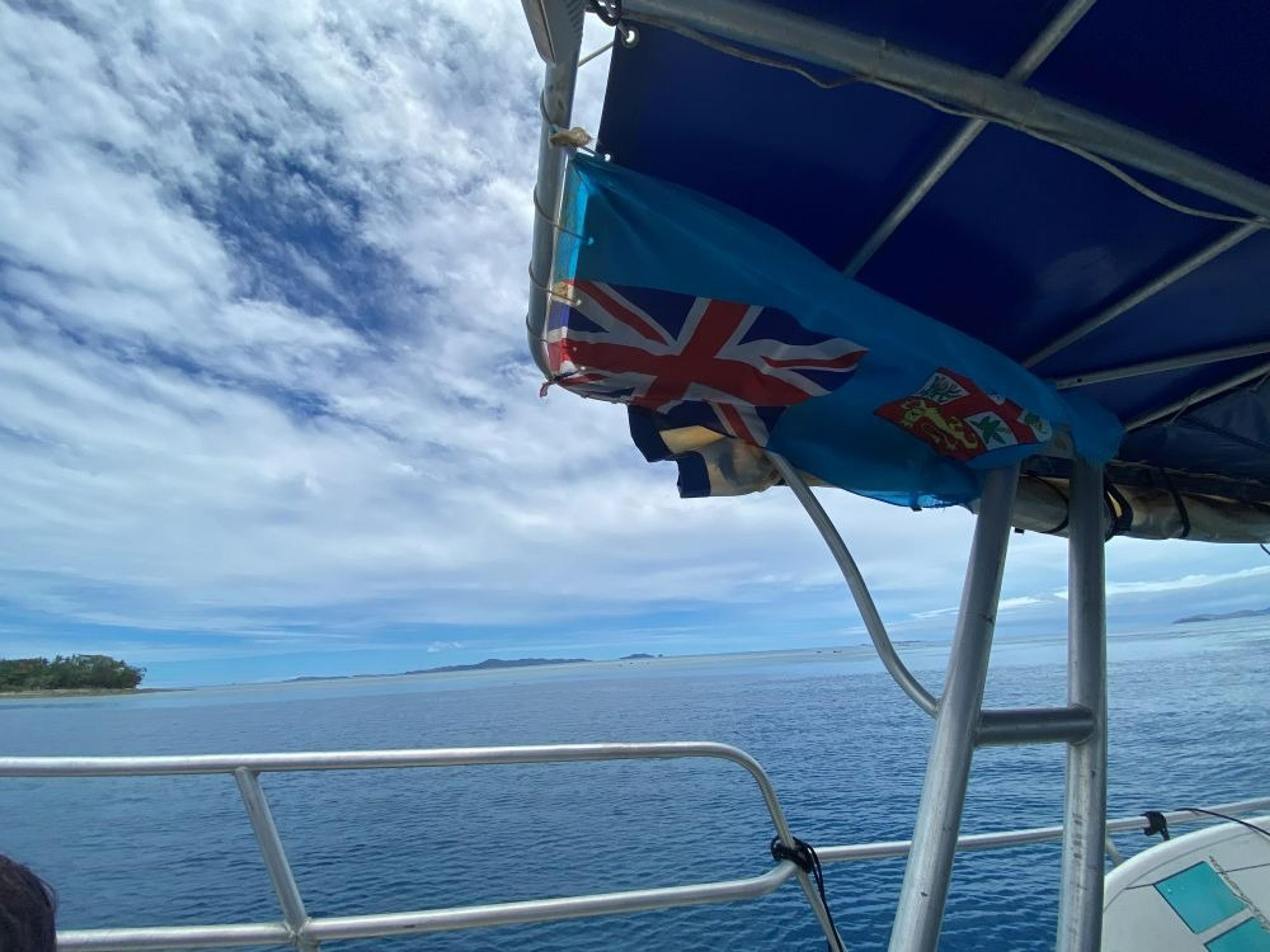
We’ve made it to the more ‘traditional’ tours and excursions section! As part of my Dad’s birthday celebrations, we hired a catamaran from Hydro Sports Fiji (located conveniently at the hotel) for a 4-hour tour of the Mamanuca Islands.
These are a chain of small islands near the coast of Fiji—some of the bigger and more well-known of these are Treasure Island (where we saw a turtle sanctuary), Castaway Island (a very fancy resort, plus great snorkeling reefs), and even the island where they film Survivor.
On our tour, we snorkeled off the boat, moored up to a sandbank, and had lunch on Treasure Island. The highlight for me was the snorkeling, since there were soooo many fish, including some really cool ones like parrotfish. Treasure Island was a nice spot to eat, and the staff on the boat seemed really familiar with these spots — between showing off the iguanas and getting the lunch orders of 20+ people, it was a well-oiled machine.
Unsurprisingly, the ease of not having to navigate the waterways yourself comes with a cost — our tour cost $2150 FJD (almost $1000 USD). That being said, there are spots for 20 people onboard, so the cost split between many may be worth it (especially since there’s not really an alternative to DIY this; you’d still have to hire out a boat).
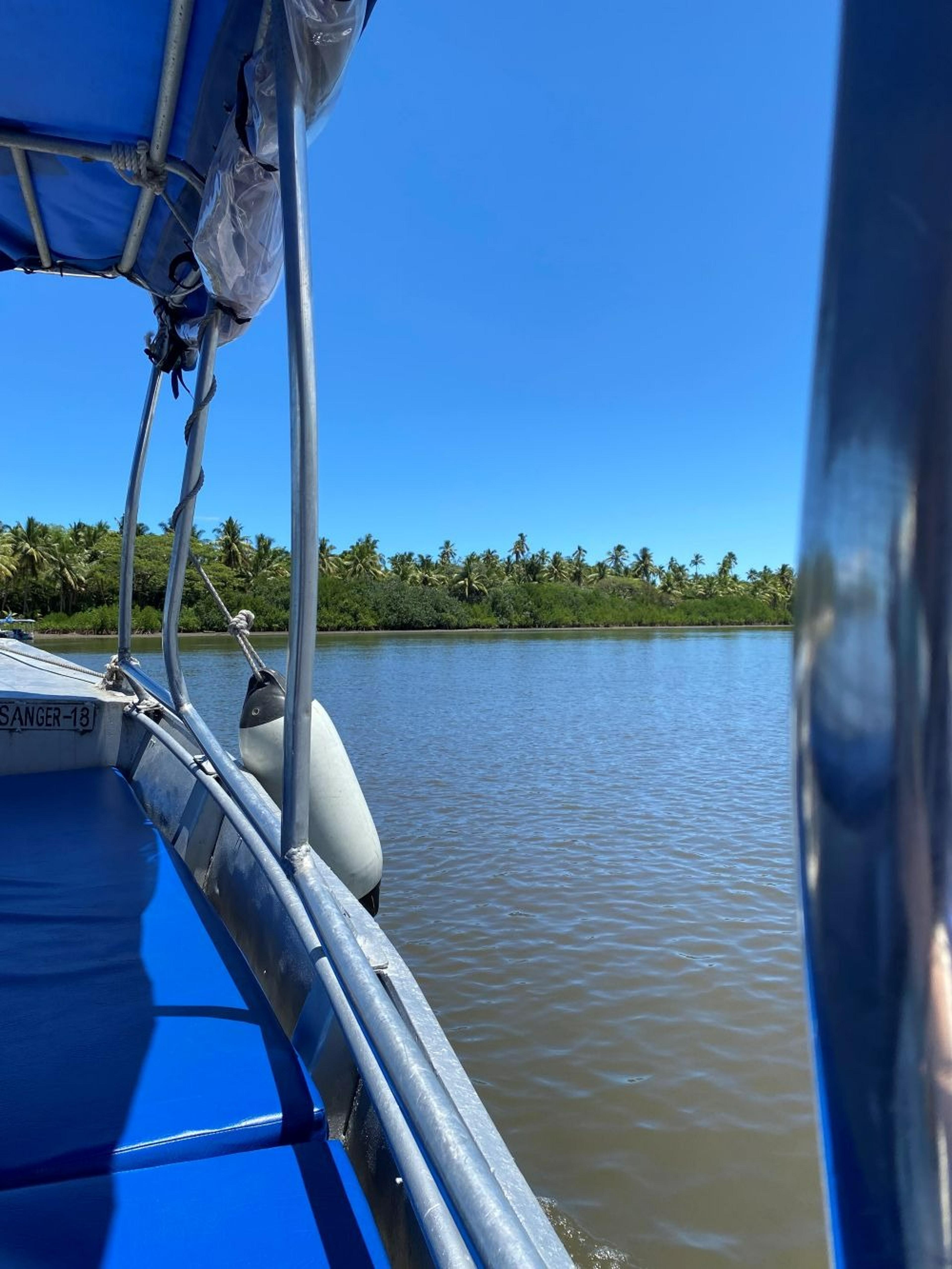
So, were the back-to-back 20+ hour journeys worth it in the end? Yes! By pushing out of the resort’s comfortable cocoon, I have a better understanding of the country and the people than I would have had if I’d just spent the time by the swim-up bar.
But, on reflection, it was these personal experiences that ended up being the best memories of the trip. I remember my Dad’s hand to help me over a rock in the middle of the waterfall and giving suggestions on necklaces for my siblings to take back home while at the market in downtown Nadi. The swim-up bar is nice, but that’s better.