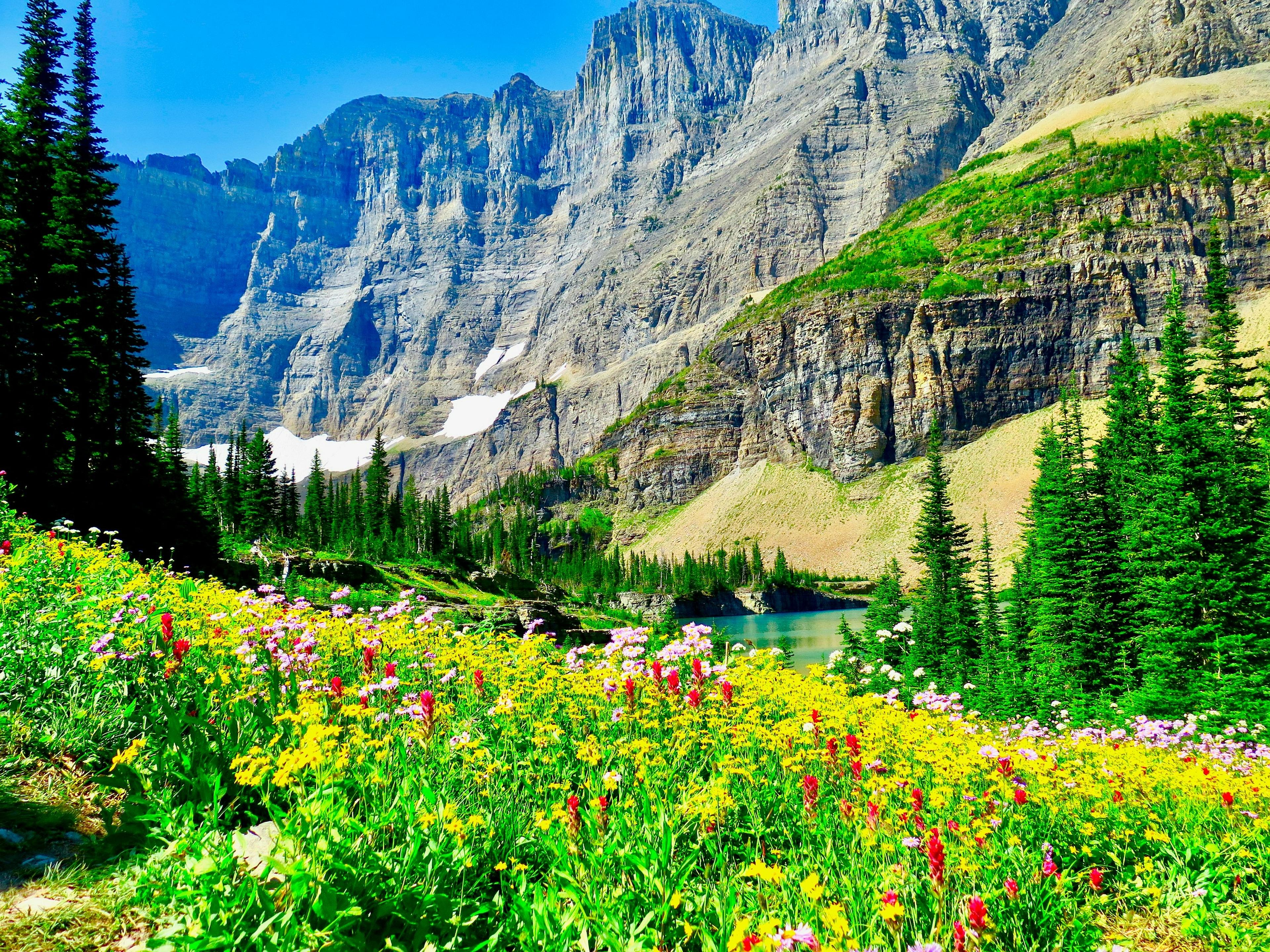
Passport to the Parks: Meet Glacier National Park

Olivia Louden
Since the first US National Park was established in 1872, sixty-two others have popped up, ranging from cacti-covered corners of the desert to huge swathes of Alaskan wilderness to colorful coral reefs in Florida.
Every park does things a little differently, so to help break each one down, we’re starting a new series: Passport to the Parks! It’s a chance for us to give you a quick introduction to the prettiest places in the country and cover the basic facts to know before you go.
And who knows, maybe we’ll take a tour around some other countries’ parks too. If you have requests or ideas, let us know in the comments!
First on our docket: Glacier National Park. Despite its fairly remote location in Montana’s Rocky Mountains, Glacier still cracks the top ten most visited US National Parks. That’s less surprising once you lay eyes on its soaring, snow-dappled peaks and sweeping valleys:
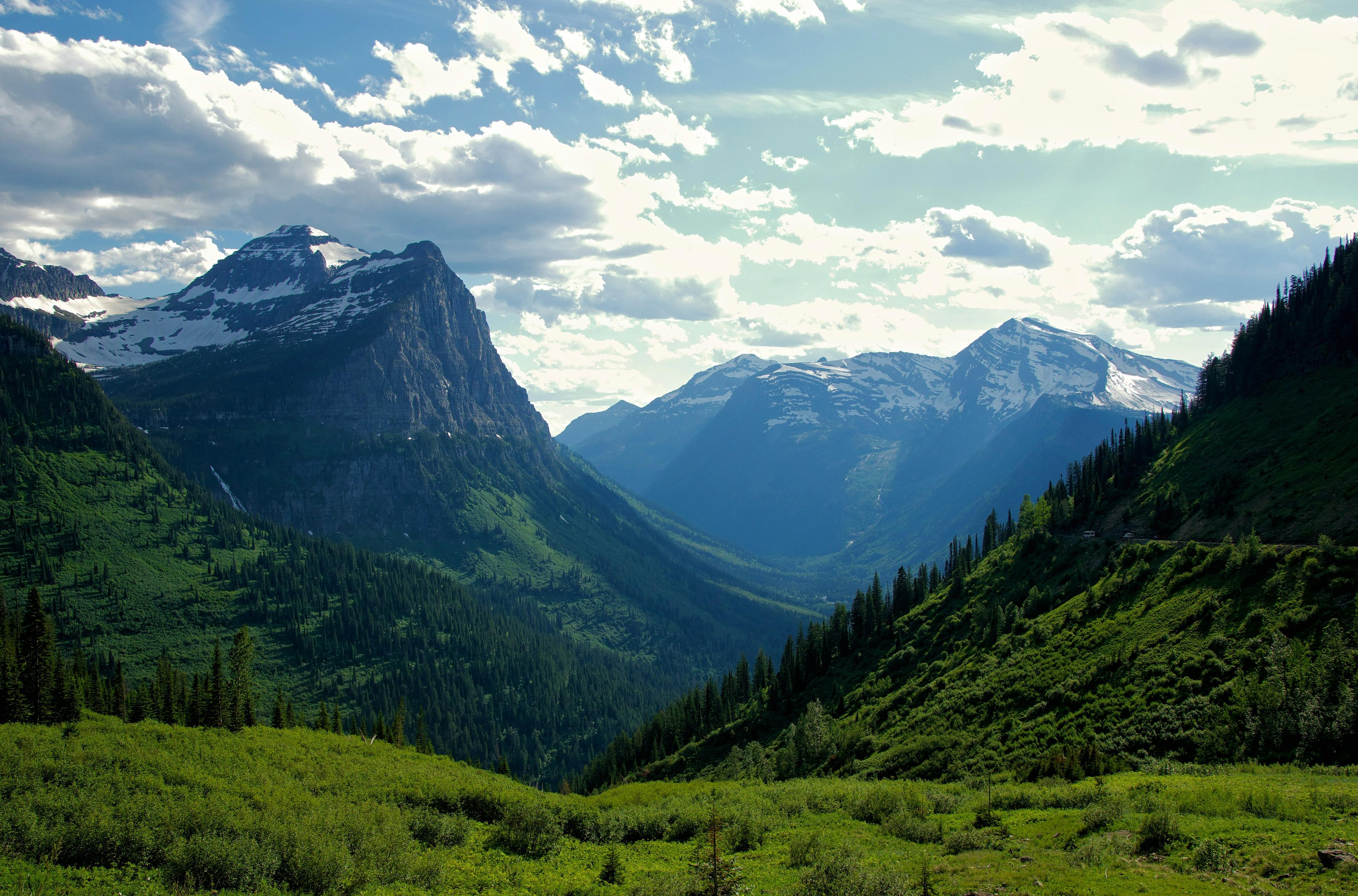
While the dramatic views here are pretty hard to top, the park’s popularity and mountainous terrain also come with some challenges. Let’s jump right in!
Quick Facts about Glacier National Park:
- Established: 1910
- Size: 1,583 square miles (4,100 km²)
- Location: Northwest Montana, just south of the Canadian border
- Closest small towns: West Glacier, Columbia Falls, Coram (<20 mins by car)
- Closest major hubs: Kalispell, Whitefish (30-45 mins by car)
- Closest airports: Kalispell (FCA) is the closest by far, but Bozeman (BZN) and Missoula (MSO) are within an afternoon’s drive and often far cheaper. International visitors may get the biggest bang for their buck by flying into Calgary (YYC) and combining their trip with some Canadian sights (more about that below!)
- Best time to visit: June-August
- Biggest highlight: Those jaw-dropping mountain vistas
As you might have noticed, the best time to visit Glacier is peak summer — while the park certainly gets crowded that time of year, it’s also the only time when the entire place is accessible. Remember that mountainous terrain I mentioned? Turns out it’s pretty hard to plow.
So while Glacier is technically open year-round, unless you’re handy with a snowmobile and don’t mind having next-to-zero open services, you’ll want to stick to the warmer months.
And hey, those verdant valleys are at their prettiest in summer anyway!
Step one of your trip should be getting a handle on Going-to-the-Sun Road: Glacier’s premiere scenic drive. The 50-mile road skirts along the edges of dizzying glacial valleys, tunnels through rocky cliffsides, and glides past crystal-clear waterfalls.
In the past, you had to snag a coveted vehicle permit to see it. For the 2026 season, the NPS is going to try stopping and starting entries throughout the day as needed instead of requiring timed entry permits.
We’ll have to wait and see how that plays out, but hopefully it improves accessibility, because this drive is widely considered to be one of the most beautiful roads in the entire country. It’s the best way to see as much of the park as possible in one fell swoop, so if you only have one day in Glacier, you should spend it on this.
It takes about two hours to drive the entire length, but even if you don’t go hiking along the way, you’ll still want to stop at as many viewpoints as possible. I suggest setting aside one entire day for the drive itself, then using any additional days you have at Glacier to hike or explore the park’s other roads.
There are also shuttles along Going-to-the-Sun that can take you to Logan Pass (a major park hub and the start of several popular trails) without having to compete for parking. Score.
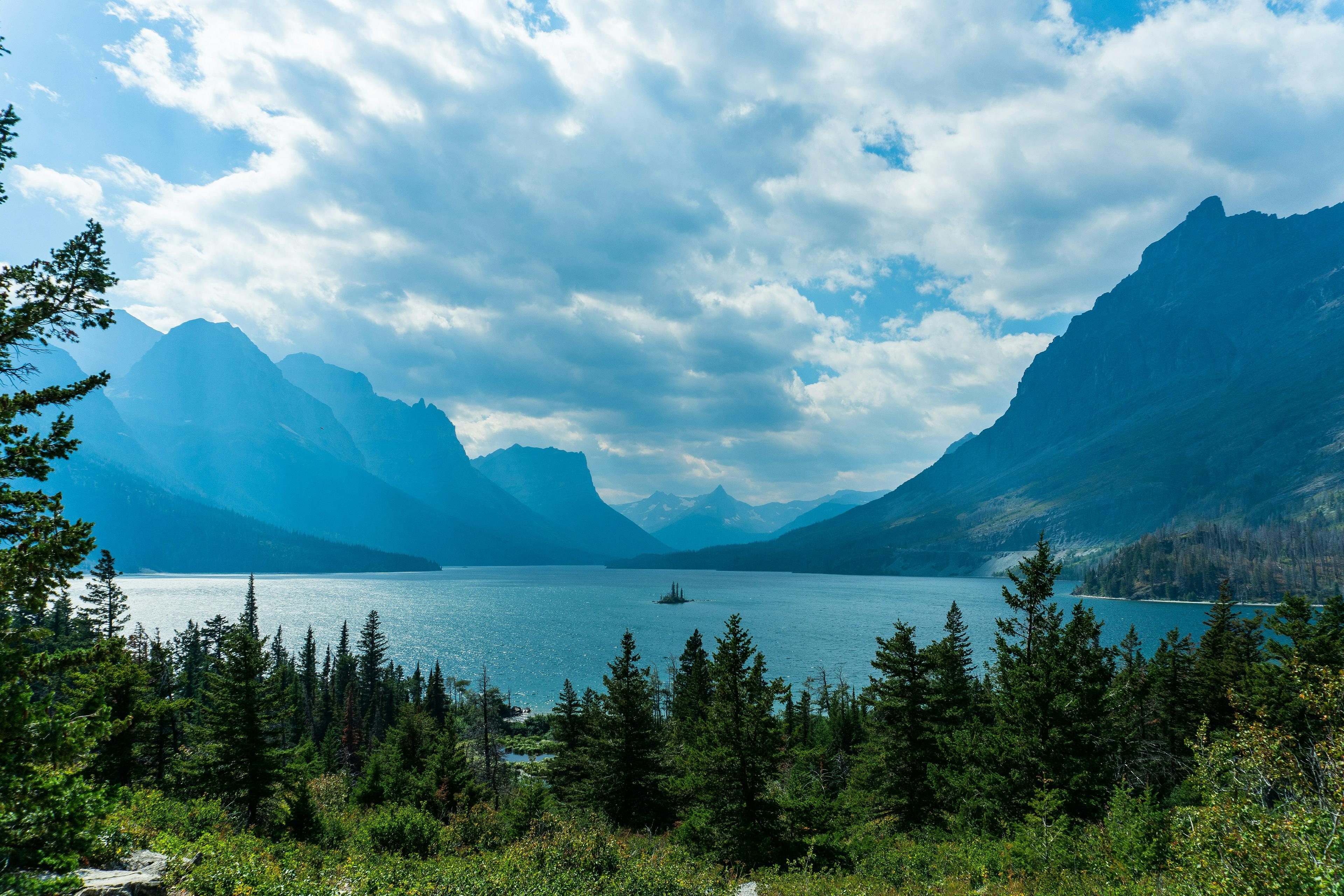
Once you’ve got your transportation sorted, you’re ready to scope out some hiking spots. With over 700 miles (1,100 km) of trails crisscrossing through the park, there’s truly a trek for everyone. The most popular is Highline Trail, a challenging ridge hike whose narrow paths guide you along the edge of the continental divide. Coming in at 11-15 miles (depending on your route), it’s a trail for the folks who want to disappear into the mountains.
For a shorter journey, try Hidden Lake Trail. Less than three miles in length, it takes you through a flowery meadow and around a glittering alpine lake. It’s also a great spot to see mountain goats, the shaggy white critters that are practically the park’s mascots.
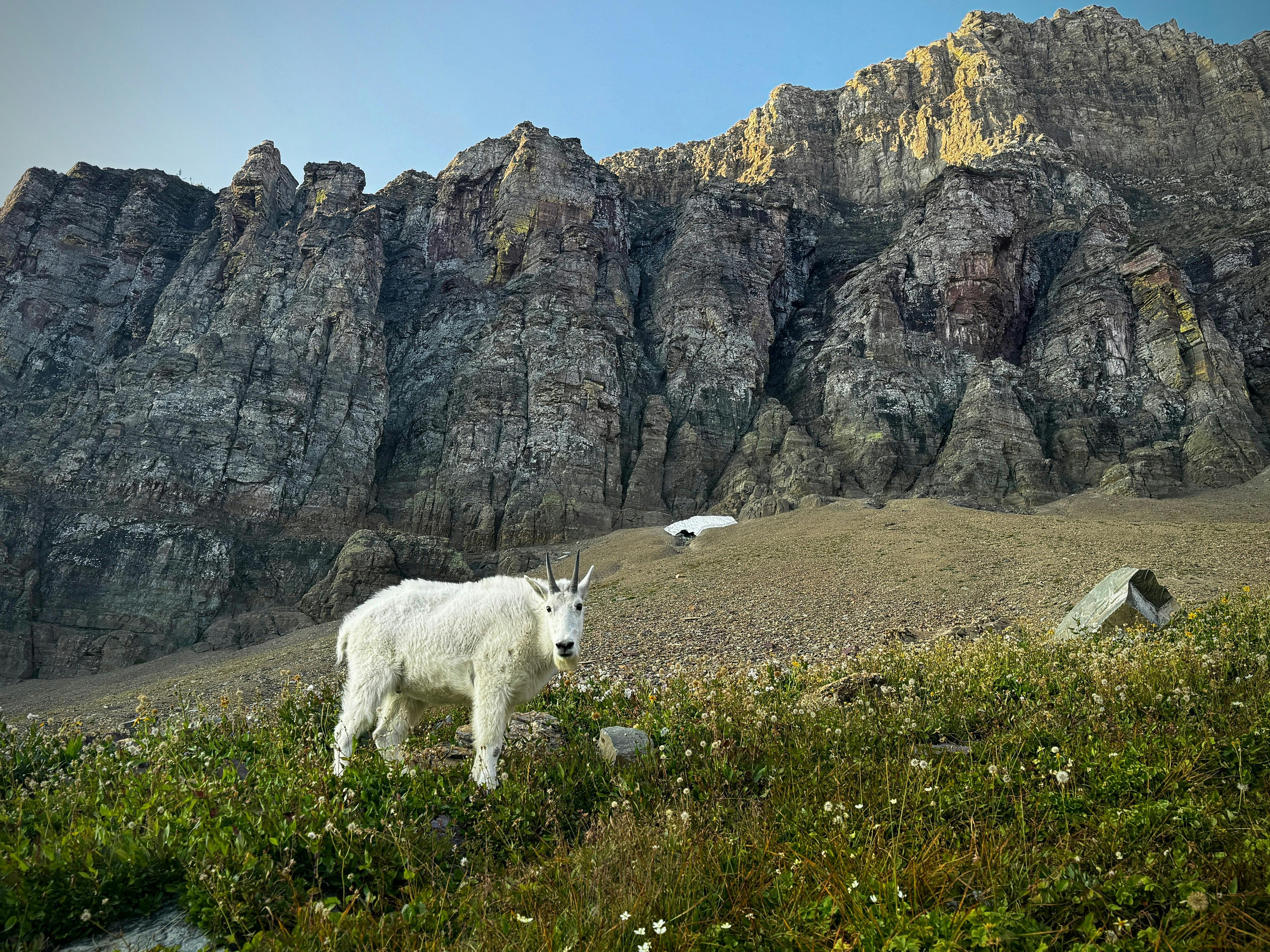
Although you might not even have to hike to spy a goat. I spotted this one having a sniff around a parking lot!
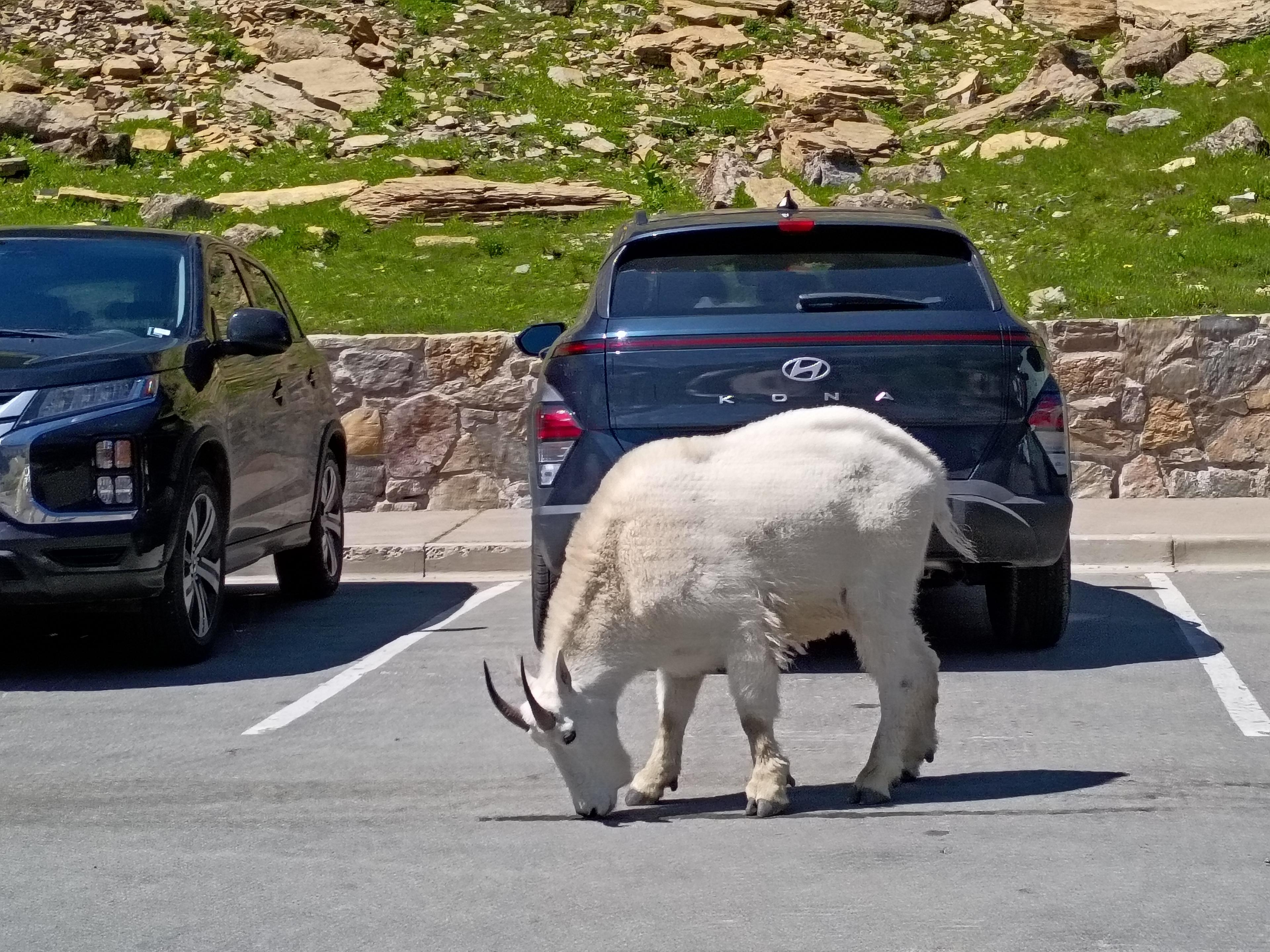
While the goats might be allowed to take a nap wherever they please, visitors will need to book accommodations if they want to spend the night inside Glacier. This requires some strategizing — campsites and lodges can book solid within minutes of opening for reservations.
Your best bet is to pick your preferred location (check recreation.gov for campsite info and the lodging hub for hotels), find out when that specific spot opens for new reservations, and be online when it happens. Plan accordingly, and you can wake up to lakeside views from inside a cozy historic lodge or to the chatter of songbirds among the wildflowers.
If you need last-minute options, you can check the list of first-come, first-served campsites and hope you get lucky.
Otherwise, check for accommodations in the towns listed in the Quick Facts. I booked this room at a house in Kalispell, and it was perfect for me.
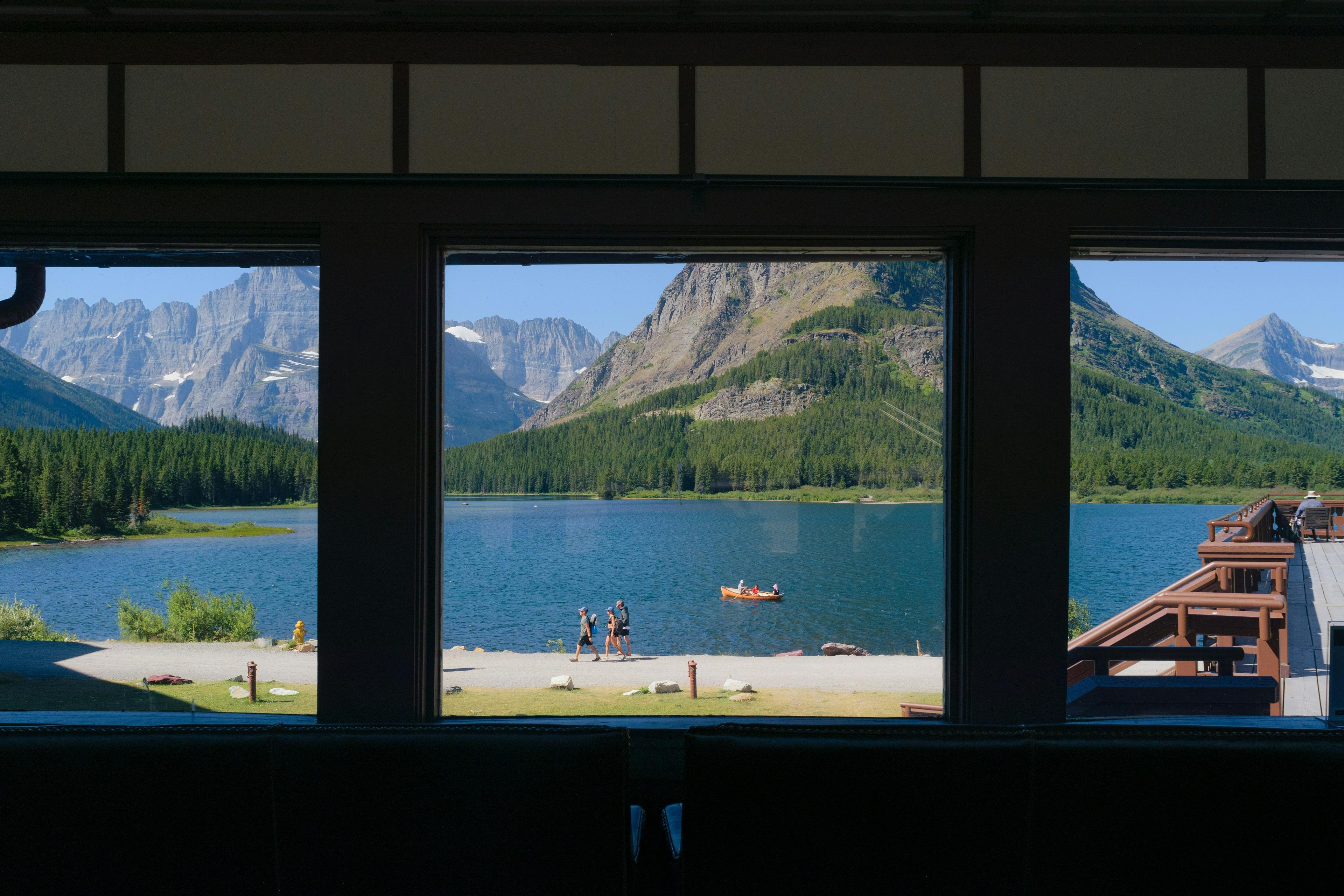
So you’ve got your sleeping arrangements sorted, your Going-to-the-Sun strategy in the bag, and a long list of hiking trails to tackle. But there’s still one more thing to consider before you arrive in Montana: Glacier is one half of an International Peace Park between the US and Canada!
The Canadian half, called Waterton Lakes, continues the stunning views on the other side of the border:
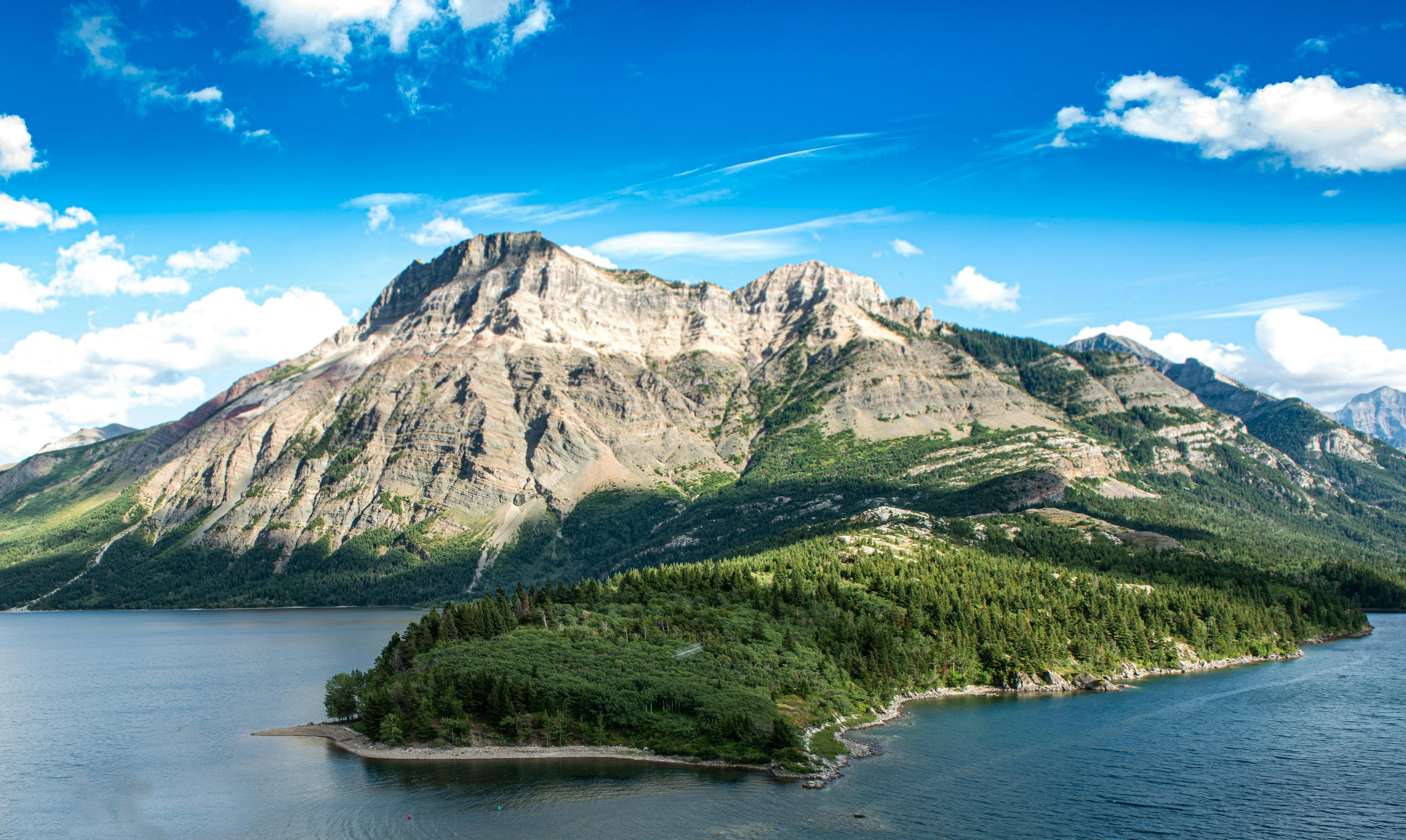
We’ll have to break down Waterton another time, but its prime location is great news for international visitors who want to see Glacier without spending too much on flights or dealing with US airports. If you land in Calgary (a well-connected international hub), you can hop around the Canadian Rockies, stop at Waterton, and then pop across the border to Glacier for a couple days, and you’ll still do less driving than if you fly into most of the smaller, more expensive US airports.
So that’s Glacier National Park in a nutshell! Let me know which national parks you’d like to see next! Need help from a SoCal local on navigating Death Valley’s scorching summers? Don’t know where to start with Denali? Or maybe there’s a spot near you that deserves a shout-out? I’m open to any and all national park suggestions, American or otherwise! Just drop 'em all in the comments :-)